Some people may reject Reiki, a Japanese stress relief modality, as incompatible with the teachings of their faith tradition. Reiki is not a religion in itself; people of any spiritual stripe practice, teach and experience the benefits of Reiki. But how does that all work together?
I can only tell you how it works for me, a Presbyterian seminary graduate who found a path as an animal communicator and practitioner of Kathleen Prasad’s Let Animals Lead® meditation method. This method is a specialized form of animal Reiki.
In short: I say my prayers, show up, listen and get out of the way.
Any healing comes from God, whether that happens through me or in spite of me. My job is to create the conditions for healing by listening and holding a peaceful space for the animals and their people.
The Let Animals Lead® animal Reiki method I practice is meditation-based. It’s hands-off unless the animal wishes contact, and there is no manipulation of energy. I allow it to work however it needs to for the animal’s highest good. God knows that better than I do.
Watch me at work and all you’ll see is a middle-aged woman sitting quietly with a dog or cat, or standing in a barn or pasture. I might have Gregorian chant or other meditation music playing softly on my phone. I’m meditating but not in a trance — gotta move quick if a Percheron is about to step on my foot or goats need to be herded back from the neighbor’s field. (Those are two of many possible interruptions; the idea is to take them in stride and carry on.)
My theological grounding is Protestant Christian, but anything I believe or experience is only a tiny part of God’s big picture. Respecting your beliefs and experience is a core value in my life and practice.
I also know animals are deeply connected to a higher wisdom that sustains all of us. Whether their humans call that higher wisdom God, the universe or nothing in particular, the animals are OK with that. So am I.
This is one of sixteen malnourished, neglected horses taken from a northeast Indiana farm in 2018. (Photo courtesy Friends of Ferdinand)
Those of us who work with animals — vets, zoo employees, rescue volunteers and practitioners like me — often get asked how we can stand to see animals suffer. Doesn’t it break your heart? Wear you down? Make you hate people?
Sometimes, yes. That’s why we are more prone to compassion fatigue, burnout and even suicide. That is a reality.
So is the need for what we do. The need to create a healthier, kinder world for animals is so huge, in fact, that it takes all of us, whatever our line of work or temperament. Illnesses and injuries can happen even when we are doing our best as animal guardians and professionals. They can lead us into a confusing, agonizing array of questions and decisions. Animal cruelty and neglect, whether we come face to face with it or just hear about it, can leave us wondering about our world.
Several years ago, I worked with six of 16 horses rescued from a severe neglect case (photo above) in my area. When I walked into the barn on that cold morning, I saw emaciated bodies, tangled manes and what looked like untreated infections. All of the horses were in various states of confusion; one had all but checked out and stood vacantly in his stall.
You bet I felt sad. And angry. All the things. But I was there to listen to them and share meditation to help them relax and regroup. Having a way to help allowed me to engage in a way I could not have otherwise.
Besides, the six horses before me were more than their body condition scores or how their human had failed them. They had their own personalities, perspectives and hopes. One knew she would probably not survive and wanted no fuss about that. The mare in the stall next to her just wanted to be with friends. The vacant horse showed me an image of a dark room with a sliver of light peeking in. They didn’t need my pity. They needed to be heard and seen.
This is Millie, whose main concern was being with friends. Whether that happened on earth or in spirit wasn’t as important to her.
It’s OK to cry or be mad as hell. Find whatever help and support you need. Then consider what you can do to make things better. Sit quietly with your dog as she is facing the last months or days of her life. Foster a horse for a rescue. Donate money for hay, cat food or medical expenses. No matter how small the effort may be, it will do more good than turning away or joining the calls for retribution on social media.
A cool book I read a few years ago has lots of ideas to get you started. You can also contact a local shelter or rescue and say you want to channel some heartbreak into good action. They’ll get it. Especially if you follow through.
My partner and I recently made the gut-wrenching decision to let our 11-year-old dog, Molly, be put to sleep. That was preceded by weeks of: How bad is it? How bad might it get? Are her good days/minutes still outnumbering the bad? What else can we try?
Over and over, I told Molly I loved her and thanked her for the love, care and laughs she’s given us. I talked with her and the cats about what was happening and acknowledged how strange and sad it all was. I assured all of them we would get through it, one day at a time, and that Kathy and I would care for and support them. We shared healing meditations and I prayed for courage.
Every time I started down the path of worry and despair, I reminded myself to return to the present moment, which was where Molly needed me to be. Sometimes I got further down that path than other times. I kept coming back, however imperfectly.
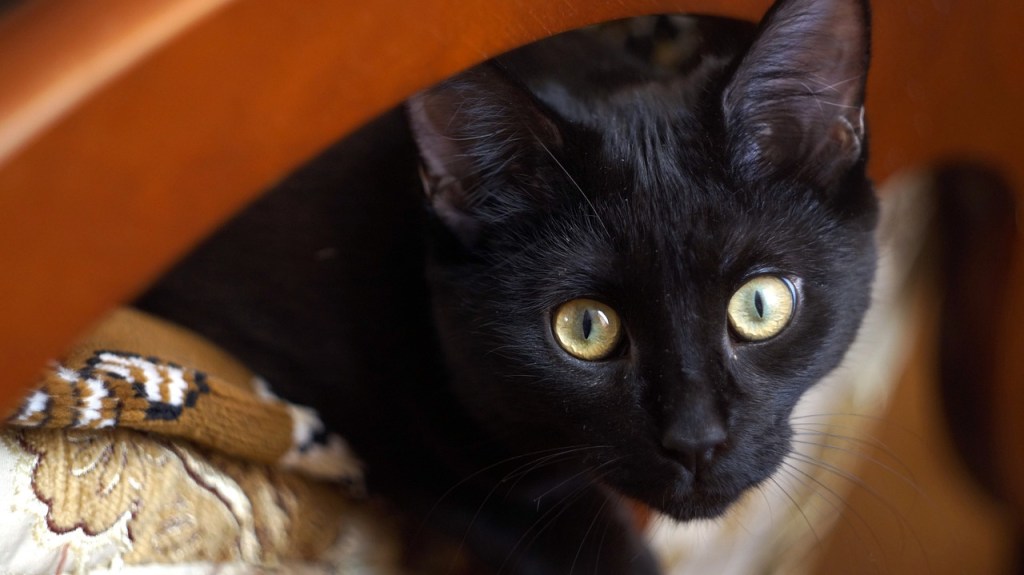
After Molly gently departed on her next adventure, Lucy (the black tortoiseshell cat pictured above) was stoic and attentive. Dusty, her younger calico sister, kind of understood what was going on but still found it confusing. Kathy and I did our best to reassure them and cope with the raw void.
Less than a week after Molly’s passing, I noticed food-driven Lucy wasn’t finishing her kibble. She ended up having five teeth extracted. Lucy has tooth resorption, which basically means her saliva breaks down her teeth, and had had five extractions less than a year before. Tooth resorption is not uncommon in cats, but science hasn’t figured out why it happens or how to fix it.
This time her recovery was full of ups and downs — different medications for pain and nausea, trying all manner of soft foods and feeding methods to get her to eat, and trips back to the vet clinic to be checked and rechecked. We were all still slogging through the fog of loss. I shared meditation with Lucy daily but wondered if I was getting it all wrong.
On a Saturday, after another vet visit and another failed attempt to get her to eat more than a couple of small bites, I was at the end of my tether. I wanted Lucy better. Yesterday.
Lucy was getting veterinary care. Now I had to force myself to do what I’d suggest to any client in this situation: Take a breath and focus on the connection rather than “the problem.”
Only then was I able to communicate with my cat without worry butting in.
What Lucy told me was not that she was tired of going to the vet and being cajoled to eat … though who could blame her? What she told me was that her mouth was still adjusting and her body was healing. She could feel the prayers and healing energy working. What she needed was time. And steadiness. She needed me not only to show up but keep coming back. Because we humans do drift.
I began to breathe a little easier. Her appetite remained sketchy for the rest of the weekend. On Monday afternoon she followed me into the furnace room, which is off limits to the cats, and ducked underneath some shelving.
“Lucy! Outta there!”
All I could see was the faint, dark outline of a cat crouched amid the dust bunnies. Never have I been so glad to see a cat behave like a stinker.
I went back upstairs, grabbed a fork and tapped the side of her stainless steel food bowl. Out of the furnace room and up the basement stairs she ran. And ate a bit more food.
The next morning, Lucy ate her breakfast normally. Well, maybe not quite normally, but close enough that we could see she’d turned a corner.
Lucy continues to improve, and we all continue to heal. It is not a linear process, and of course there’s never a good time for an animal to be ill or pass away. We humans have enormous responsibility for our animal companions, and yet there’s so much we cannot control. I’ve discovered that returning to God, to the breath, and to the presence of the animals can only help. Sometimes it’s the only thing that does.
Even if I have to do it several times a day (or hour), I’ll keep coming back.