

In my experience, there’s no right or wrong amount of time to wait before adopting again after you’ve lost a beloved animal. The challenge is to respect yourself and your grief while being willing to be surprised.
Years ago I lost my much-loved Idgie, the sweet diva of a tiger cat who inspired my journey into animal communication and healing. The pain was, in fact, like the proverbial gut punch.
A few weeks afterward, I read about a horrific local animal cruelty case in which fireworks were tied to a kitten’s tail. That kitten received treatment, foster care and a loving home, but something opened up within me. I realized how much I wanted to give another kitty a home. And Idgie had trained me so well.
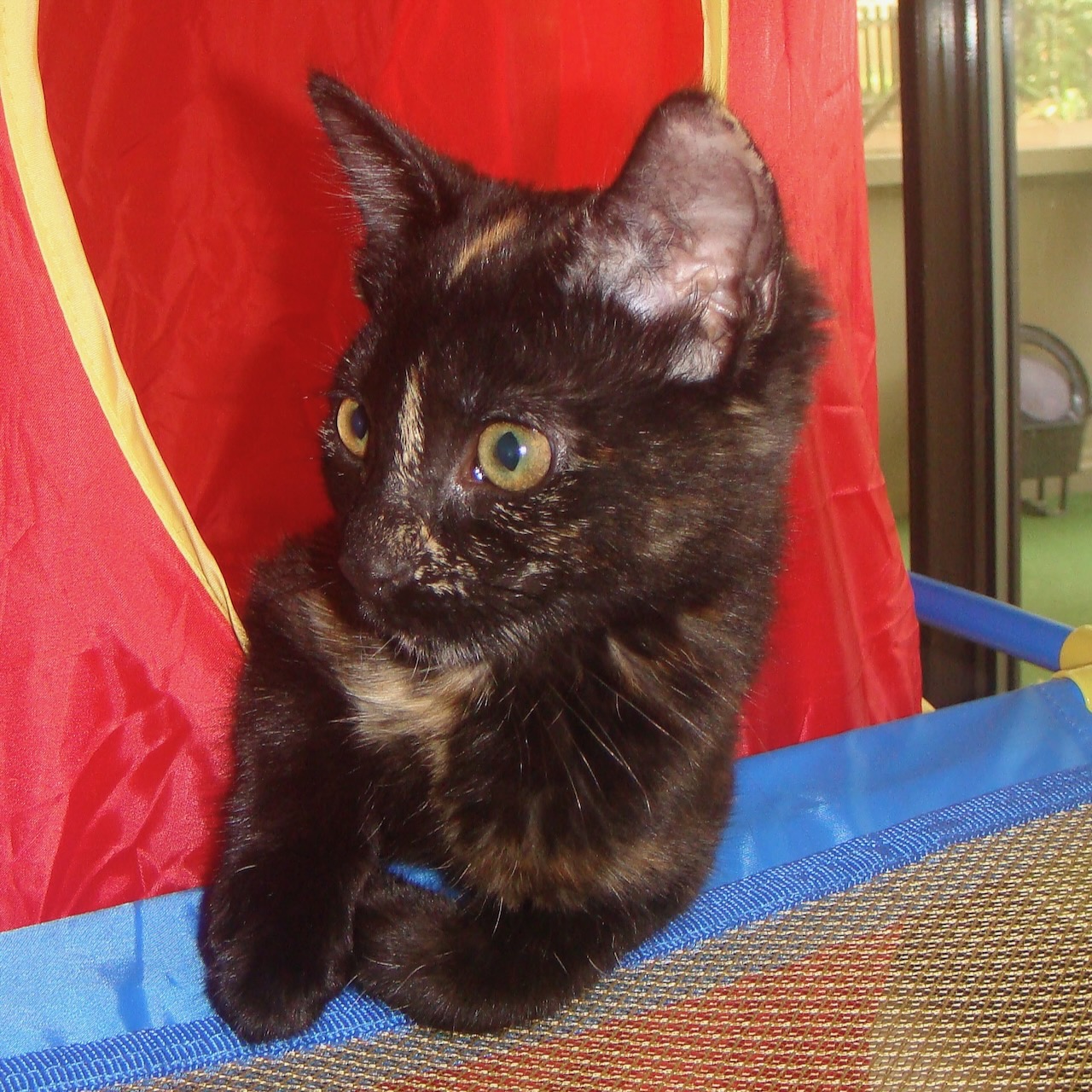
At the city shelter, Kathy and I met several kittens, but none seemed especially interested in us. Maybe now wasn’t the time after all, I thought. Then the volunteer brought out one who was about to go to a satellite adoption center. The four-month-old black tortoiseshell kitten prowled around the adoption counselor’s office, trying to figure out where she was and why. Then she came and sniffed both of us, accepting the pets we offered.
When I sensed the kitten was open to it, I picked her up. I commented on the gold streak between her eyes that seemed to stop and resume on top of her head.
“Doesn’t it look like God came along with a paintbrush?” the volunteer said.
I held the kitten so that we were eye to eye. She reached out with one tiny black paw and patted my face. We’d been chosen.
Did the joy of welcoming Lucy erase the hurt of losing Idgie? No. Lucy succeeded Idgie, but did not replace her. One being cannot truly replace another, and there’s no sidestepping grief if we are to love fully. While I continued to grieve for Idgie, my heart filled with gratitude for the love she had given me. That love enabled me to recognize the connection with Lucy, who needed a home as Idgie had.
A few takeaways, as long as you’ve read this far:
• Pay attention to your intuition. A lightness or sense of joy generally indicates a yes; a heavy, sad sensation a no or a not yet.
• Stay with your grief long enough, however long that is, for your heart to open to a new and unique animal companion.
• Remember the animal chooses, too; pay attention to the way a prospective new companion responds to you and how you feel.
Whenever you and your next animal companion find each other, you are both signing on for a beautiful, painful, and totally worthwhile adventure.


