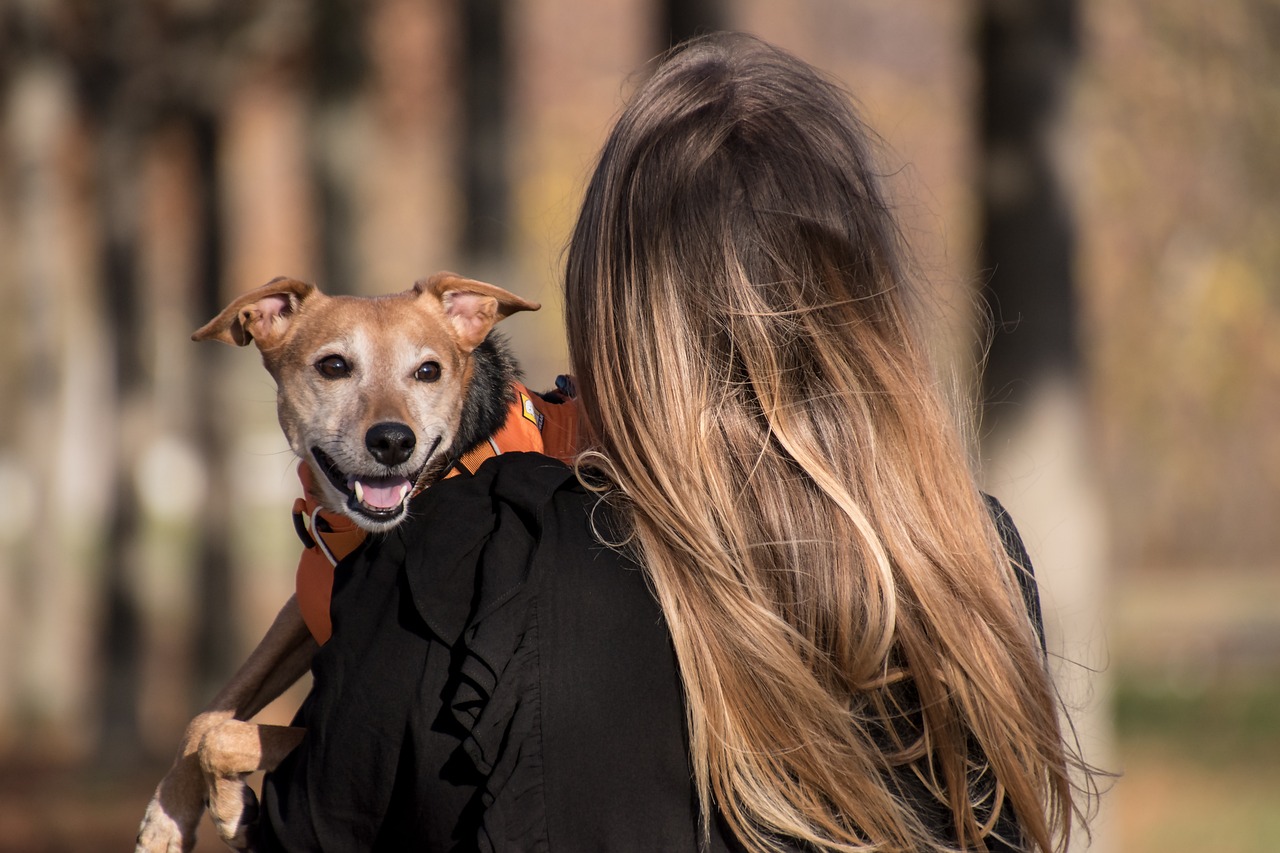
There is such beauty in our animal friends. You know that already. Many, if not most, of the animals I’ve been blessed to work with this year in my animal communication and Let Animals Lead meditation practice appear in this short video.
In 2024, Indiana experienced some amazing beauty in the sky as well — the solar eclipse in April and at least a couple of Northern Lights displays. A few photos from these are included as well.
Thank you to Camp Red Cedar for the cover image of the aurora borealis above the camp grounds; Chandu Prem Lal for the stunning capture of the eclipse behind the Indiana Soldiers and Sailors Monument; Heather Hoffmann for her beautiful scenes of the Northern Lights; Jenn Andrew for her photo of me at the pasture fence and everyone else who sent their best.
Even bigger thanks go to all of you who trusted me to listen to and hold space with the horses, dogs, cats, goats and other creatures in your lives. I look forward to doing even more in 2025.
Mary Oliver and Robert Bly were two of the writers I photographed during the 1989-1990 Butler University Visiting Writers Series, the year after I graduated. (Turns out the English Department still had a use for me.) But my favorite is this extra shot of, from left: Shirley Daniell, English Department secretary; Dr. Grace Farrell and Professor Susan Neville.
I started college in 1985 knowing only that I loved books and literature and could write well. Advertising? Public relations? Journalism? Teaching? It all swirled together in an abstract of future possibilities. Even at 18, I think I also knew a lot would depend on what job opportunities presented themselves when I finished this four-year marathon . . . and that the future does funny things to your efforts to prepare for it.
Since I grew up in the newspaper business and worked on my high school newspaper, journalism would have been a natural choice. However, when I entered Butler University, the journalism department seemed in danger of being eliminated and its students were understandably uneasy. The English department was all stability, warmth and great books by everyone from Julian of Norwich to the poets and novelists who visited.
A liberal arts education was more fashionable back then, but I still got the invariable questions. All were some variation of: “What are you going to do with it?” More than one person suggested business as a double major. Or I could at least join a sorority for the connections and a place in the university’s social order. (I did neither.)
What I did was intern for a couple of local publications, help Dr. Jim Watt grade freshman writing exercises, and write a bit and edit tons more for the college literary magazine, Manuscripts. I got to read and study great literature and practice the art and craft of writing. I also had a wonderful assortment of faculty, staff and fellow students challenging and supporting me.
Did my career path become clearer as graduation drew closer? Nope. Life kept happening. Such is literature and life. We react, respond and try to make sense of the world as it turns and shifts. Some of us write about it, or we study how other people write about it and what that means and why. And if we confuse the daylights out of everyone by the time we’re done, so much the better. (Just kidding. Mostly.)
Here are five great reasons to major in English — or be glad you did. These are based on my experience and observation; academic advisors, parents and other advice-givers may say otherwise. As always, individual results may vary.
1. It’s highly flexible and applicable. The communication and critical thinking skills you will develop by majoring in English will benefit you in all kinds of work environments. Internships can give you valuable experience in specific areas such as teaching and journalism. If you find you can’t stand a particular line of work, you have plenty of other options without changing your major.
2. It works as a single or double. You can combine an English major with a major or minor in another discipline. For example: Double major in English and engineering (and have fun moving between those two worlds) and become a technical writer who can actually explain mechanical stuff to English majors.
3.It puts the ball in your court. What you do with an English major and how it pays off (whatever that might mean) is really up to you. There is no prescribed career path for a student majoring in English; you are free to create your own. Some paths are more financially rewarding than others. Some are more suited to your gifts, talents and life circumstances than others. So you get to start by applying your critical thinking skills and creativity to your own life.
4.It allows you to see through eyes very different from your own. You will read books, poems, essays and plays by writers from throughout history, all over the world and many walks of life. Read the ancient Greek poets and see how a civilization comes together. Read Alice Walker and learn about resilience in the face of racism and male domination. Read Mark Twain and learn how a person takes the world’s woes and incongruities, but not necessarily himself, seriously.
5. It’s an important work in progress. Piecing together your classes, extracurriculars, internships and whatever else your college years bring is a great introduction to piecing together your life. Studying literature and learning to form and express your own ideas is not a bad way to tell, and live, your own story.
When we bring our animal friends on visits — or our guests bring theirs — it can be very, very good. To further paraphrase the nursery rhyme, it can be horrid.
Especially during the holiday season in 2024, when communication among human family members and friends may already be fraught. As an animal communicator, I can tell you the animals feel this. They may not understand a national election, but they know if you are sad, scared or angry. They are affected by conflict in the house, even and especially if it’s not their house, or if extra humans are in theirs. As with us humans, stress can contribute to illness or behaving in ways they otherwise would not.
So, should you cancel all visits with humans who didn’t vote for your candidate? Whatever boundaries you set are your call. You are responsible for maintaining your and your pet’s well-being.
If you do hit the road or host, and regardless of human views and votes, you can use simple animal communication techniques to facilitate more fun and less drama.
1. Do ask, and do tell.
Even if you brought your dog the last time, ask your host if it’s OK this time. You never know whose allergic aunt might be there, too. It’s also good to clarify with your guests about whether they’re bringing their Komodo dragon. (Never assume, I say, and avoid nightmare scenarios like this.)
Either way, let your pet know what is going on before and during the visit. Yes, you can — especially if you are willing to take a few minutes and a few deep breaths, quiet the mental chatter and to-do list, and focus on your beloved animal.
Tell your animal friend, either silently or out loud, where you’re going, how you’ll get there, for how long, and who will be there. As you do so, hold pictures in your mind of you and your animal in the car, the trip, your friend’s house, and the other animals and people who will be there. Picture the sun rising and setting however many nights you’ll be there. If your dog had a blast playing with your brother’s dog or kids last time, picture that, too.
Ask the animal what would make the visit easier and more fun for her. What pops into your head? The word “blanket”? The image of a well-worn chew toy? Bring them along. (You probably have what my honorary daughter calls an adult diaper bag of supplies for your pet. There’s room.)
Or say your cat’s space is about to be temporarily invaded by your cousin’s Chihuahua and three toddlers. Again, picture them arriving and let the cat know how many nights they’ll be there. Ask not only for his forbearance, but what he prefers — to be part of the gathering? To be safely ensconced in another room with water, food, and litter box? Again, observe the images and feelings that come up. Follow through on what you can.
You can also tell your animal friend that these holiday visits may be harder for you this year and that you may need some extra support. I’m sure they’ll be glad to help!
2. Boundaries are OK. Really.
You are your pet’s hall monitor, caretaker, and advocate. On new turf or with new beings in the house, it’s all the more important to let him know what’s expected, and that he can count on you.
Say you’re at Cousin Ned’s house, and he has a no-fur-on-the-furniture rule. Your dog may be used to lounging freely on your sofa. While you’re at Ned’s, quietly tell your dog that he has to stay on the floor … and picture him contentedly lying there. (He’ll know the difference between Ned’s house and yours, even if he doesn’t like it.)
You are also the one who has to politely but firmly insist that Grandpa not feed fried chicken to your overweight cat, or that your niece stop pulling your dog’s ears. Now.
Since you know your animal best, you want to be the first to see signs of overwhelm — growling, retreating, hiding, and even nipping. These are warnings in even the most good-natured creature. Do everyone a favor and move your pet to a quiet place away from the stressors.
3. Set aside one-on-one time.
Whether you and your pet are the visitors or the home team, there are likely some territorial tensions and jealousies mere humanity cannot grasp. Your pet is sharing your attention with other humans and animals. Being mindful of this can make a huge difference in not only the visit but your relationship.
Spend even a few minutes alone with your animal each day of the visit. You can toss a ball, offer a belly rub or some lap time, or just sit and let her know you are there for her and only her in that moment.
This is also a great time to check in about what each of you needs. You may sense that he needs a little more space from the kids. You can also gently remind him what’s expected. For example: If jumping up on people is a problem, picture him doing that and you immediately putting him in another room. Then follow through when it happens.
For more information on keeping gatherings safe and happy for animals, check out this article from the American Veterinary Medical Association. It’s geared toward the winter holiday season, but just about all of it applies year-round.





 All Creatures