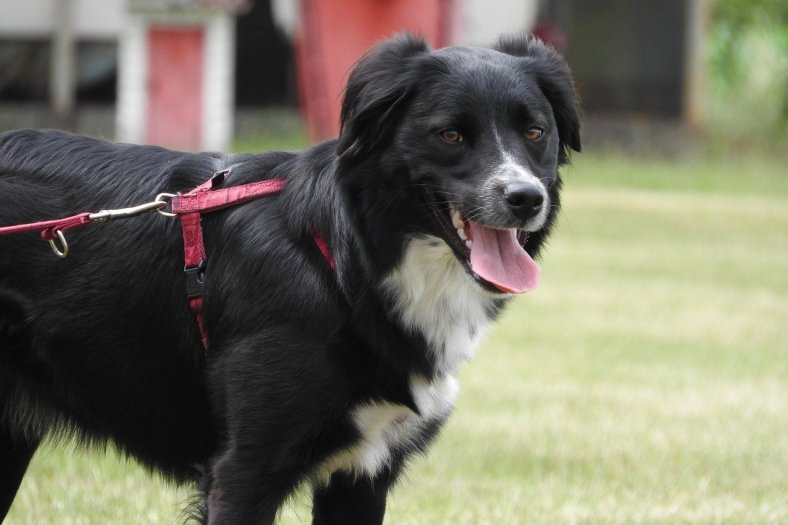
Talk with your dog before a walk

Happy dog going for a walk
Communicate with your dog about the behavior you want on walks. (Image by MAKY_OREL from Pixabay)

Dog walks and dog park visits get more frequent and fun in spring, and now we are getting out with fewer COVID restrictions. Yet frustration still seems to flare up everywhere, including over dog (and owner) behavior in public spaces. 

Here are a few ways you can get the season — and each walk — off on the right foot with some simple animal communication techniques.

Before you grab the leash or even spell the W word, calmly sit or stand with your dog. In your mind, picture what the two of you are going to do — putting on the leash/halter, going to the dog park, walking down the sidewalk in your neighborhood — and how you expect her to behave. 

You can tell her in words, too, but say and picture what you DO want (keeping her attention on you, for example) instead of any behavior you don’t want. You’d be surprised at how readily all of this can be understood by an animal … especially if it’s consistent. 

Keep checking in with your dog during your walk or dog park visit, holding these same images of what you DO want in mind as you enjoy your time together outdoors. Keep your phone in your pocket unless there’s an urgent reason not to. This outing may be a tiny or obligatory part of your day, but it means the world to your dog. 

To keep yourself, your dog, and others safe, check out these good-citizen tips. You probably know the basics: Carry bags and pick up your dog’s poop. Keep him leashed and close to you (with a trainer-approved leash, not a retractable one). Prevent him from injuring himself, other animals, or people. 

If you do experience problems, even and especially if someone else brings them to your attention, please don’t hesitate to work with a trainer. There’s no shame or judgment, only a desire to improve the quality of life for your dog, you, and anyone you may encounter. A good trainer can help you work wonders, especially if you get a referral from someone you trust. It’s really never too late, in your dog’s life or yours, to develop better habits. 

I’m happy to help, too! Both Reiki and animal communication can be very useful in resolving behavioral issues, easing transitions, and giving animals and their people a “reset” during stressful times.

Use caution first with essential oils

Image by Charlotte Govaert from Pixabay 

When a journalist friend shared a Snopes Fact Check piece about essential oils being poisonous to pets, I took notice.

Snopes is generally good at sifting out scams and misinformation, and I already knew cats are much more sensitive than other animals to essential oils. Its rating: True. When used the wrong way or in the wrong concentration or amount, even diffused, essential oils can be toxic.

I would never suggest a client use essential oils with any animal without first seeking reliable guidance on which oils to use, how, and with what species. First, I’m not a veterinary professional. Second, there are too many variables — species, the individual animal, the condition being treated, oil quality, and use. The following is intended only as a starting point should you want to learn more about essential oil use for animals.

A veteran physical therapist and dog parent told me about animalEO, a line of essential oils and blends developed by holistic veterinarian Dr. Melissa Shelton. Her website is packed with information and instructions, and there is a very active animalEO Facebook group hosted by Dr. Shelton herself. (Good luck keeping up with the high volume of posts.) Also see her response to the viral post that led to the Snopes piece.

I’ve used a few of these blends with my own animals, mostly for diffusion and at low concentrations. The whole household benefits from a little aromatherapy. Moreover, it gives me confidence to know that the products were created for animals by an experienced veterinarian. (I receive no compensation from animalEO.)

Speaking of oil: CBD oil and other cannabinoid products for animals merit even more caution. There is very little data on their use, and your veterinarian may be restricted from even discussing it. 

Finding reliable pet health information in a sea of social media and commercial sites can be challenging. Here are some guidelines I use, both as a journalist and an animal wellness practitioner. 

If you are interested in using essential oils — either for yourself or the animals you love — there is no harm in going to animalEO to learn before you buy. Then here are my recommendations:

  1. Don’t be tempted by cheaper, lower-quality oils, or blends not formulated for animals. 
  2. Take what you learn (from whatever or whomever) and run it by your veterinarian.
  3. If you do use essential oils for or around animals, use as directed. When in doubt, use less rather than more.
  4. Observe your animal carefully. If you remotely suspect any adverse effects from the oil — stop use and contact your vet.

Remember that “natural” isn’t necessarily beneficial. As always, be mindful, not fearful.

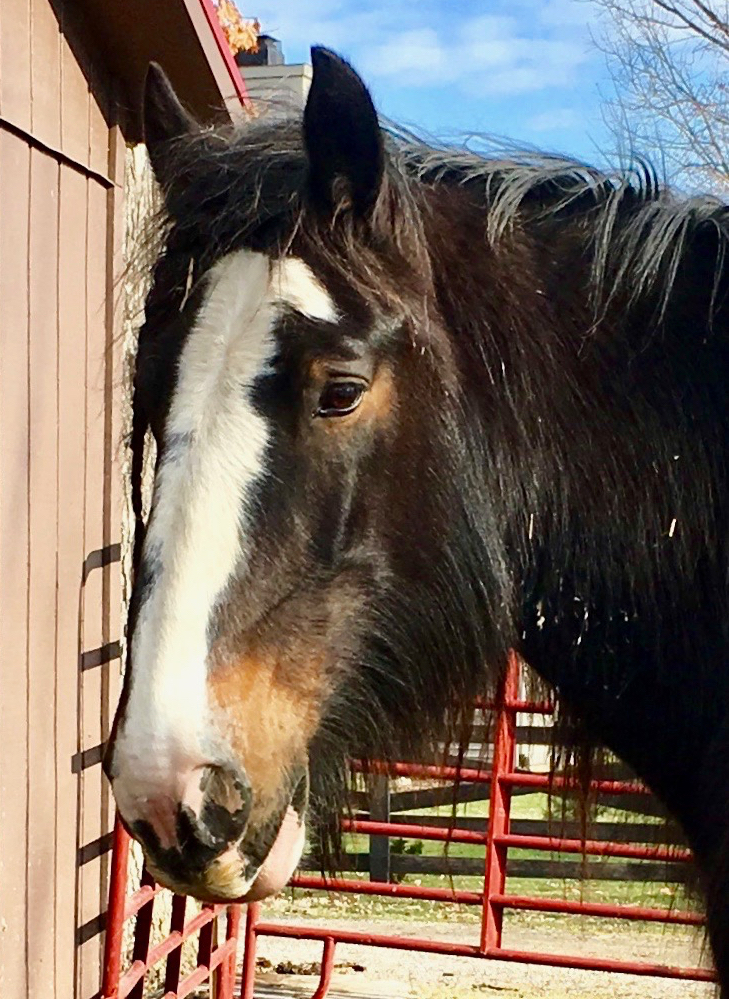
Letting animals choose lets them be their best

Draft horse after Let Animals Lead Reiki session
(Photo by Nancy Crowe)

The massive draft horse was one of the saddest, checked-out animals I have met. He’d spent years on at least one Amish farm, was isolated and probably abused, and had given up. His new owner, the director of a nonprofit equine therapy center, wanted to find out what he needed.

The first thing I did was ask if it was OK to communicate with him. Surprised but skeptical, he agreed. The notion that he could choose anything was foreign to him.

Within a week or so, he told me what he wished to be called: Duke.

When I offered to share Reiki with Duke, I made it clear that opting out was absolutely fine. As we worked together during those first months, sometimes it was a yes and sometimes a no. How long the session lasted was also up to him.

That is the core of the Let Animals Lead method I practice. It’s all meditation and no hands unless the animal initiates contact, or the practitioner knows the animal well enough to gauge whether that would be welcome.

One day Duke decided he’d had enough Reiki and walked back into the barn. I thanked him and moved on to a pig a few feet away.

A few minutes later, Duke stuck his big head out the barn door and looked straight at me. “Got any more of that?” I heard.

I assured him I did, but he’d have to wait until the pig and I were done. When I returned, he was waiting at the fence. I met his eyes and saw hope.

His owner, veterinarians, equine bodyworkers, clients, and I all worked to help Duke heal from the effects of his past, giving him choices whenever possible. He still struggles mightily with triggers. But he has friends in the herd. He connects with veterans who also live with PTSD. He even let kids dress him up for the Fourth of July. Being a therapy horse would have been unthinkable for Duke not so long ago.

While we can’t let our animals choose to play in traffic or opt out of a vet visit, there are many other options we can offer. We can give them a choice of toys, blankets, or litter boxes. We can hold out two different treats and see which gets gobbled up first. We can let cats come to us rather than chasing or picking them up. We can suggest a walk or ride and pay attention to the dog’s body language for a “let’s go” or a “not today.”

Choice frees us all to engage honestly, be our best selves, and create our “better than before.”