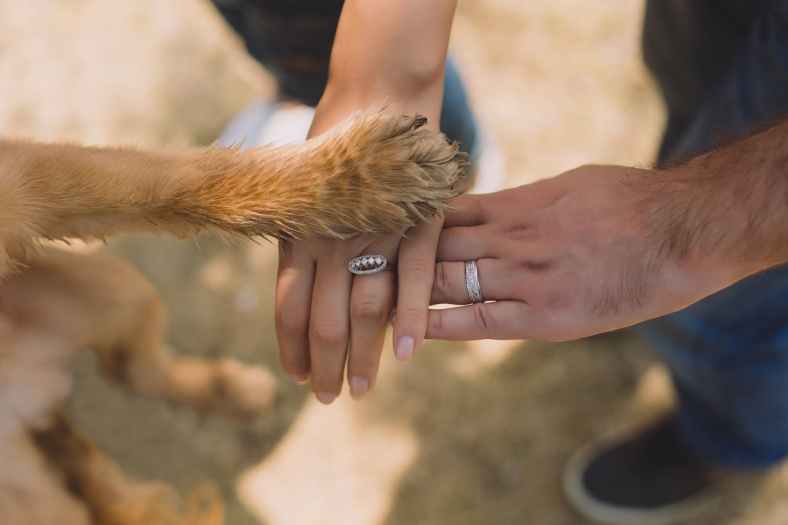
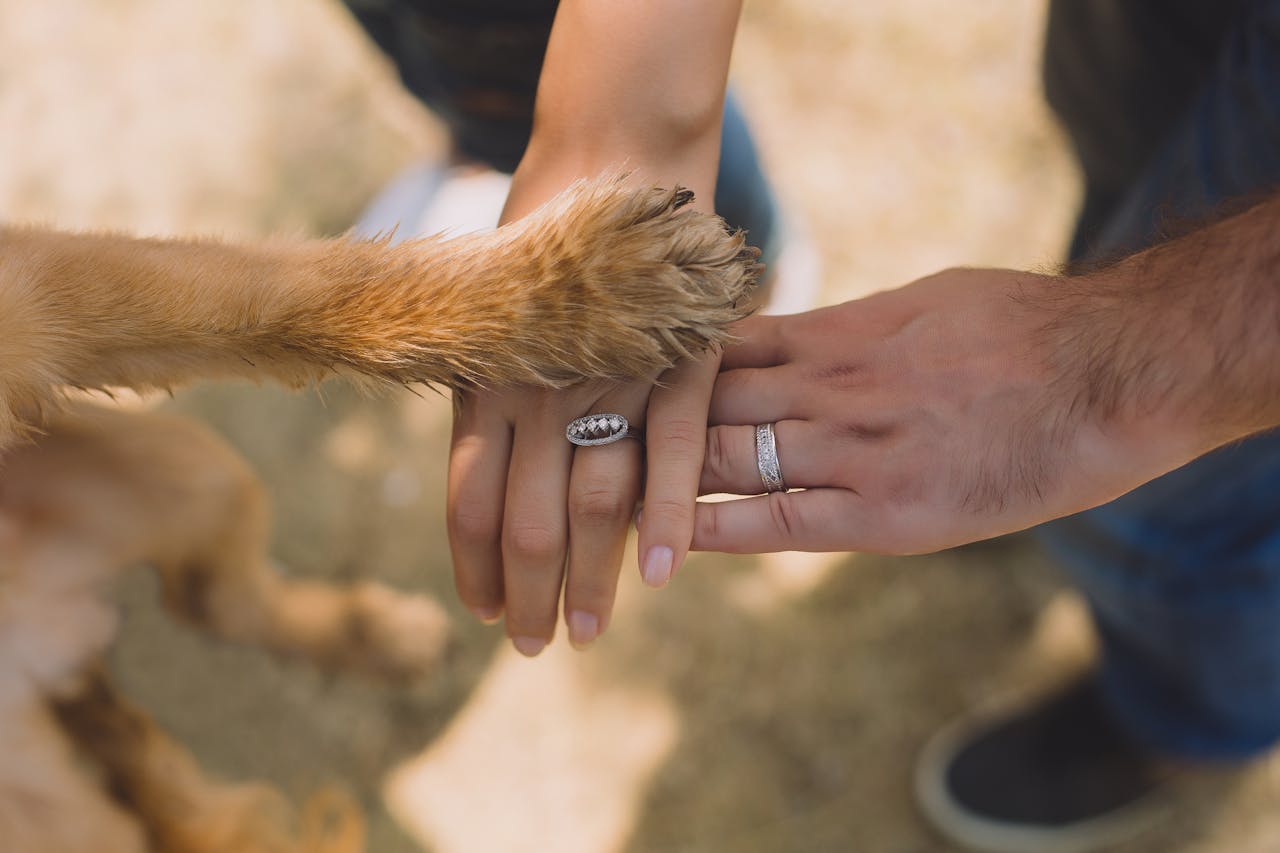
The American Holistic Veterinary Medical Association has published a blinded, placebo-controlled, randomized clinical study on how distant Reiki affects the quality of life and well-being in dogs. Reiki, as you may know, is a Japanese stress relief modality. I practice a specialized, meditation-based form of Reiki called Let Animals Lead.®
All dogs in the Reiki group (vs. the placebo group) showed owner-assessed pain improvement, with 70.6 percent showing an “excellent” or “moderate” improvement. Here’s the abstract with link to the full article by Claudia Ruga Barbieri, DVM, MS, MBA.
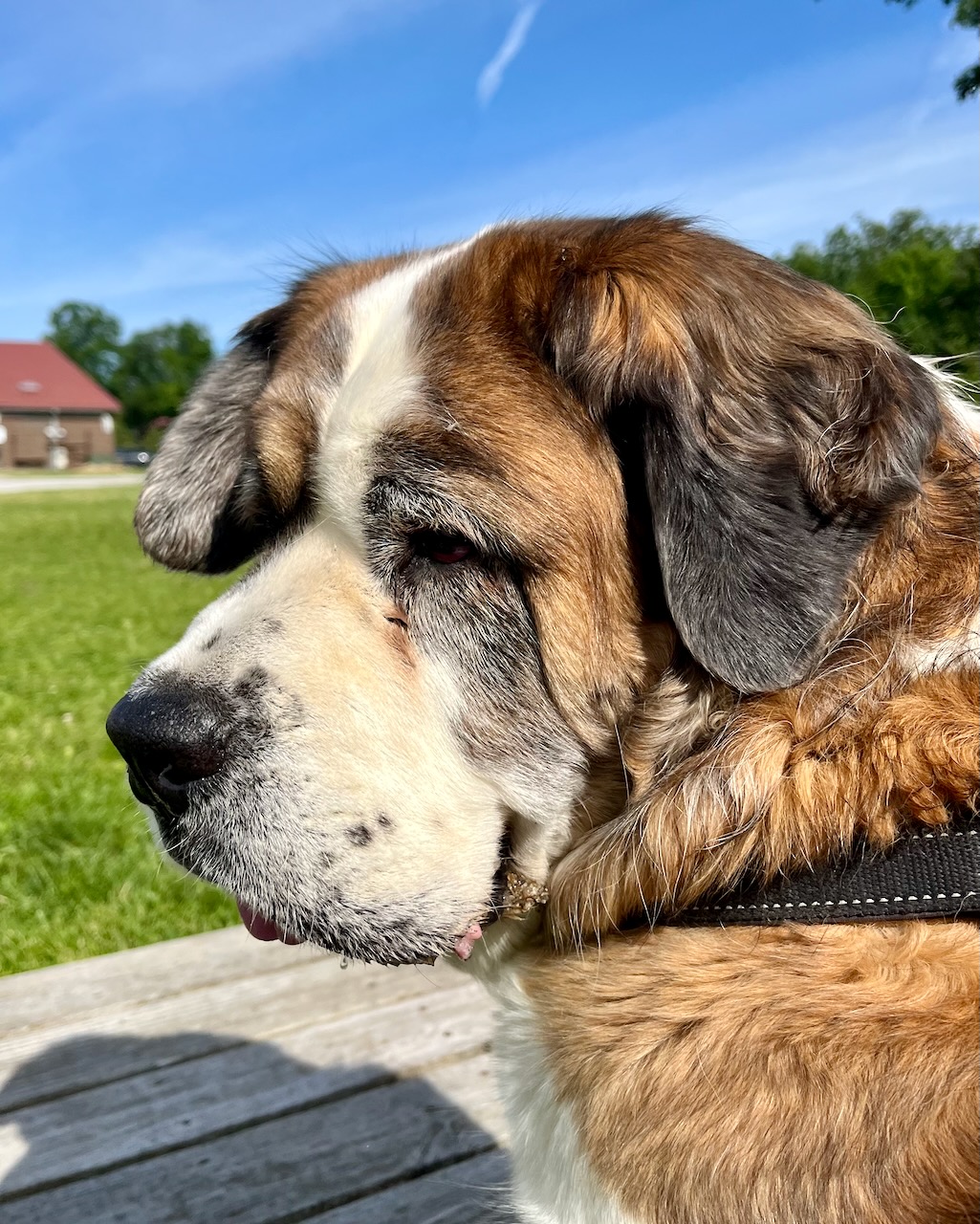
Bernadette, left, and Jack both dealt with pain of various sorts and not only benefited from Reiki but taught me a great deal as well. Being leaned or sat on by a St. Bernard, especially in the sunshine, is a great reminder about staying present on the animal’s terms. Jack would let me throw the ball (even though I throw badly) several times before he stopped for a meditation session.
They’re on my mind more lately because two years ago this month, they died in a plane crash with their beloved humans, Allison Wheaton and Randy Strebig. May their memory be a blessing, and may we all continue to learn about healing.
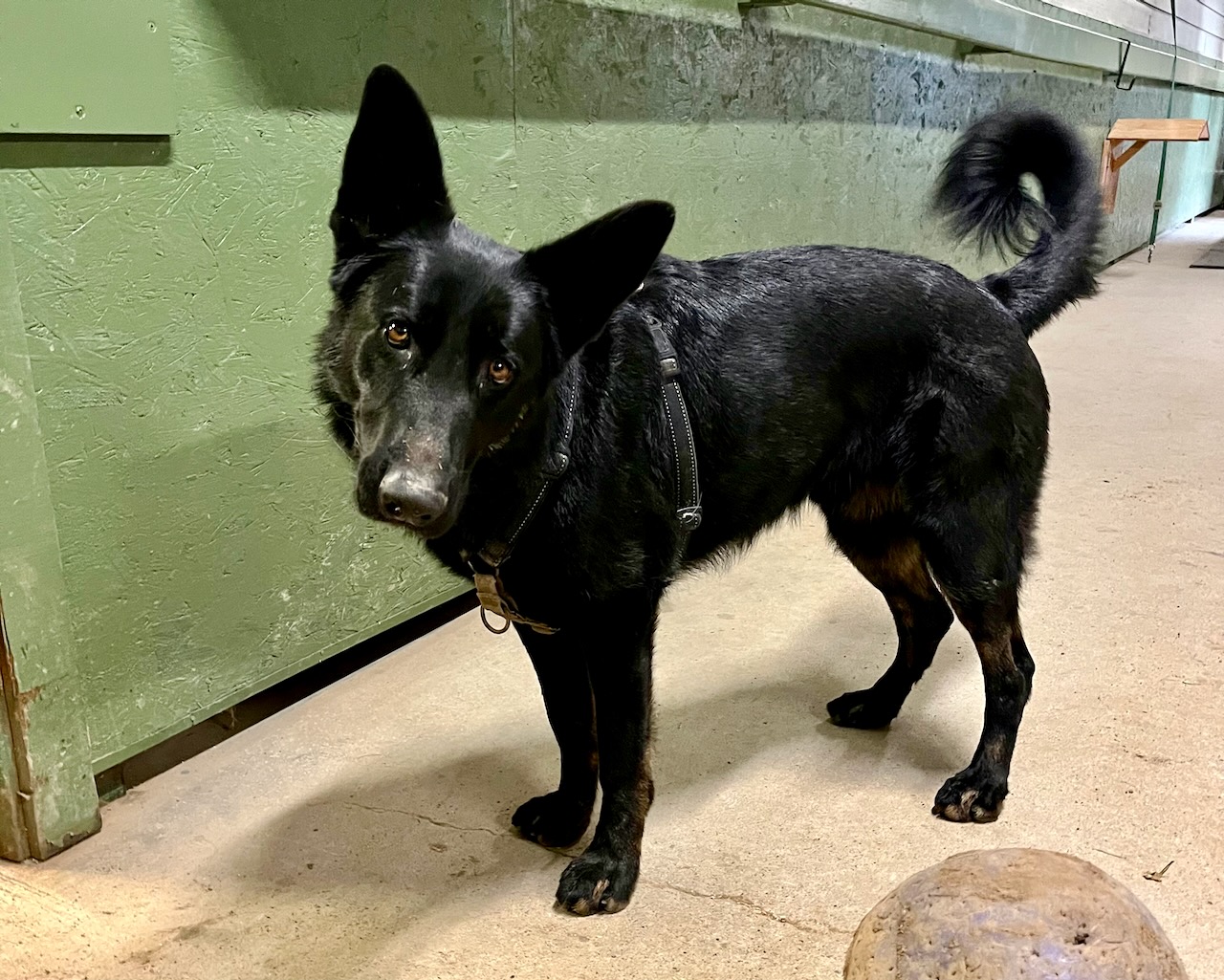
I put the tablet in Molly’s food every day, and every day she scarfed it all down, no questions asked. When I found one of the pills stuck under her water dish, I had questions. No answers were forthcoming — just the face you see in the photo — so from that day on the pill got smeared with a bit of her wet food and deposited directly into her mouth. Fortunately, she was OK with that.
Medicating our animal friends requires shifting strategies; if one stops working, we have to be ready with another. Back when heartworm preventive pills had to be given every day, I rotated among braunschweiger, hot dogs and cream cheese to hide them in. As soon as Pepper the schnauzer deftly worked the pill loose and dropped it onto the floor, shooting me a “do you think I was born yesterday?” look, it was time for a new enticement.
Wirecutter recently reviewed pet-pilling techniques and products, which inspired us to try the Tomlyn paste with for our smart senior cat’s medication. It’s early days, but so far it’s working more consistently than putting it in her wet food.
Just as important as the method or vehicle, if not more so, is our mindset. You may have to give a medication topically, or perhaps putting it in food doesn’t work and you have to make a kitty burrito (wrapping the cat in a towel with just the head sticking out, gently opening her mouth and inserting the pill or squirting in a liquid with a syringe). If you approach the task like a hunter, a wrestler, or with a dread-laced dusting of baby talk, it confirms to the animal that this must indeed be a bad thing. They will feel/behave accordingly.
If, on the other hand, you take the attitude of: It’s time for your medication, no big deal, we’ve got this — you’ll get better results AND have a much better relationship with your beloved animal. (I would be remiss if I did not add that their time on earth is too short for us not to make the most of every moment, even the uncomfortable ones.)
I had a client who was quite nervous about giving her young cat injections every day. In a communication session, the cat asked me to encourage her to be more confident and he would be, too. I passed this along, and a little more tutoring from the vet tech got them both on the road to recovery.
Here’s more on medicating your pet (with liquids as well as pills) from Fear Free Happy Homes, and on other tough tasks (vet visits, nail trims, etc.) from me.
As the lead vet at a last-stop California animal shelter, Dr. Kwane Stewart dealt with waves of intakes and discouragement. It got to him.
That’s not uncommon among people who work with animals: You go in knowing you can’t save them all (though of course you want to). Then human stuff piles up … irresponsible pet ownership, abuse, neglect, bureaucracy, you name it — and you wonder if you can do anything at all.
Stewart began to stop and talk with the area’s homeless people who had pets, offering his services pro bono. Despite the initial mistrust — how did they know he wasn’t going to take their dogs or cats away? — he found renewed purpose. He details this journey in What it Takes to Save a Life: A Veterinarian’s Quest for Healing and Hope.
“Homeless people are loving, dedicated pet owners — which I hadn’t thought the case before I started my work,” he writes.
Another surprise was how well behaved the dogs were. In clinics, he’d seen his share of out-of-hand dogs whose humans insisted they had no time to train them. The dogs of the homeless did not pull at their leashes, bark or growl when Stewart approached, nor did they attack other dogs. These owners had nothing but time. They and their canine companions could read each other perfectly.
Stewart has also been inspired by those who weren’t homeless, but still pretty beaten down by the circumstances of their lives. One of these was Richard, a Vietnam veteran who lived in a trailer with his wife and several rescued animals. When Richard’s dog Courtney, a Corgi-hound mix, required a $3,000 surgery for bladder stones. Richard quickly agreed. Stewart asked if he was sure.
“Do what you’ve got to do. Period. … Courtney’s a member of the family. I ain’t rich now but I’ve been poor and I can and will be poor again if that’s what it takes. … That’s just something that when you become a responsible pet owner, that’s what you’ve got to do.”
Stewart put some info about Richard and Courtney on a GoFundMe page. He was stunned when $17,000 came in within a week. In what he calls one of his favorite details of all time, one of the donors was another pet owner he’d helped.
Another great detail: Stewart also works on TV and movie sets, making sure animal actors are safe and well. He overheard Brad Pitt bragging about how sweet, loyal and intuitive his own dog was. “If I closed my eyes, I could have been on Skid Row, listening to someone on the streets talking about what their dog meant to them.”
There is, of course, much more to this memoir. Stewart’s own history includes being bullied as a child, getting into fights well into adulthood, mental illness, a broken marriage, finding joy in fatherhood and navigating vet med as a Black man.
Stewart now leads the Project Street Vet nonprofit, which currently has teams in California, Florida and Atlanta.