When the enormity of a problem makes you want to shrug your shoulders and turn away, that’s the time to break that problem down — into a million oddball pieces if necessary — and find something, however small it may seem, that you can do. Sometimes it’s right in your back yard.
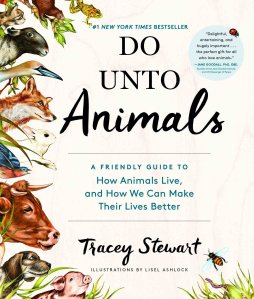
Tracey Stewart’s book, Do Unto Animals: A Friendly Guide to How Animals Live, and How We Can Make Their Lives Better, does this with the savvy of a an animal advocate and former vet tech and with mom-next-door authenticity. The book also does it with Lisel Ashlock’s breathtaking illustrations, some of them simply capturing the natural world and others showing how pigs express sadness, how cats may react to catnip (“whoa, dude!”), and more.
Within these colorful pages, you’ll find everything from practical animal care tips (“Five Ways to Make a Cat Happy”) to recipes for homemade dog biscuits and horse cookies to hard-to-take information about puppy mills and factory farms. At no point in the reading of this book did I find the shaming, blaming, or manipulating that can seep into the most well-meaning literature that aims to benefit animals or the environment as a whole. Parents will find this book especially useful, as there are several activities (such as the “Hurtless Hunt”) families can do together.
So the next time you read or hear something that leaves you feeling overwhelmed with sadness and/or that nothing you can do could possibly help — first of all: Breathe. Then open this book.
Monty Roberts, known for his nonviolent horse training methods, received the MVO (Member of the Royal Victorian Order) distinction from Queen Elizabeth II. (Photo courtesy Flag is Up Farms)
I love seeing the connections between my work and that of others in the horse world — in this case, trainer Monty Roberts.
Listening to horses (in their language) and building their trust propelled the career of this “California cowboy” and earned the trust of the late Queen Elizabeth II. After listening to Roberts’ Horsemanship Radio podcast for some time, I decided to read his 1996 autobiography, The Man Who Listens to Horses. Though I am not a horse handler, his Join Up® method of starting horses struck a familiar note. I wanted to know more.
Roberts, born in 1935, described a childhood of hard work and harder knocks. His father used traditional and often brutal methods to break horses in body and in spirit. Despite or perhaps because of this, young Monty figured out early that kindness and giving the horse a choice yielded better results.
His father and other horsemen called his methods foolish and dangerous, Roberts recalled. Dad drove home the point with abuse, prompting the younger Roberts to keep quiet about nonviolent horse training until he was out from under his father’s roof.
Word about Roberts’ work eventually got out. In particular, it got into a horse magazine read by Queen Elizabeth II, who invited Roberts to England to demonstrate Join-Up®. The trip was a game changer, not only for Roberts and the monarch who would become a friend, but for a growing number of horses around the world.
Join-Up® uses the natural language of the flight animal to gain the horse’s trust. The aim is for the horse to accept — by his own choice, never force — saddle, bridle and rider.
To my mind, this puts Join-Up® in the same family as Kathleen Prasad’s Let Animals Lead® meditation method, which I practice. It’s all about animal agency. Ditto for Fear Free, in which I’m also certified, which teaches techniques trainers, veterinarians, shelter workers, groomers and pet owners can use to reduce animals’ fear, anxiety and stress.
Likewise, though the book describes Roberts as a real-life horse whisperer, he claims no mystical ability. I agree that communicating with animals isn’t some mysterious mystical thing or the human telling the horse what to do so that the horse understands and complies. It’s about learning how horses experience the world, listening without expectation and respecting the inherent worth of another being.
So many descriptions of horse work in this book, including the step by step Join-Up® guide in the appendix, left me wanting a visual — so here’s a video of Roberts demonstrating with a young horse. Roberts explains what he and the horse are doing at every turn, though the image quality isn’t the best.
Also check out this one of Roberts and British actor Martin Clunes (“Doc Martin”) working with one of Clunes’ beloved Clydesdales.
A few parts of the book about Roberts’ business dealings read like something out of film noir. The depiction of his police officer father killing a black suspect, which he admits family members asked him not to include, is very difficult to read. The introduction and afterword, both by author Lawrence Scanlan, could have been pruned too.
I also found myself wondering why nonviolent horse training (or nonviolent interaction in general), was such a hard sell … but obviously, it was and in many arenas still is.
Whatever your background or philosophy, if you have or work with horses in any capacity, learning more about Monty Roberts’ method is worthwhile.
When Fred Rogers was about halfway through his studies at Pittsburgh Theological Seminary, the faculty asked him what sort of ministry he envisioned. Rogers, who was already doing children’s television work, said he hoped to make that a ministry.
“Nothing like that had ever been fashioned from Presbyterian fabric,” relates Maxwell King in The Good Neighbor: The Life and Work of Fred Rogers (Abrams Press, 2018), “and Fred’s teachers were somewhat at a loss to guide him.”
Fortunately, one of them suggested Rogers also study child development with Dr. Margaret McFarland at Pittsburgh’s Arsenal Family & Children’s Center, which he did. He and McFarland would work together for the rest of their lives. Rogers also took graduate-level child development courses at the University of Pittsburgh.
But Pittsburgh Presbytery’s elders felt Rogers should become an assistant pastor, then senior pastor of a church, and stand up in a black robe and preach on Sundays. They refused to ordain him.
A friend from seminary, the Rev. Bill Barker, risked his own position to advocate for Rogers’ non-traditional ministry. Rogers’ television audience — kids from about 2 to 8 — was a congregation of thousands if not millions, he said at a presbytery meeting. “‘And this is a man who has been authentically called by the Lord as much as any of you guys sitting out there,'” Barker recalled telling those gathered.
The elders somewhat reluctantly relented, and Rogers was ordained in 1963.
A few years later, Mister Rogers’ Neighborhood popped up on the television landscape. The show contained no Bible verses, prayers, or mention of God. It was just this quiet, sensitive guy and his neighborhood of people, puppets, and stories. Yet the core messages of kindness, courage, and respect for self and others could not have been clearer.
As a young child, I watched “Mister Rogers’ Neighborhood” when it first aired (in black and white) on a bulky Magnavox that was more furniture than appliance. His approach spoke to a kid who didn’t like a lot of noise and flash, but appreciated a reasoned, encouraging word. The fact that Mister Rogers was also a Presbyterian minister didn’t really surprise me. I figured he was where God wanted him to be. Rogers just had that vibe of someone who pointed the way to a bigger, better reality.
There are many more layers to this comprehensive biography by King, a journalist and now CEO of the Pittsburgh Foundation. What struck me was the way Rogers, with God and the people who entered his orbit, co-created a ministry. And he did so despite the church not knowing quite what to do with him.
Rogers probably would have continued with his television ministry with or without the presbytery’s endorsement via ordination. The fact that he persisted, a friend backed him up, and the church body changed its position testifies to our ability to learn even when we don’t especially want to.
Answering a call to serve God doesn’t always take the form we expect, and sometimes the best career move is to drop our expectations and listen.

 When the enormity of a problem makes you want to shrug your shoulders and turn away, that’s the time to break that problem down — into a million oddball pieces if necessary — and find something, however small it may seem, that you can do. Sometimes it’s right in your back yard.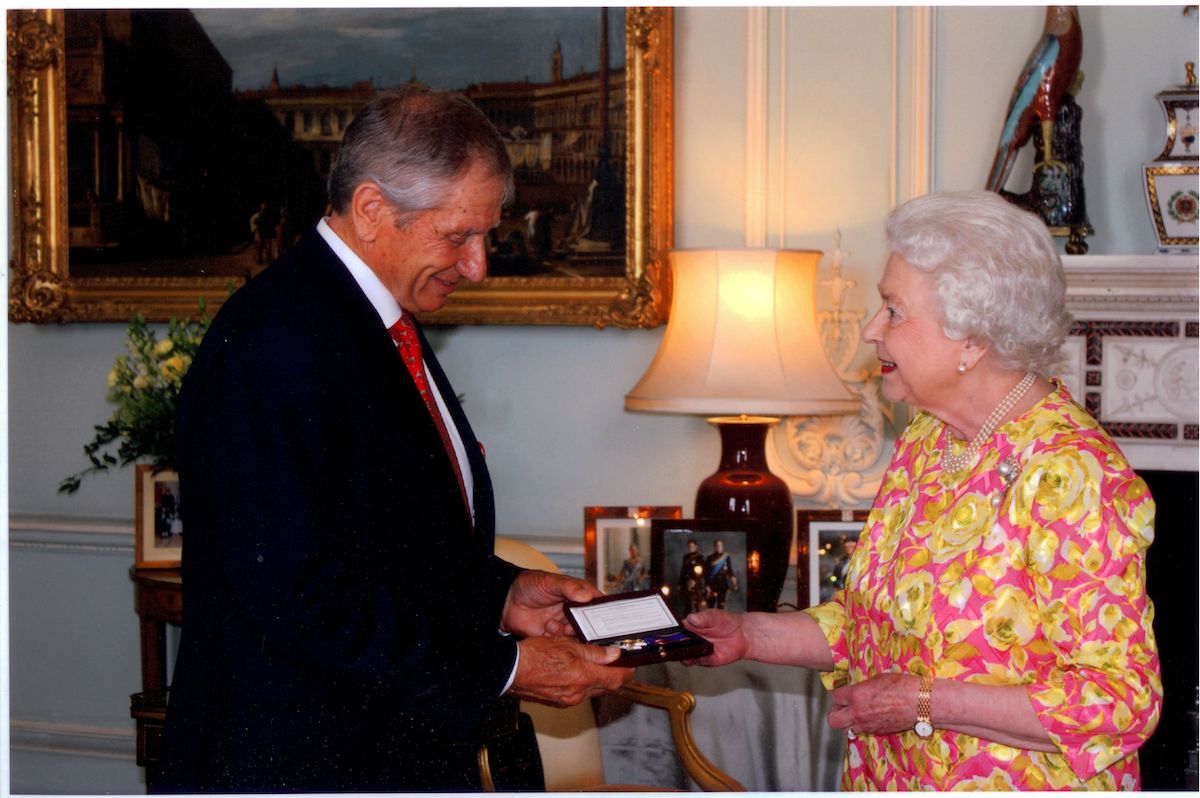
 When Fred Rogers was about halfway through his studies at
  All Creatures