Negotiating with squirrels yields nuttin’

Can an animal communicator persuade squirrels to cease and desist garden destruction? So far, I cannot.

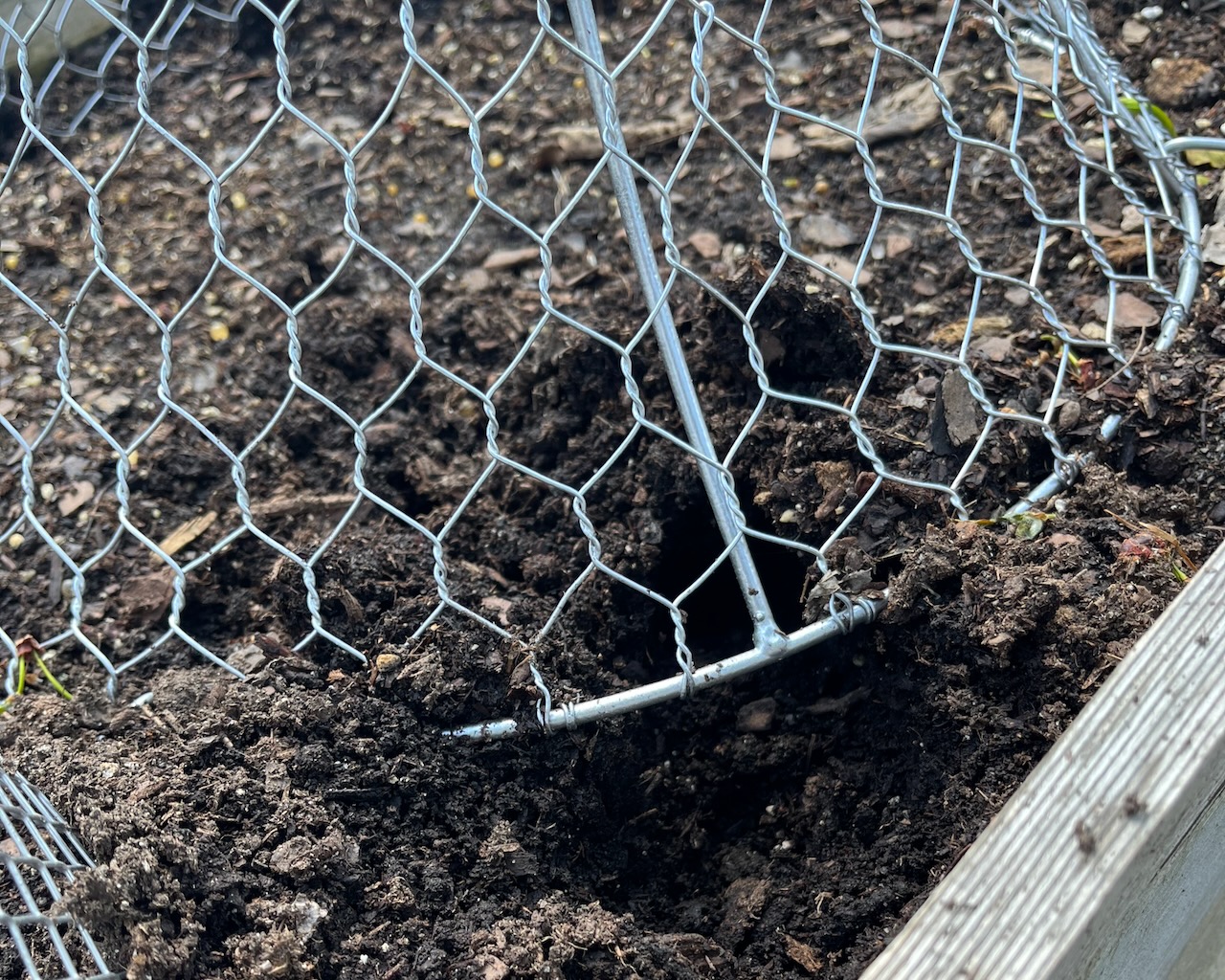
The squirrels have 80-90 percent of our backyard sanctuary at their disposal. They have places to hide from predators, a regularly refilled water dish, a steady supply of peanuts and ample room to bury their nuts. Yet they persist in digging holes in my garden beds … even burrowing under the chicken wire cloches anchored there specifically to thwart them.

“Guys, please leave these alone,” I asked them calmly, picturing and pointing to the raised beds and containers in the corner. Then I did the same with the rest of the yard: “The rest of this abundant and suitable space is fair game. I’ll share the carrots and sweet potatoes if you let them grow.”

No deal.

Part of it is that wild animals do not have the same stake in communicating and working with us humans as their domestic counterparts. Their instinct to dig, devour and bury will override any benefit they might see in cooperating with a two-legged gardener. Sure I could threaten to cut off their benefits, put out poison or set traps if they keep disturbing the beds, but I would never follow through.

So I toss out the peanuts well away from the vegetable beds, say “bon appetit” and add “you blasted bushy-tailed vandals” under my breath.

And I continue to work on humane exclusion and deterrent methods, knowing I’m in their back yard just as much they’re in mine.
African violet victories

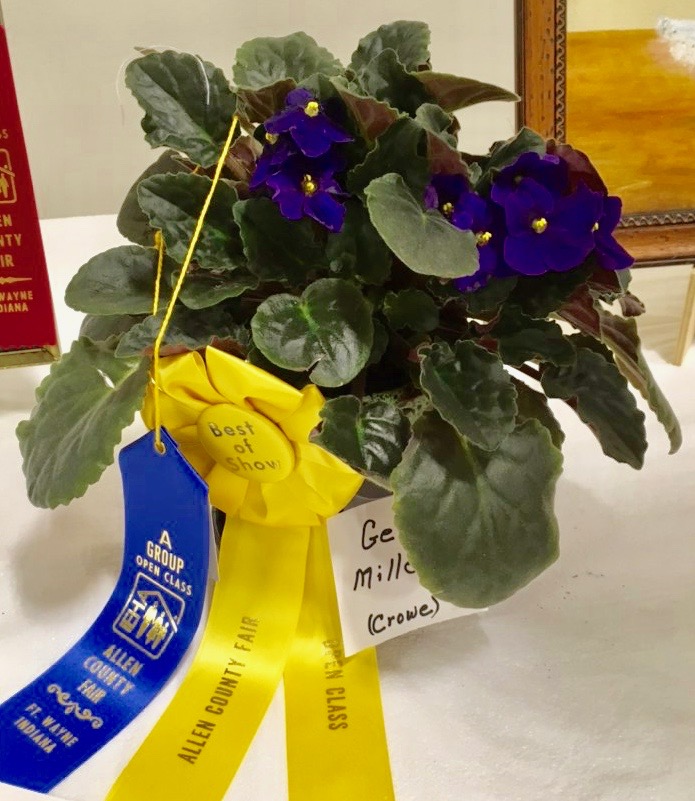
Geri's AV with ribbons at fair

I grew this African violet from a leaf cutting three years ago as part of an anxiety-inducing repotting operation. 

There was a time when I avoided even looking at the African violets I passed in grocery and home improvement stores. Experience told me I did not have whatever knack, touch, or mojo was required to care for them. Enough heartbreak, I vowed.

Then my dear spouse Kathy presented me with an absolutely beautiful African violet from McNamara Florist (location formerly known as Sand Point), one of my favorite nurseries here in Fort Wayne. It thrived for two years. I was amazed.

Then I noticed it was looking a bit gangly and the lower leaves were drooping. The need to repot was a sign of success … but it was also another opportunity to screw up.

I consulted fellow Master Gardeners. I studied the African Violet Society of America‘s website. Then I gathered my courage, tools, and potting medium, and performed the transplant.

After some transitory drooping, the patient pulled through like a champ and bloomed again. I hadn’t killed it! What’s more, a few of the cuttings I’d rooted from the leaves removed from the parent plant became brand new little African violet plants.

I gave some of the offspring as gifts, letting my intuition tell me which plant needed to go to what person. Or you might say I let the plants tell me.

The baby African violet that went to my friend Geri knew what it was doing. Under her care, it grew many more lush green leaves, bloomed abundantly, and needed a new pot after about a year. Just like its mum, it took the transplant well.

Summer arrived, and Kathy suggested Geri and I enter our brilliant young charge in the Allen County 4-H Fair. Geri and I are city girls. 4-H and county fairs have not been part of our experience, by and large. But what the heck, we figured. Geri filled out the form and entered the African violet in the adult House Plants: Propagated Potted Plant category.

The plant won Best of Show.

So if you think you don’t have African violet mojo, try the following:

  1. Get a plant from a good source, such as a reputable local nursery.
  2. Water weekly with a weak African violet fertilizer solution (weekly, weakly).
  3. Repot when needed, and don’t panic if it droops afterward. Give it time to recover.
  4. Consult sources such as the AVSA or your local Master Gardeners for information and support.

You just never know what you can accomplish with smart sourcing, well-researched information, and a little help from your friends.