Oscar the ambassador

Oscar Tennessee Aquarium 05.18

Oscar, a green sea turtle, gets around at the Tennessee Aquarium. (Photo by Nancy Crowe)

I first met Oscar in 2007. The green sea turtle at the Tennessee Aquarium was missing his right rear flipper and a good part of his left rear flipper. A boat propeller had cut through his shell. Like many turtles who survive trauma, he’d developed buoyancy problems and bobbed, bottom up, like a cork in the big multi-species tank that was now his home.

Florida’s Marine Science Center had treated him initially. Covered with green hair algae, he looked just like Oscar the Grouch from “Sesame Street” — hence the name. When it was determined he could not be released back into the wild, he came to live at the Tennessee Aquarium in 2005. He was then about the size of a dinner plate.

By the time I saw Oscar, he was about the size of a saucer sled. Clearly, he was growing and had found a home where he would be protected and cared for … but still, I thought. How sad.

It is sad when animals suffer, especially at the hands (or boat propellers) of humans, and when our actions result in species becoming threatened or endangered. We should feel sad and angry about all of this.

But it’s so, so tempting to get stuck in the awfulness, which is probably what I did upon first hearing Oscar’s story. I remember my thoughts veering off to the pain he must have experienced, the terror when he was picked up and brought to the marine hospital … and could I ever, in good conscience, ride in a motorboat again? Was there such a thing as turtle-safe boating? Shouldn’t there be a law about that? And on and on.

I was new to animal communication at that point, which is to say I was still pretty cautious about trusting the intuitive information I was getting. My experience as a journalist had taught me to listen with my ears and mind. Communicating with animals requires listening first with the heart and then using a calm, clear mind to translate. However, the voice of this sea turtle was unmistakable.

“Are you kidding me? I’m the luckiest guy in the world. How many other sea turtles get to do this?”

Well, I didn’t have an answer for that, so I just stood for a few minutes and watched Oscar cut through the water with his front flippers and partially wedge himself under a rock to keep him from bobbing back up when he wanted to sit a spell. His joy — at having another shot at life, at being in a place where he was loved and cared for, at figuring out how to get around and stay put, and at showing people of all ages and walks of life what is possible after things go seriously, horribly wrong — was palpable. It carried through the water, glass, and crowd, and wrapped itself around me. I thanked Oscar for clarifying what it meant to be him.

My animal Reiki teacher, Kathleen Prasad, would echo this lesson years later during our training at an animal sanctuary. She taught us to both consider and look beyond the exteriors of what has happened to an animal to see the bright, beautiful light that animal essentially is. All of us, humans and animals, are not our wounds. We are not our histories. They are part of us, but we are so much more. Honoring this in ourselves and others helps us all heal and get around a bit more gently in the world.

I must add here that Kathleen is not in favor of zoos and aquariums. Though I agree with much of what she says, I’ve seen too many good things happen to and for animals at places like the Tennessee Aquarium and other accredited and/or mission-based facilities to write them all off. That’s my current thinking, anyway.

When we allow ourselves to move from the awfulness into seeing who an individual such as Oscar actually is and what he can do for the thousands of people who visit the aquarium, we can much more clearly see the next right action. Then we have a fighting chance at solving the cause of the awfulness. People who meet Oscar might be inclined to use less plastic to protect turtles from the waste, support wildlife conservation efforts with their time and finances, volunteer at a wildlife rehabilitation hospital, see their own injuries and limitations in a new way, or simply smile at his upside-down pluckiness. Any of these and more can have wonderful ripple effects for us and our world.

I visited Oscar this spring, and he is now at least as big as a saucer sled. He hangs out in his favorite spots among the rocks and plants, and as Emily Dickinson put it, dwells in possibility. He assured me he has plenty of work to do.

How a Reiki session works

img_0717

The first lesson of animal Reiki? The animal is always at least one step ahead … and that’s OK.

If you are considering Reiki to support a beloved animal’s well-being, it may help to know more about what actually happens during a typical session.

Getting there

For in-person appointments in the Fort Wayne, Indiana area, which last about an hour, I come to your home, barn, or clinic. When I arrive, we can get acquainted and talk about whatever concerns you may have. Then I’ll find a comfortable place to sit or stand near the animal. After I say a silent prayer and gain the animal’s permission to share energy, I will enter a peaceful, meditative state. The animal is free to lie still, stand, move around, eat, get a drink of water, go out for a pit stop, etc. The Reiki energy — the life force that animates all living things — will go right to work, wherever it is needed, regardless.

Why it works

It works for two reasons. First, the energy comes not from me but from a higher power: God, the Universe, All That Is. There are many names. I’m the conduit, not the source. Reiki is a stress relief and relaxation modality and not affiliated with any particular religious tradition, but at the same time, it is based on the notion that the energy comes from a safe, loving place where all living beings are connected.

Second, I am sharing the energy with the animals rather than doing something to them. During a session, cats or dogs will often come closer, curl up next to me, or settle in my lap, but they sometimes prefer to be a few feet away or even leave the room. That’s OK; I won’t chase after them. However they want to participate in a Reiki session, or not, is up to them. It’s really not the same model of the Reiki client lying on the table and the practitioner moving around him or her using the hand positions.

That’s why it works. More often than not, we don’t know how, and that can be hard to get our heads around. I’m a skeptical journalist who never expected to be doing anything like this, and I wouldn’t keep doing it if I didn’t see the benefits.

A peaceful presence

An animal Reiki session is not about fixing the animal or getting rid of what’s wrong. Reiki, which never harms, is about creating and sharing a peaceful space that promotes whatever healing needs to happen. The animals often have a better sense of that than we do, which is all the more reason to let them lead.

You and any other humans or animals present are welcome to participate and may also benefit from the session, but I generally keep conversation to a minimum during the meditation. After about 30 minutes, I will gently bring the meditation to a close and we can talk about any feelings, questions, or impressions that arose. I may share intuitive information I received during the session that might be helpful to you, but I am not a medical professional and do not diagnose. Most animals (and humans) feel relaxed and rejuvenated after a Reiki session.

We can then discuss and/or make an appointment for further treatment. The benefits of Reiki are cumulative and it helps the animal to get to know me over multiple visits, so I generally recommend a series of three sessions over 10 days to three weeks, depending on the animal’s circumstances and needs. Then I’ll be on my way, and you are encouraged to call or email me with any questions or concerns.

Animal Reiki and animal communication

Animal Reiki may involve communication, and I often send distant Reiki energy as part of an animal communication session. However, a Reiki session is a time of meditation and quiet healing, and an animal communication session is about gathering information and insight. So, while there is some overlap between the two, the objectives are different enough that I handle them separately. Please see my animal communication page for more information.

Animal Wise: Fit for a queen

KYywIyP-asset-mezzanine-16x9-euoHPiY.jpg.fit.344x192

For a delightful tribute to Dash (and Tori, who plays him), visit the New Hampshire PBS site. (Photo courtesy New Hampshire PBS)

If you are a fan of the “Victoria” series and have not seen Season 2, Episodes 3 and 4, you may want to stop reading here. Even if you have seen it, it wouldn’t hurt to have a tissue handy.

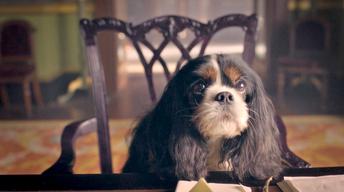
How many twenty-somethings today could rule a nation? Before you answer that, let’s revise the question to: How many twenty-somethings of any era could rule a nation without the love, companionship, and guidance of a wise soul? I’m not talking about Prince Albert or Lord M, but Dash, Victoria’s Cavalier King Charles Spaniel, who was her constant companion from her isolated girlhood into the beginning of her life as a queen, wife, and mother.

Dash (played by Tori, who had the same role in the 2009 movie “The Young Victoria”) appears in many scenes with Victoria, usually in her lap, on her bed, or on a nearby chair. This is a dog who knows his place, and he observes everything that goes on and listens to all that is said (and unsaid) by his beloved human. There is nothing one would not do for the other — not for personal or political gain, but purely for love and perhaps the occasional treat. He was the one being in the world who did not care about her parentage or power. Dash cared simply and honestly for Victoria — not by doing, but by being.

Shouldn’t everyone with a country, corporation, or consciousness to run have that? Especially during the almost-adult to stuff-just-got-real-adult transition. Pepper, a miniature Schnauzer mix, saw me from eighth grade to my early journalism career and almost through graduate school. When I imagine those years without her, I see a lot more sadness and judgement and a lot less growth, acceptance, and fun. One little dog made a big difference for me and the people and animals around me to this day, and I’m no queen.

When it became apparent at the beginning of the episode that Dash may not be doing so well, I braced myself, but of course the tears flowed when he died. I love his epitaph:

His attachment was without selfishness,
His playfulness without malice,
His fidelity without deceit,
READER, if you would live beloved and die regretted, profit by the example of DASH.

A sweet, perceptive two-minute video about Dash can be seen on the New Hampshire PBS website.

The initially crusty, but increasingly insightful Duchess of Buccleuch becomes the conduit, in Episode 4, for a new puppy entering the queen’s orbit. An unauthorized leak in the royal bedchamber points to the need for a bit of training for the pup, but we are left assured that Victoria’s education will continue.