Dealing responsibly with anger helps animals, too

In animal communication sessions, an animal will often show me an angry person in a current or past household.

It could be an abuser. It could be a situation that led to a person or animal living in fear, getting hurt or neglected, or losing their home. Maybe all of these.

It could also be someone who would never harm an animal or person, but is struggling with human stuff. Animals are naturally wary of angry people, though many wish they could help with whatever the problem is. Animals don’t understand the specifics, but they get the threat. Their humans mean the world to them.

What if we could harness our anger to recognize and solve problems rather than create more problems?

An essay I read in seminary, “The Power of Anger in the Work of Love” (in Making the Connections: Essays in Feminist Social Ethics) made me think that might be possible. Theologian Beverly Wildung Harrison said anger is “better understood as a feeling-signal that all is not well in our relation to other persons or groups or to the world around us.” Though anger doesn’t automatically lead to wise or humane action, she added, it can help get us there.

That is, if we calm the heck down first and think it through (my addition).

Can we learn to deal with our anger without being jerks … or worse? Sometimes a pause of even a few seconds can buy life-changing time to respond rather than react. We may not be able to change the situation, but we can change the energy we send out. It matters, I promise.

Using anger constructively might seem too good to be true in an age of pointing fingers and putting up walls. However, check out this excellent Kiwanis Magazine story by my friend Julie Saetre. It dives more deeply into why people are so angry these days and coping in a way that might actually help.

Also, please support those who work tirelessly (and often thanklessly) to help animals affected by abuse and neglect. Increasingly, domestic violence shelters are teaming up with humane societies so that people in abusive relationships can get themselves and their pets out of harm’s way.

We all owe it to the animals, one another and ourselves to do better.
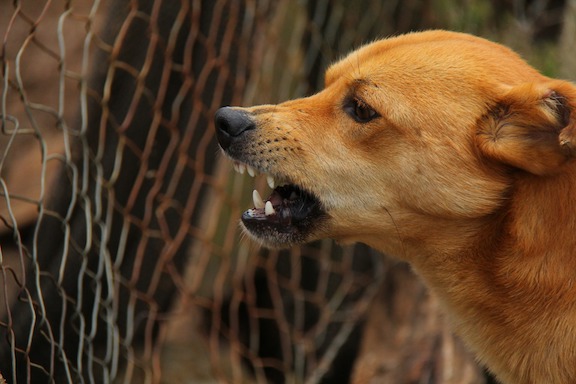
The power of now for an angry dog

dog-486553_1920

I worked with an angry dog very much like this one during my Animal Reiki III training. (Photo by asommerh on Pixabay)

Normally, I steer clear of individuals — dogs or not — who are barking at me. But something drew me to Lyson despite his barking and the warnings posted all over his kennel at the animal sanctuary where I was doing my Animal Reiki III training with Kathleen Prasad.

The warnings were about keeping hands and fingers away from the cage, letting him out separately from the other dogs, and keeping him muzzled when he was out of the kennel. I could understand why, given the anger convulsing his body with every bark. I did not have Lyson’s backstory or any illusions about fixing whatever was bothering him. My classmates and I had dispersed around the barn to share Reiki with the animals, and that’s what I was going to do.

I pulled up a chair by his kennel and turned slightly to the side (some animals interpret your facing them directly as confrontation). I let both Lyson and Mojo, the dog in the next kennel, know they were free to take as much or as little of the energy as they wanted. It was completely up to them. Then I began my meditation, pulling in the energy of the earth and sky to remain grounded and connected to God.

Mojo sat quietly, cocking his head a bit. Lyson furiously barked and barked. I held a space of peace for both of them and myself, trying to remember the particulars of Kathleen’s “be the mountain” meditation. As a Reiki practitioner and empath, I have learned the hard way that taking on or getting sucked into another individual’s emotions or problems helps no one. It’s not mine to do. That’s the beauty of the Reiki space; it lets me care while stepping out of the way and allowing a higher wisdom to work.

A couple of times, Lyson stopped barking and went to the back of his pen. When he returned, he looked at me like he couldn’t believe I was still there, that someone was interacting with him in a way that did not involve violence or force. Then he started barking again.

About midway through the meditation, I looked down and noticed a mouse peeking out from a hole under Lyson’s pen. “Well, hi,” I said quietly. “You’re welcome to join us.”

As the session drew to a close, the mouse drew his nose back into the hole. Mojo relaxed, still curious about what the humans in the barn were up to. Lyson barked a couple more times just to make sure he got his point across. Before I rejoined my classmates at the other end of the barn, I briefly met his gaze. There was something about the healing energy we had just shared that he understood, even if it was just a tiny sliver. Perhaps that was wishful thinking on my part.

When I discussed my experience with Lyson, Mojo, and the mouse with the rest of the class, Kathleen said she heard Lyson was to be euthanized. Apparently, his aggressive behaviors had been deemed too severe for any other solution to be workable. She said it was good that I worked with him, that he got to have some positive interaction with human beings. I was fairly confident the decision was not made without careful assessment, love, and anguish.

Would I have loved to hear Lyson made a total turnaround during our Reiki training and was granted a reprieve … and if not adopted, at least able to live out his days among the other dogs at the sanctuary? Of course. But making that happen was not within our power, and practicing Reiki with a specific outcome in mind only blocks the healing energy you are trying to share.

Therein lies the tension between a Reiki practitioner’s natural and sincere inclination to help (and to want to see the results of said help) and the way healing actually works: with us mortals doing what is ours to do and leaving the rest to a power beyond ourselves.

What was ours to do that day at the barn was exactly what we did — share healing energy with the animals, regardless of what had brought them there or what may or may not happen after we left.

Sometimes, the only thing left to do is to offer someone a peaceful presence.

Maybe that’s what Lyson, in between his bouts of barking, began to understand.