Three benefits of working with an animal communicator

Are you listening to your animal friend
Are you listening? Working with an animal communicator lets your animal friend know that you are. (Image by Päivi Nietosvaara from Pixabay

You want to solve a puzzling behavioral problem with your dog. You want to help your cat through your upcoming move or divorce. You want to know what your horse needs from you as the end of his life approaches. Any of these situations, and countless others, may have you wondering if an animal communicator could help you sort it out.

Maybe you have doubts about animal communication. That’s OK. Maybe you’re not sure where to start — also OK. For now, consider three ways working with an animal communicator could help you and your animal friend find peace of mind.

1. Animals love that you’re listening.

In most if not all of the animal communication sessions I do, the animal appreciates being heard. This is especially true of rescued animals who have had little or no say in what happens to them. If they’ve experienced trauma, the notion that they have a choice about anything (including whether to communicate with me) may be new. Animal communication can therefore open new avenues of trust and partnership.

Working with an animal communicator can also help your animal hear you. Anyone who has ever had a human child, or been one, knows that what you hear from someone besides your primary caregiver sometimes sinks in more readily.

Of course you have been trying to listen to and help your animal. You’re probably doing better than you think. But there are so many of us humans on this planet, and we all have different skills and perspectives. We’ll all do better if we help each other out.

2. You get another set of eyes.

Years ago, I tied myself in knots trying to help my cat Idgie with a variety of health problems and changes. Even though I’d begun studying and working in animal communication myself, I knew I needed another perspective.

So I booked a session with my animal communication teacher, who helped me see aspects of the situation I had not. She also suggested action steps to help both Idgie and myself. That, along with continued veterinary care, helped get us on the right track.

An animal communicator brings a fresh perspective to your situation. Even if I’ve worked with an animal and/or family before, every session brings something new.

An animal communicator can be part of your pet’s team: you, your family, your pet sitter, your vet, your trainer, the folks at the specialty pet food store, the farrier, the groomer, the bodyworker, and more. I’m blessed to know a number of animal professionals in northeast Indiana to whom I can refer clients and ask questions.

3. Your relationships will improve.

Listening opens doors to a closer and happier relationship between you and your animal friend, but the benefit doesn’t stop there.

That’s because whatever you and your animal are facing almost certainly affects others, from your spouse to your horse’s trainer to the neighbor who mentioned your cat crying while you’re at work. As disconnected and polarized as we humans are, we live in a connected universe. Peace of mind in one arena translates to another. Who couldn’t use a little more of that these days?

To learn more about how animal communication and Reiki can help your animal friend — and you — visit me at www.njcrowe.com.

Scientific studies on Reiki and animal communication

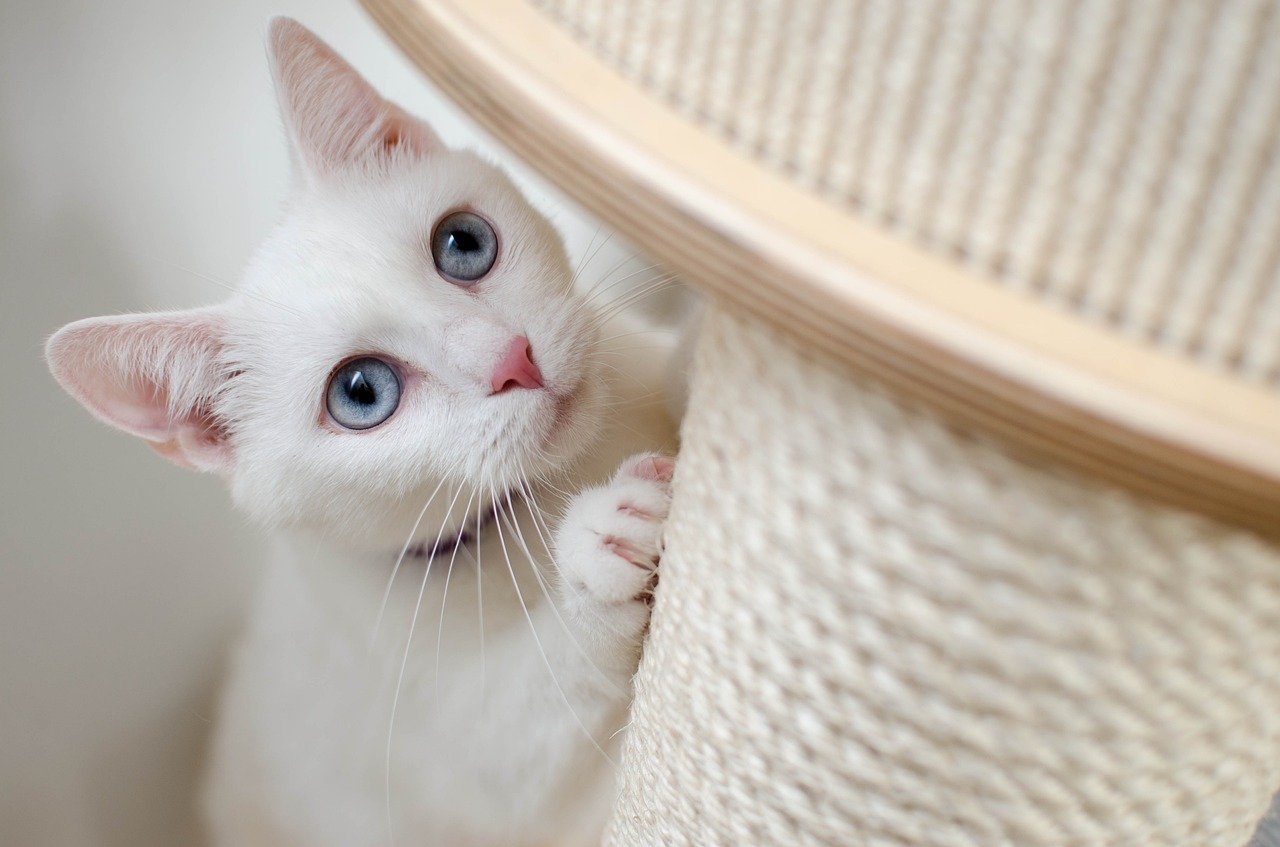
white kitten with scratching post
Several scientific studies support animal communication, animal sentience, and animal Reiki. (Image by Daga Roszkowska from Pixabay)

What does science say about whether and how animal Reiki and animal communication work?

What we know (or hypothesize) about anything today may only scratch the surface of what we’ll figure out tomorrow — but there’s more scientific knowledge out there than you might think.

Animal Reiki benefits

There are a few studies about Reiki, but not many about animal Reiki specifically. Here’s what I found in late 2021:

• The American Kennel Club recently published a story on the benefits of Reiki for pets, also citing a study you can find on the National Center for Biotechnology Information website. That 2017 (human) study, published in the Journal of Evidence-Based Complementary & Alternative Medicine, indicates Reiki is better than a placebo. In particular, it “activates the parasympathetic nervous system to heal body and mind. It has potential for broader use in management of chronic health conditions, and possibly in postoperative recovery. Research is needed to optimize the delivery of Reiki.”

• An Innovative Veterinary Care Journal article also touts the benefits of Reiki to animals, especially in clinical settings. This one cites an animal-specific 2008 study, “Reiki Improves Heart Rate Homeostasis in Laboratory Rats,” from the Journal of Alternative and Complementary Medicine. It showed Reiki reduced heart rate and blood pressure in noise-stressed rats.

• Kathleen Lester’s 2019 article in the Journal of the American Holistic Veterinary Association, “Reiki as Complementary Care in Veterinary Medicine,” cites numerous scholarly sources to discuss how Reiki can benefit not only animals but the veterinary staff caring for them. (With a shortage of veterinarians exacerbating an already stressful job, I think this will be increasingly important.)

Animal communication: dog brains, cat names and more

I found a bit more research on human-animal communication:

Dogs have some understanding of what we say and how we say it, Hungarian scientists found. They trained a group of family dogs to enter an MRI machine and scanned the way their brains responded to not only words but their tone. The study appeared in the journal Current Biology in 2014.

Two books reviewed in the Christian Science Monitor further delve into research on how attuned our canine companions are to our emotions, speech, and behavior. Alexandra Horowitz, cognitive scientist and author of Inside of a Dog, followed that bestseller up with Our Dogs, Ourselves: The Story of a Singular Bond. Clive D.L. Wynne, a dog behavioral scientist examines that bond in Dog Is Love: The Science of Why and How Your Dog Loves You.

Cats react to the sound of their names, according to a group of Japanese scientists whose study appeared in the journal Scientific Reports. Monique Udell, an animal behaviorist at Oregon State University, told the Associated Press the study shows “cats are paying attention to you, what you say and what you do, and they’re learning from it.”

Goats prefer positive human facial expressions, says a UK-based study published by The Royal Society. “These findings suggest that the ability of animals to perceive human facial cues is not limited to those with a long history of domestication as companions, and therefore may be far more widespread than previously believed,” the authors concluded.

• Norwegian researchers taught 23 horses to express their needs using symbol boards — for example, to request a blanket on a cold day. “When horses realized that they were able to communicate with the trainers, i.e. to signal their wishes regarding blanketing, many became very eager in the training or testing situation,” the authors wrote in their study, which appeared in Applied Animal Behaviour Science. “Some even tried to attract the attention of the trainers prior to the test situation, by vocalizing and running towards the trainers, and follow their movements.”

When you look at any study, pay attention to who conducted the research, who paid for it, and whether any conflicts of interest are disclosed.

Also keep in mind that many factors influence what we believe about the legitimacy of animal communication, Reiki, or anything else.

Scientific inquiry, by nature, is ongoing, so please send or post a link to any animal Reiki or animal communication study you find that I didn’t!

And, as they used to say on television: Stay tuned.

Up against a wall with your animal?

Image by sianbuckler from Pixabay

“I get it. But I don’t like it.”

As an animal communicator, I occasionally hear or sense this from our four-legged and other friends.

Usually it’s because their human has asked me to help them understand an upcoming move, addition to the family, or other change. Or maybe he or she has hired me to help sort out a behavioral issue.

The animal understands the situation. He may understand what the human wants. But you’re not seeing the change you hoped for.

“I get it. But I don’t like it.”

So the animal keeps nipping, scorning the litter box, or refusing to load. The problem continues after the vet visit, the session with me, your efforts to help, or all of the above. What on earth can you do?

First of all, understand that I can make your wishes known to your animal, but there is no guarantee she will comply. Compliance isn’t the point anyway.

So back to the “what can you do” part:

Let it be. You want to do something — anything — to resolve this problem yesterday, but remember you’ve already planted the seeds for something better.

Some situations resolve themselves in ways understood only by the animal. The cat decides the new baby isn’t a hairless monster. The horse loads when another person tries. The dog feels better and eats the special diet more readily.

You may choose to do something else tomorrow. Today, let go and see what happens. The animal will feel the change in your energy.

Give the animal a choice. Offer an additional litter box. Try getting the donkey onto the trailer tomorrow rather than force him today. If your dog doesn’t want to be around your boyfriend, let her stay where she feels safe.

Letting the animal choose boosts her confidence in herself and in you. That can only improve your relationship and the situation.

Savor (and reward) the small victories. The new cat and the current cat come within three feet of each other without hissing. The dog stops barking the first time he’s asked. This is great! Pony up (so to speak) with praise, a treat, or a play session

Ask for more help. Your animal may be telling you she needs (if you’ll pardon a tired old job rejection phrase) to move in a different direction. If you are still struggling, I will do my best to refer you to a trainer, organization, business, veterinarian, another practitioner or communicator, or someone else through trusted sources. Or you can ask a trusted friend for referrals. It does take a village.

Similarly, don’t hesitate to (diplomatically) let your veterinarian know that you need some other ideas. He or she is on your side, and on your animal’s side.

Also remember every state has veterinary schools — Purdue, here in Indiana — whose mission it is to help people help animals.

There are ways to bridge the gap between understanding and integrating. As with us humans, it may take patience, creativity, and additional support.