What do animals remember?

After my parents moved to Florida, Dad didn’t think Pepper would remember him and Mom when they came back to Indiana to visit me. It had been months since she’d seen them. He figured even the smartest schnauzers have limited memory banks.

Before they arrived, I held an image of Mom and Dad in my mind as I told Pepper they were coming. All morning, she trotted from one window to another to watch for them. When my parents arrived, Pepper greeted them in good canine “I know exactly who you are and I am SO, SO BEYOND HAPPY you’re here!” fashion.

Memory capacity varies by species, of course. But remembering people, locations, cues, and associations that have been important — for good or ill — is wired in for survival.

Research has shown animals also possess episodic memory, a capability once thought unique to humans. In other words, they remember past events as well as where the litter box is, what “sit” means, and that fresh hay is due at sunrise. Internationally known trainer Monty Roberts said on a podcast that horses never forget anything.

Since I’m an animal communicator, does that mean they relay those past events to me? In a way, yes.

Though animals don’t dwell on the past, they may still live with its effects. So if I’m communicating with a dog because the owner is concerned about his separation anxiety, the dog might show me an image of what contributed to the behavior. That could be a previous owner crying over giving him up, his best dog friend being taken away, or the person who fed him never coming back.

These are glimpses, not narratives. They can still be used, in addition to what is already known about the dog’s history, to help him heal and respond better when his person leaves for work. With a little more knowledge about what went wrong, we’re better able to find the treatment, training, or other resources to make things right.

Scientific studies on Reiki and animal communication

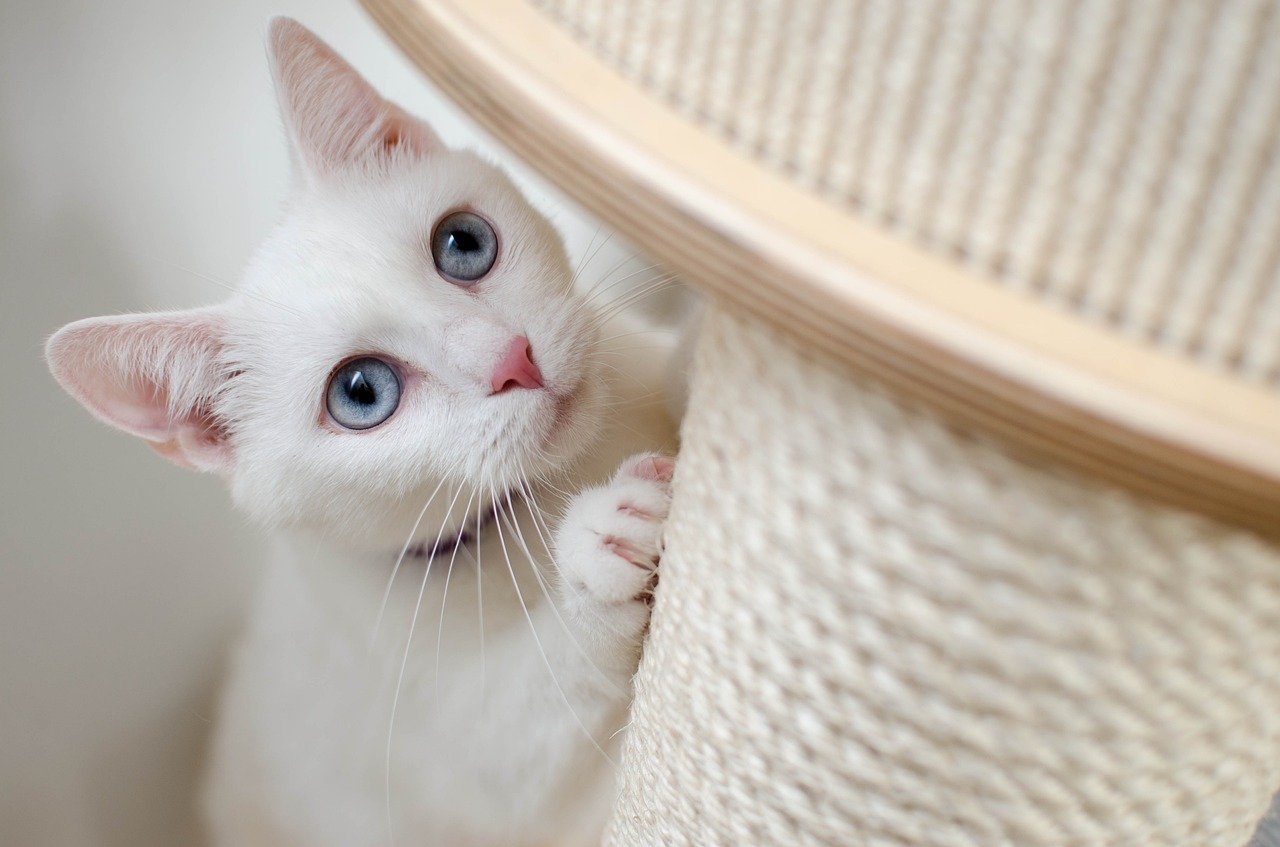
white kitten with scratching post
Several scientific studies support animal communication, animal sentience, and animal Reiki. (Image by Daga Roszkowska from Pixabay)

What does science say about whether and how animal Reiki and animal communication work?

What we know (or hypothesize) about anything today may only scratch the surface of what we’ll figure out tomorrow — but there’s more scientific knowledge out there than you might think.

Animal Reiki benefits

There are a few studies about Reiki, but not many about animal Reiki specifically. Here’s what I found in late 2021:

• The American Kennel Club recently published a story on the benefits of Reiki for pets, also citing a study you can find on the National Center for Biotechnology Information website. That 2017 (human) study, published in the Journal of Evidence-Based Complementary & Alternative Medicine, indicates Reiki is better than a placebo. In particular, it “activates the parasympathetic nervous system to heal body and mind. It has potential for broader use in management of chronic health conditions, and possibly in postoperative recovery. Research is needed to optimize the delivery of Reiki.”

• An Innovative Veterinary Care Journal article also touts the benefits of Reiki to animals, especially in clinical settings. This one cites an animal-specific 2008 study, “Reiki Improves Heart Rate Homeostasis in Laboratory Rats,” from the Journal of Alternative and Complementary Medicine. It showed Reiki reduced heart rate and blood pressure in noise-stressed rats.

• Kathleen Lester’s 2019 article in the Journal of the American Holistic Veterinary Association, “Reiki as Complementary Care in Veterinary Medicine,” cites numerous scholarly sources to discuss how Reiki can benefit not only animals but the veterinary staff caring for them. (With a shortage of veterinarians exacerbating an already stressful job, I think this will be increasingly important.)

Animal communication: dog brains, cat names and more

I found a bit more research on human-animal communication:

Dogs have some understanding of what we say and how we say it, Hungarian scientists found. They trained a group of family dogs to enter an MRI machine and scanned the way their brains responded to not only words but their tone. The study appeared in the journal Current Biology in 2014.

Two books reviewed in the Christian Science Monitor further delve into research on how attuned our canine companions are to our emotions, speech, and behavior. Alexandra Horowitz, cognitive scientist and author of Inside of a Dog, followed that bestseller up with Our Dogs, Ourselves: The Story of a Singular Bond. Clive D.L. Wynne, a dog behavioral scientist examines that bond in Dog Is Love: The Science of Why and How Your Dog Loves You.

Cats react to the sound of their names, according to a group of Japanese scientists whose study appeared in the journal Scientific Reports. Monique Udell, an animal behaviorist at Oregon State University, told the Associated Press the study shows “cats are paying attention to you, what you say and what you do, and they’re learning from it.”

Goats prefer positive human facial expressions, says a UK-based study published by The Royal Society. “These findings suggest that the ability of animals to perceive human facial cues is not limited to those with a long history of domestication as companions, and therefore may be far more widespread than previously believed,” the authors concluded.

• Norwegian researchers taught 23 horses to express their needs using symbol boards — for example, to request a blanket on a cold day. “When horses realized that they were able to communicate with the trainers, i.e. to signal their wishes regarding blanketing, many became very eager in the training or testing situation,” the authors wrote in their study, which appeared in Applied Animal Behaviour Science. “Some even tried to attract the attention of the trainers prior to the test situation, by vocalizing and running towards the trainers, and follow their movements.”

When you look at any study, pay attention to who conducted the research, who paid for it, and whether any conflicts of interest are disclosed.

Also keep in mind that many factors influence what we believe about the legitimacy of animal communication, Reiki, or anything else.

Scientific inquiry, by nature, is ongoing, so please send or post a link to any animal Reiki or animal communication study you find that I didn’t!

And, as they used to say on television: Stay tuned.

Animal communication and Reiki are different modalities

Let Animals Lead® meditation and animal communication go well together, but they’re not the same … kind of like these two. (Photo by Nancy Crowe)

While Let Animals Lead® animal Reiki and animal communication make a great pair, they are separate disciplines with unique benefits. The difference is essentially between meditation and conversation.

How they work

A Reiki session is a time of meditation, relaxation, and peace. Because I am certified in Kathleen Prasad’s Let Animals Lead® method, the animal is always in charge of whether and how he shares the energy.

During an in-person session, which I offer in the Fort Wayne, Indiana area, a cat or dog might curl up in my lap or settle across the room. A horse may stand on the other side of the pasture, hang out in a stall, or come to meet me at the fence. I’ve even had a donkey sidle up and nudge his head under my arm! Whatever the species or context might require, I go into a meditative state and let the energy do its work.

Distant sessions are much the same, except that the animal and I are not in the same physical space. She’s generally at home relaxing with her person, hanging out with the herd, or doing whatever, while I’m in my home office — again, in a meditative state, letting the energy do its work!

During an in-person or distant meditation session, I may receive intuitive information — but that is not the objective of the session.

An animal communication session, on the other hand, is an exchange of information. I don’t need to be in the same physical space as the animal or on the phone with the animal’s person for this. I connect with the animal telepathically, focusing my attention on what he has to share. No appointment is necessary for this.

With the animal’s permission, I work to gain insights into behavior. Or I tell her about a change coming up and ask what would help her adjust. Or I ask him how he feels about anything from his food to his person’s new boyfriend. Once I’ve talked with the animal, I email the person a summary of what we discussed. The client is always encouraged to take only what resonates and is helpful, and leave the rest.

Together but distinct

In some settings, such as a farm with multiple animals, I may do meditation and animal communication in the same visit, but not in the same moment.

How this works might be compared to a chaplain’s rounds. Time with each animal could be spent in conversation to begin. Then we might share a quiet meditation. After the session, we might talk a little more before I thank the animal and move to another. We wouldn’t be meditating and talking at the same time!

There is a time and a purpose to everything (Eccl. 3:1). When we let meditation and animal communication function on their own, our animal friends get the best each has to offer.