When traveling with animals, get there together (and safely)

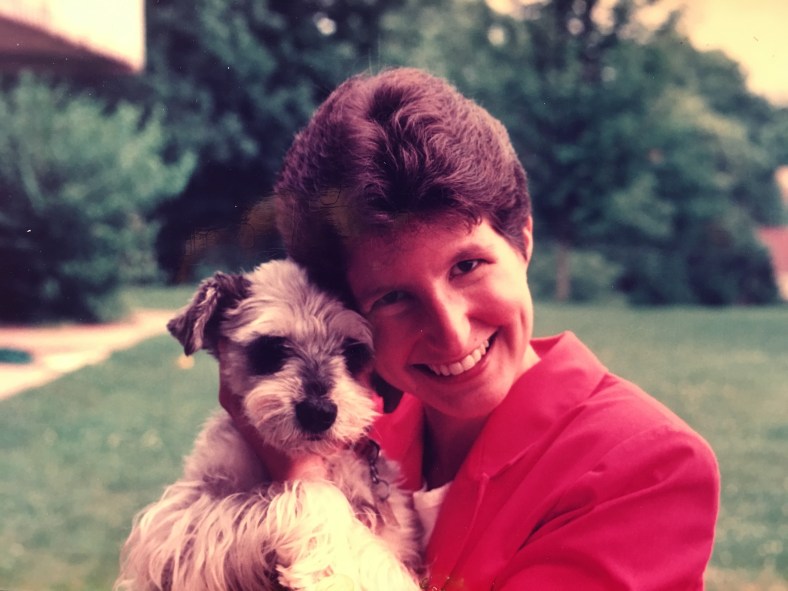
Pepper and I outside my apartment at Louisville Presbyterian Theological Seminary (Photo by Charlie Castner)

The day Pepper and I moved to Louisville was stupid hot. My parents helped me load the last few things into my 1986 Mazda in Columbus, Indiana and we were off.

Sweat trickled down my face and chest despite the air conditioning being on full tilt. I was excited about starting my degree program at Louisville Presbyterian Theological Seminary, but for the moment I just wanted to get myself and my dog there safely.

As we chugged down I-65 in the searing sun, I glanced over at Pepper. I’d never allowed her in the passenger seat, but with every inch of the back stuffed with stuff, there was nowhere else for her to be. The 13-year-old rescued schnauzer mix sat facing me, panting. No car seat, no harness, no nothing.

I’d communicated with Pepper for weeks and days as I packed for the move. But if there was ever a “Tell me again. Where the hell are we going, and WHY?” expression, she wore it that day.

Dogs riding loose in cars might have been standard practice in 1993, but it wasn’t and still isn’t safe. If special harnesses, car seats or other devices were available then, I didn’t know about them. Pepper and I traveled many miles over our 15 years together and I am grateful we both emerged unscathed.

Today we have travel crates, crash-tested harnesses and awareness, though you still see many pets bouncing around in back seats and truck beds. Wirecutter offers this guide not only to tested top picks but best practices (“Would you let a kid do it?”).

Managing anxiety (yours, too) when moving horses

Image by Juncala from Pixabay

The horse didn’t know he was moving that day, let alone why. He had no idea what awaited him at the end of that trailer ride.

As an animal communicator and Let Animals Lead® practitioner, I was working with other animals at the farm when this newcomer, an off-track thoroughbred named King, arrived.

With each attempt to coax him down the ramp, he panicked more. Once the humans finally got him off the trailer and into a round pen, he ran back and forth, stopping every minute or two to whinny.

The humans went into the barn. The horse took little notice as I slowly approached.

“Hi, King,” I said softly. “This place must look pretty scary to you, but you’re safe.”

I don’t recall how long I stood or sat next to the round pen. I turned to the side, as animals under stress can feel threatened by a human facing them head-on, and offered a quiet meditation. The running and whinnying continued.

It was one of those times when the animal’s nervous system was so activated that I wasn’t sure if the session was doing any good. Holding space for King, and letting him choose whether/how to connect with me when he hadn’t been able to choose or even know about this move, was all I could do.

Over the next few years, King found horse and human friends and gave it his all as a working horse. Then his person asked me to ask him how he’d feel about going to a different home as a pleasure horse with one or two other horses. It was up to him, she said, and he could come back if he wanted.

King thought that sounded good. He was loaded and unloaded without incident, and at last report was flourishing in his new home.

Things happen. Horses get moved. It may be for the best, and it may even save the horse’s life. Volunteers with a local rescue carried a miniature horse with badly overgrown hooves onto a trailer during a severe storm a few years ago, and I know they did so with as much calm and communication as humans can muster in such circumstances.

If you are moving, re-homing, selling or rescuing a horse, you both might be dealing with a fair amount of stress right now. Some self-care and animal communication techniques can help the horses and humans involved navigate the change in a way that offers everyone peace.

Here are two things to consider:

1. You set the tone.

Your horse already knows something’s up; changes like these rarely come out of nowhere. She may not understand financial hardship, divorce or barn drama, but she feels its effects. She is very likely to pick up on what you tell yourself about the situation and the pictures you hold in your mind. There is no blame here; we are only human and horses are only equine. Just know that how you handle it from here matters more than you think.

If you and your animals are all moving to the same place, picture all of you loading up and traveling, then all together in the new place. Picture everyone helping one another adjust even though it may be hard. If a horse is going to be with the horse friends he’s used to, emphasize that.

Maybe you’re moving your horses to a new barn. Again, picture an uneventful loading, trailering and unloading at the new place, along with the buddies he’s traveling with or any horse he knows there.

If you and your horse are parting, let her know she’s going to live with someone who can care for her better than you can right now, or where you think she’ll be happier. Picture the trailer ride, the new home, the new owner and friends, even the temporary safe space. If any animals are staying behind, let them know they’re staying and everyone will be cared for.

If you are moving a horse for rescue or evacuation, stay as calm as possible. Let him know his safety is your priority and he can help by trusting you … even just a tiny bit.

2. Help is available. Please ask.

I am not a horse owner myself, but have observed that horse people can judge one another mercilessly or help in a heartbeat if you’re dealing with major manure (literal or otherwise). A friend or neighbor of the latter variety makes a big difference and might be closer than you think.

I can help by communicating the situation to your horse and listening to what he needs. I can support him, you, and the other animals with Let Animals Lead®, a meditation-based stress reduction modality. Both of these also work from a distance and can bring greater peace of mind to even the hardest transitions.

Most importantly: If you are having trouble caring for your animals, please reach out to your vet or a reputable rescue or animal welfare agency. They’d rather help you now than deal with a more serious situation down the road.

Animals respond to music

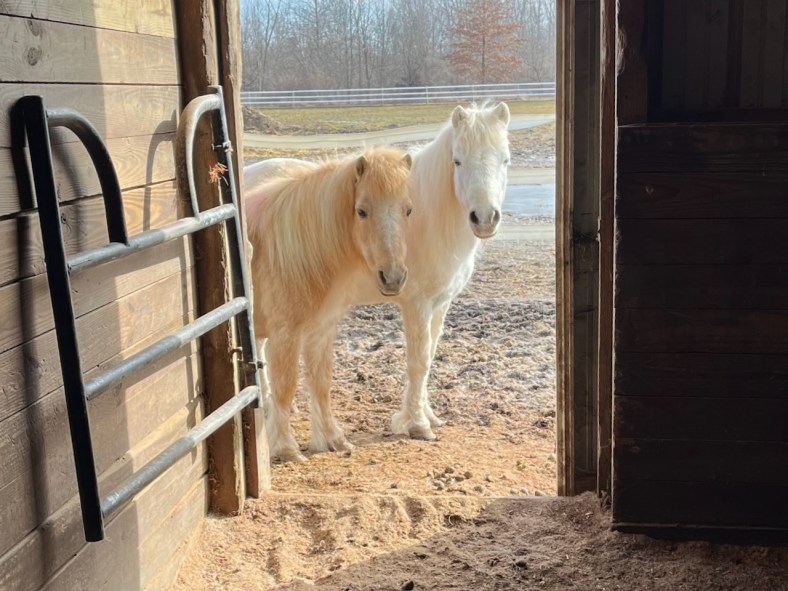
The crew above liked the Tibetan singing bowl recording I played. Other creatures have been partial to Gregorian chant. If animals depend on their hearing for survival, music appreciation (even preferences) shouldn’t be surprising.

Another example: My father-in-law’s care home had an aviary in the lobby. It was just off the dining room, which was also the site of guitar sing-alongs, concerts and music therapy sessions. After a while I noticed how the finches, mourning doves and other birds responded to the sounds that came through the door. Sometimes they seemed unaffected, flitting and chattering as they had before the program started.

During a selection of piano classics, I walked by to find them all perched, cocking their heads now and then. The human audience, whether transported to another time and place or enjoying the present moment, seemed equally content.

Science has demonstrated the effects of music on the brain, and music therapy is part of many human health and wellness settings. Your grandmother might not remember your name, but she might recognize the melody of a Nat King Cole song, especially if she and Grandpa danced to it.

You can find videos and stories of grieving whales soothed by violins and dogs chilling in their kennels as a cellist performs in the shelter. Even though you’re not there, by watching the animals you can feel how the sound fills and alters the space.

But I don’t think the benefits end with the last note. There is something about music that keeps healing even in the silence, even amid the noise in the world. It might even replace the noise in our heads.

And how many of us have had songs stuck in our heads? More on that in a moment.

A while back I loaded Chant, the popular 1994 album by the Benedictine Monks of Santo Domingo, from the CD cabinet into my iTunes. Gregorian chant is prayer sung in Latin, generally without accompaniment. Its development is attributed to Pope Gregory the Great during medieval times, but there is some scholarly uncertainty about that. Regardless, to listen to it is to step into the eternal. You don’t have to know a word of Latin to understand each chant is about God’s presence in any circumstance.

I began to include the chants in my Let Animals Lead® practice, a form of animal Reiki based in meditation. Sometimes I have the music playing softly from my stereo or the phone in my pocket. My favorite is Puer Natus in Bethlehem; take two minutes and check out this lovely video version.

My Let Animals Lead® teacher, Kathleen Prasad, says chanting (of whatever spiritual stripe) unites breath with sound in a way that calms and heals. Where fear and sadness constrict, chanting expands.

“The more expansive you become, the more easily you can feel emotions without being knocked over by them,” she says in her Animal Reiki Source blog. Animals will feel this expansiveness and want to share your strong, balanced space, she continues.

2019 07.26 Mildred in sun
Mildred and I shared meditation with Gregorian chant. (Photo by Nancy Crowe)

On rounds at a farm, I sat down in the shade, pulled up iTunes on my phone and clicked on one of the chants — I believe it was Kyrie Fons Bonitatis (Lord, fountain of mercy). Mildred, a goat who has seen a lot of living, had been lounging on the grass nearby. Now her head swiveled around, ears alert. It wasn’t her “What is that infernal noise?” look (I knew that one). Mildred recognized what she was hearing. She listened with me as we shared a Let Animals Lead® Reiki session. Soon she closed her eyes and lifted her face to the sun.

I wondered if, in her storied life, Mildred ever spent time in the pasture of a Benedictine monastery. Or, on this day, did she simply tune into a sound and energy connecting her to her creator? The particulars didn’t seem to matter much to Mildred. All I got from her was that she liked hearing it again and it made an already beautiful day — moment, really — even better.

Even though I wasn’t doing the chanting myself, allowing that expansiveness to move from God through the monks through me and Mildred was truly a gift.

I can’t carry a tune in a bucket or any other receptacle. So when I don’t have the actual music playing, I try to carry the energy of the music with me. You could say I keep it “stuck” in my head and heart to share with the animals, however it may benefit them the most.

Think about this … and feel free to share:

  • If you leave a radio on for your animal friends when you leave the house, what music do you choose?
  • If you sing or play an instrument, how do they respond?
  • How does having a song (or chant, or other music) stuck in your head make you feel and respond to others?