Finding reliable pet health information

Image by Martine Auvray from Pixabay 

When we’re worried about our animal friend’s health, it’s easy to go down a rabbit hole in search of answers. It doesn’t matter if the search term is a symptom, diagnosis, or treatment. Most of us have done it and wound up even more confused or misinformed, which helps no one.

Knowing where to look and where to be wary can yield better outcomes and fewer headaches. Based on many years as a journalist, animal wellness practitioner, and pet mom, here are my suggestions for accurate, credible animal health information sources:

Your veterinarian

Your veterinarian and vet clinic should be your primary source for your pet’s health. They know you and your animals. If you don’t have a vet you trust, find one by asking fellow pet parents you trust. Online testimonials and reviews are helpful, but nothing beats a personal referral.

If you’re afraid of asking a stupid question or bothering the vet clinic staff, consider that some of the most pertinent questions are the seemingly stupid ones (i.e., “Where are my pants?”). Your vet and staff are your chief allies in your pet’s well-being. It’s OK to ask them, “Where can I learn more about this?” They’d rather steer you toward a trusted source than have you paralyzed with fear or try an unproven “miracle cure” that may do more harm than good.

Veterinary schools

Places like the Purdue University College of Veterinary Medicine (our Indiana example) educate and train tomorrow’s veterinary professionals. Vet school faculty and staff members are trained scientists whose job it is to figure stuff out — accurately and without bias. (More on bias in a moment.)

University-conducted studies can be wonderful sources of information and insight. Keep in mind that a single study is seldom, if ever, the final answer. What we know about our animals, our world, and ourselves is constantly evolving.

Also, these studies are generally written with a style and terminology that leave you wondering what on earth is wrong with plain English. They’re intended for a professional or academic audience. That’s cool, but you may want something more accessible.

Fortunately, the Cornell University College of Veterinary Medicine website’s Health Topics section is geared toward both veterinarians and pet owners. I especially like the information I’ve found on the Cornell Feline Health Center page.

Now to the question of bias. When you are reading a media report on a study that links X to Y, or which indicates A is beneficial in the treatment of B, click the link to the actual study. It may be a university study in a professional journal, or it could be a press release.

Either way, look at who paid for and conducted the study. Would they have a vested interest in the outcome? For example, if a study about the benefits of CBD oil was paid for or conducted by a company that makes CBD supplements, I wouldn’t give that study much weight. Its conclusions may prove correct in time, but show me some independent research. Also look at any conflicts of interest disclosed by the authors themselves.

Again, resist the impulse to draw conclusions from research that may not be conclusive.

Professional associations

The American Veterinary Medical Association’s website includes resources for pet owners — including, of course, how best to partner with your veterinarian for your animal friend’s best life. (There’s also a great article on getting pet health information online, which hits some points I do not here.)

The American Holistic Veterinary Medical Association’s Holistic Veterinary Therapies page is where I would start for information on complementary and alternative therapies such as chiropractic, acupuncture, and more.

Don’t overlook the library

I’ve been talking about online information here, but I’m old enough that, once upon a time, the stacks were my first stop. But my advice is similar. Look at the credentials of the author(s) and don’t get swept up in “breakthrough,” “miracle,” “revolutionary,” or similar claims.

Those are the sources to seek. Briefly, here are the sources to evaluate more carefully:

• Sites owned by businesses selling a product or service. This goes for mine, too. Do they link to reliable sources of health information? Do the claims seem too good to be true?

• Blogs (again, including mine), message boards, social media and anyplace else where people can post anything. What sources, if any, does the person reference? Is he or she angry? Grieving?

• Wikipedia. Being a free-for-all may be part of its charm. Fine. Just look in the text and footnotes for links to reliable sources.

Bottom line: When you’re evaluating a source of information on animal health, always consider the who and the why. Then — again — work with a veterinarian you trust.

Ready to adopt again?

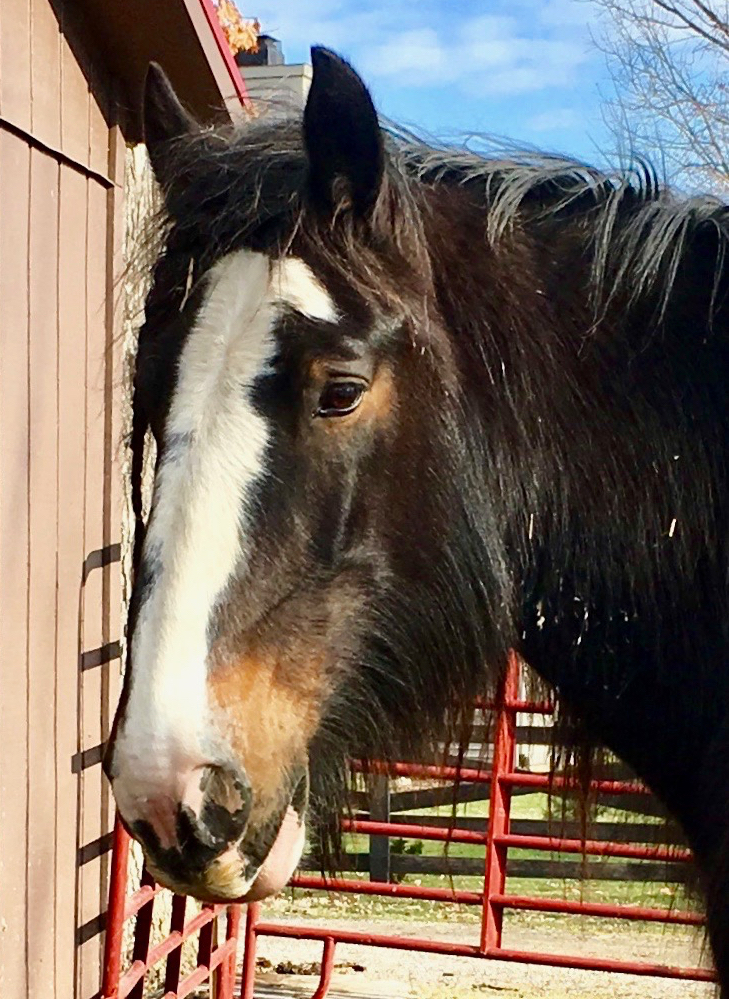
dog & person silhouette Image by Barbara Jackson from Pixabay

Image by Barbara Jackson from Pixabay

As an animal communicator, I walk with people and their animal friends through a lot of endings and beginnings.

The pain of loss is real and raw. It deserves respect. At the same time, you are here on earth with much love to give. Plenty of animals need loving homes.

Only you know whether and when to welcome another animal into your home, but here is my perspective along with a couple of things to consider.

Eight years ago this month, I lost my much-loved Idgie, the sweet diva of a tiger cat who inspired my first forays into animal communication and Reiki. Idgie had been sick, and she and I had been saying our see-you-laters for months. Deep down, I knew other feline friends would succeed her. At some point.

Idgie in cat bed 2007 crop

Idgie, 1996-2012

When I came home from the vet clinic and faced an Idgie-less, cat-less house, the pain hit me like the proverbial ton of bricks. It was all I could do to survive in the moment, much less think about the future.

Not long afterward, I read about a horrific animal cruelty case in which fireworks were tied to a kitten’s tail. Something opened up within me, and I realized how much I wanted to give another kitty a home. And Idgie had trained me so well.

One afternoon, I sat on my back porch and took a few deep breaths. My partner and I planned to visit the city shelter the next day. It was only six weeks after Idgie’s passing — was it too soon?

I connected with Idgie in spirit and asked her to guide us to our next feline companion, whenever and wherever it would best happen. What I received was her classic ears-back expression and: “Right. Like I wouldn’t be involved in that decision.”

At the shelter, Kathy and I met several kittens, but none seemed especially interested in us. Then the volunteer brought out one who was about to go to a satellite adoption center. The four-month-old black tortie prowled around the adoption counselor’s office, trying to figure out where she was and why. Then she came and sniffed both of us, accepting the gentle pets we offered.

2012 Lucy on my desk chair crop

This is Lucy not long after we adopted her.

When I sensed the kitten was open to it, I gingerly picked her up. I commented on her distinctive coloring, notably the gold streak between her eyes that seemed to stop and resume on top of her head.

“Doesn’t it look like God came along with a paintbrush?” the volunteer said.

I held the kitten so that we were eye to eye. She reached out with one tiny black paw and patted my face.

We’d been chosen.

Did the joy of welcoming Lucy erase the hurt of losing Idgie? No. I still felt like crying every time I saw a tiger cat or a picture of one that reminded me of her. Lucy succeeded Idgie, but did not replace her. One being cannot truly replace another, and there’s no sidestepping grief if we are to love fully. While I continued to grieve for Idgie, my heart filled with gratitude for the love she had given me. That love enabled me to recognize the connection with Lucy, who needed a home as Idgie had.

The only thing I can imagine that’s worse than losing a pet is never having had that animal in my life. 

If you are struggling, or just wondering, here’s what I suggest:

  • Pay attention to your intuition. It’s hard to do this when you are in pain. But if you can, get quiet and ask yourself if it’s time to visit the animal shelter — or contact a rescue if you’re interested in a particular breed or type of animal. If you feel a lightness or sense of excitement and joy, that indicates a yes! If there’s a heavy, sad sensation, you might want to wait.
  • Adopt from a place of abundance, not lack. Another animal cannot truly replace the one you lost, or take away your pain. The last thing you want is to impose expectations on a new pet that are not about him or her at all. Stay with your grief long enough — however long that is — for your heart to open to a new and totally unique animal companion.
  • Remember the animal chooses, too. (Some animals would say they do all the choosing, but you get the idea.) My experience is that each dog, cat, bird, horse, human, or whoever comes into our lives for a reason. The animals probably have a better grasp of it than we do. When you meet a prospective new companion, pay attention to the way they respond and how you feel.

Whenever you and your next animal companion find each other, you are both signing on for a beautiful, painful, and totally worthwhile adventure. You both deserve no less.


The naming of horses

2019 08.14 Dolly 3 - edited

I caught Dolly in the middle of lunch with hay on her face, but her star quality shines through.

There are many rules for naming racehorses, but none for your average equine citizen. From what I’ve observed, horses often get new names when they get new people, new homes, new jobs, a second chance, or any combination of these. Some retired racehorses, like my friends Beau and Pirate, go by shorter versions of their racing names.

This isn’t unique to horses. Look at the way we humans take on and drop nicknames, take spouses’ names, reclaim family names, hyphenate, and depending on who’s talking, go by names like Mom.

One horse I know chose a name his new person wouldn’t have picked in a million years. Another came by hers through blonde star synchronicity. Yet another, when given the choice, kept the name she had.

Duke

I felt the sadness of the 17-year-old shire as soon as Allison Wheaton, director of Summit Equestrian Center, sent me his photo. After years as an Amish farm horse, and apparently not the best of situations, he was to become Summit’s newest resident late last year.

Duke 04.05.19 v

This is Duke a few months after his arrival at Summit Equestrian Center. He still wasn’t out with the herd, but he’d decided he liked Reiki. (Photo by Nancy Crowe)

Allison asked me to communicate with him before he arrived and find out what he needed in the transition, and what he might like to do. And would he like a new name, or would he prefer to keep the one he had (Angmar)?

The notion that he had a choice about anything was a strange concept to this heavy-hearted soul. Yet when I asked him what he wanted to be called, I heard: “Just call me Duke.”

I passed that along. Since most school/sports rivalries are not on my radar, it didn’t occur to me that Allison, a University of North Carolina grad, might wince at the name of her alma mater’s chief rival. As I learned later, she had vowed never to name a dog, horse, or anything else Duke. But Duke it was.

As fall deepened into winter, Duke acclimated and found his footing as a therapy horse. He found he appreciated being listened to and liked Reiki, especially once he realized it was his choice. Getting him to the point where he could join the rest of the horses in the pasture took months, many introductions, and a few scuffles.

Then one day this spring, Duke caught my eye from across the pasture. He was standing up straight, ears forward, with the rest of the crew.

“Do you see where I am? Do. You. See. Where. I. Am?” I heard.

Yes, Duke … I see you.

Dolly

Malibu, a Tennessee Walker-Belgian cross, had a few different homes by the time she joined the Summit herd. No one seemed to have time for her, and now she had no idea where she belonged.

Three or four days later, “Hello, Dolly!” — from the musical of the same name — got stuck in my head. I listened to the album over and over as a child and saw Carol Channing in what many consider her signature role as Dolly. But I hadn’t heard it recently or thought of it much.

The day after that, I received a text from Allison that the newcomer had settled in a bit, but Malibu didn’t seem like the right name. “Dolly? There’s got to be a sassy blonde star name that fits better,” she said.

I told her about the musical and sent a video link to the song. It includes the lyric “Tomorrow will be brighter than the good old days.”

Allison was thinking of Dolly Parton and I was thinking of the fictional Dolly Levi — but both seemed to fit. So Dolly it was, and she’s already shed stardust on a couple of participants in Summit’s veterans program.

Lulu

Some horses keep their names. Lulu, a beautiful paint mare, was rescued from a horrible neglect situation. As Lulu began a new chapter at Summit, Allison asked me to see if she wanted a new name as well … like Cheyenne?

2019 07.26 Lulu & my hand copy

Lulu has been learning to trust again.

When I asked Lulu, she told me she knew who she was and it didn’t matter what the humans called her. Cheyenne was fine, but she was also fine with sticking with Lulu, so that’s what we did.

Recovery is all about ups and downs, and less than two years later, Lulu’s is no exception. She has a good buddy in Pirate, one of the aforementioned retired racehorses, and she’s helped some of Summit’s human clients heal their own wounds. Every time I check in with her, even if she is struggling with the effects of her past, I see her choose to give her new life — still as Lulu — a chance.

You tell me …

How did your horse friends get their names … or new names?