Animals respond to music

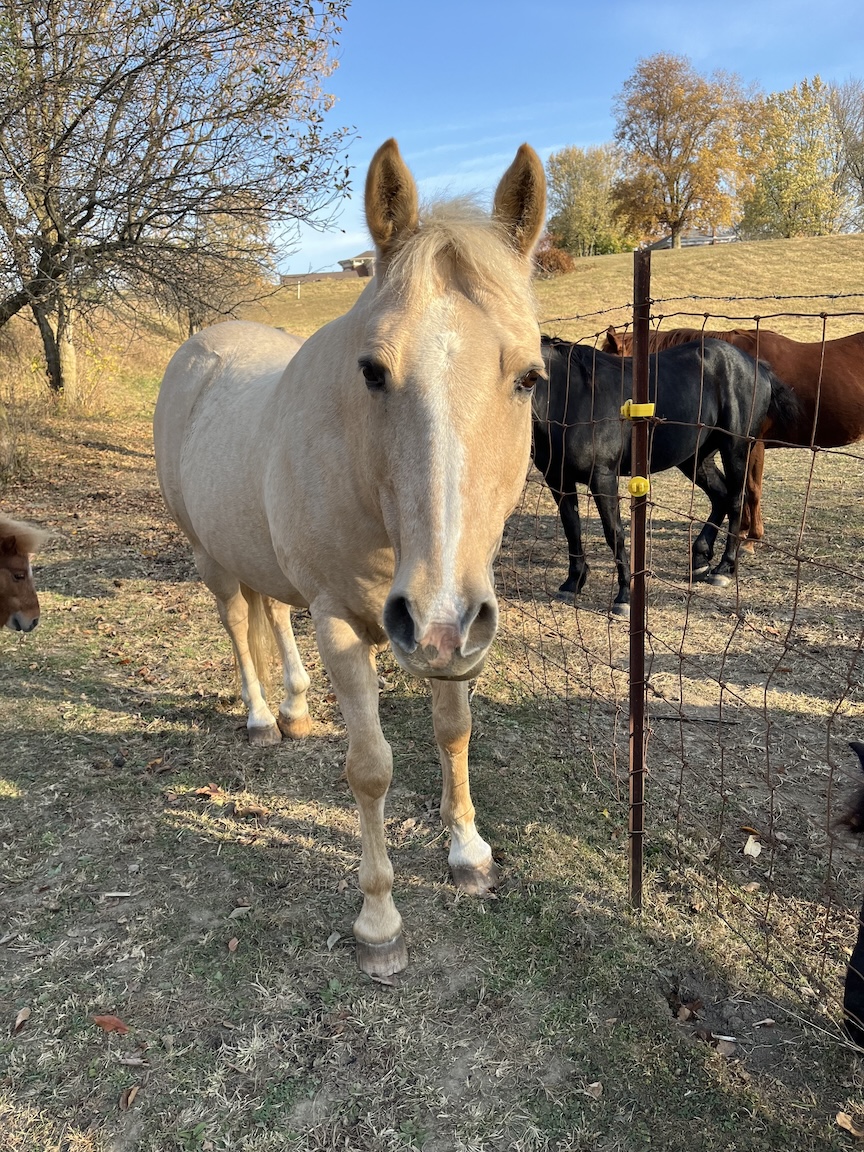
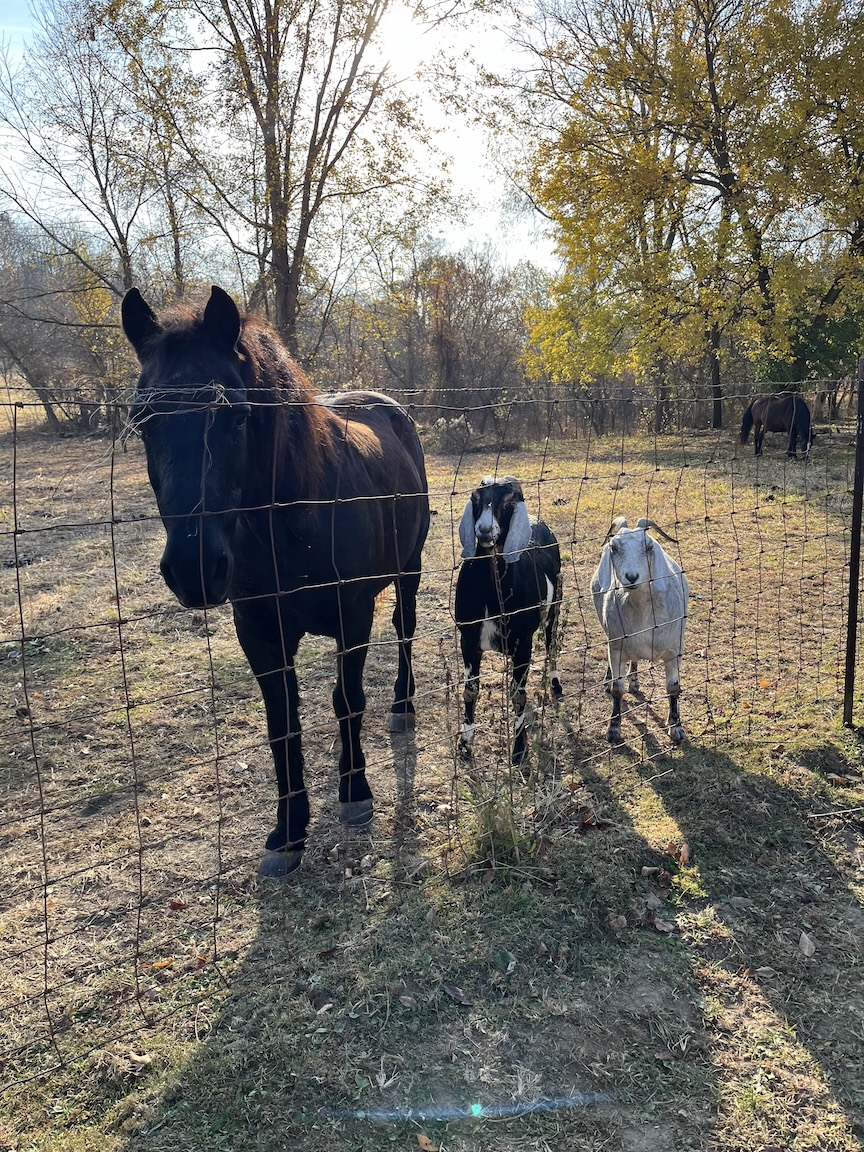
The crew above liked the Tibetan singing bowl recording I played. Other creatures have been partial to Gregorian chant. If animals depend on their hearing for survival, music appreciation (even preferences) shouldn’t be surprising.

Another example: My father-in-law’s care home had an aviary in the lobby. It was just off the dining room, which was also the site of guitar sing-alongs, concerts and music therapy sessions. After a while I noticed how the finches, mourning doves and other birds responded to the sounds that came through the door. Sometimes they seemed unaffected, flitting and chattering as they had before the program started.

During a selection of piano classics, I walked by to find them all perched, cocking their heads now and then. The human audience, whether transported to another time and place or enjoying the present moment, seemed equally content.

Science has demonstrated the effects of music on the brain, and music therapy is part of many human health and wellness settings. Your grandmother might not remember your name, but she might recognize the melody of a Nat King Cole song, especially if she and Grandpa danced to it.

You can find videos and stories of grieving whales soothed by violins and dogs chilling in their kennels as a cellist performs in the shelter. Even though you’re not there, by watching the animals you can feel how the sound fills and alters the space.

But I don’t think the benefits end with the last note. There is something about music that keeps healing even in the silence, even amid the noise in the world. It might even replace the noise in our heads.

And how many of us have had songs stuck in our heads? More on that in a moment.

A while back I loaded Chant, the popular 1994 album by the Benedictine Monks of Santo Domingo, from the CD cabinet into my iTunes. Gregorian chant is prayer sung in Latin, generally without accompaniment. Its development is attributed to Pope Gregory the Great during medieval times, but there is some scholarly uncertainty about that. Regardless, to listen to it is to step into the eternal. You don’t have to know a word of Latin to understand each chant is about God’s presence in any circumstance.

I began to include the chants in my Let Animals Lead® practice, a form of animal Reiki based in meditation. Sometimes I have the music playing softly from my stereo or the phone in my pocket. My favorite is Puer Natus in Bethlehem; take two minutes and check out this lovely video version.

My Let Animals Lead® teacher, Kathleen Prasad, says chanting (of whatever spiritual stripe) unites breath with sound in a way that calms and heals. Where fear and sadness constrict, chanting expands.

“The more expansive you become, the more easily you can feel emotions without being knocked over by them,” she says in her Animal Reiki Source blog. Animals will feel this expansiveness and want to share your strong, balanced space, she continues.

2019 07.26 Mildred in sun
Mildred and I shared meditation with Gregorian chant. (Photo by Nancy Crowe)

On rounds at a farm, I sat down in the shade, pulled up iTunes on my phone and clicked on one of the chants — I believe it was Kyrie Fons Bonitatis (Lord, fountain of mercy). Mildred, a goat who has seen a lot of living, had been lounging on the grass nearby. Now her head swiveled around, ears alert. It wasn’t her “What is that infernal noise?” look (I knew that one). Mildred recognized what she was hearing. She listened with me as we shared a Let Animals Lead® Reiki session. Soon she closed her eyes and lifted her face to the sun.

I wondered if, in her storied life, Mildred ever spent time in the pasture of a Benedictine monastery. Or, on this day, did she simply tune into a sound and energy connecting her to her creator? The particulars didn’t seem to matter much to Mildred. All I got from her was that she liked hearing it again and it made an already beautiful day — moment, really — even better.

Even though I wasn’t doing the chanting myself, allowing that expansiveness to move from God through the monks through me and Mildred was truly a gift.

I can’t carry a tune in a bucket or any other receptacle. So when I don’t have the actual music playing, I try to carry the energy of the music with me. You could say I keep it “stuck” in my head and heart to share with the animals, however it may benefit them the most.

Think about this … and feel free to share:

  • If you leave a radio on for your animal friends when you leave the house, what music do you choose?
  • If you sing or play an instrument, how do they respond?
  • How does having a song (or chant, or other music) stuck in your head make you feel and respond to others?
Letting animals choose lets them be their best

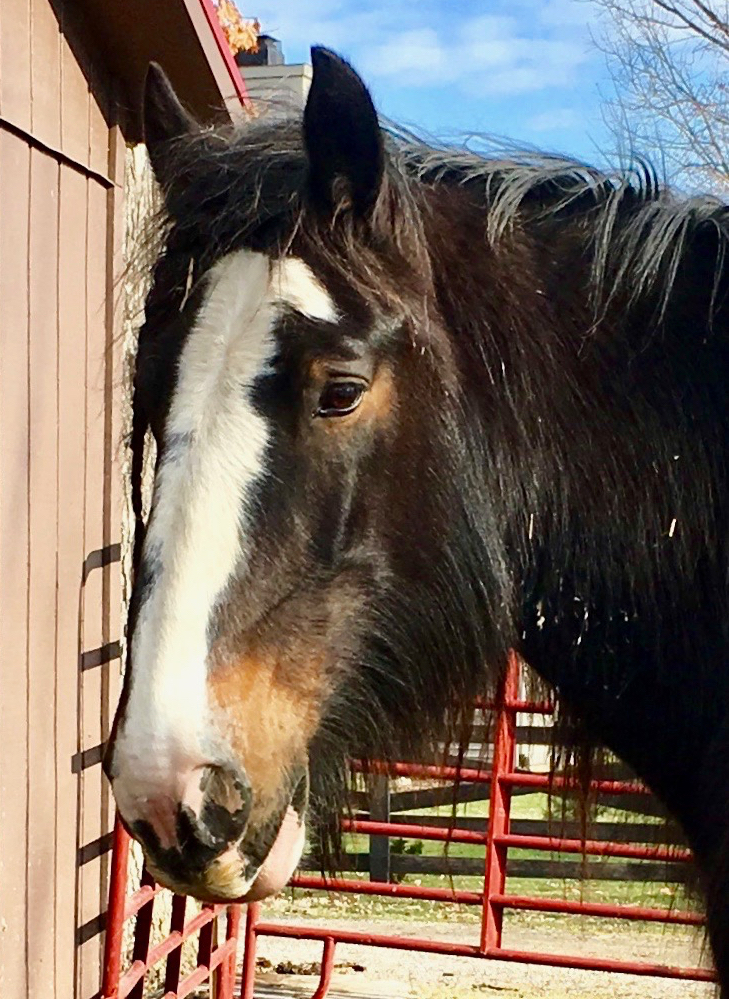
Draft horse after Let Animals Lead Reiki session
(Photo by Nancy Crowe)

The massive draft horse was one of the saddest, checked-out animals I have met. He’d spent years on at least one Amish farm, was isolated and probably abused, and had given up. His new owner, the director of a nonprofit equine therapy center, wanted to find out what he needed.

The first thing I did was ask if it was OK to communicate with him. Surprised but skeptical, he agreed. The notion that he could choose anything was foreign to him.

Within a week or so, he told me what he wished to be called: Duke.

When I offered to share Reiki with Duke, I made it clear that opting out was absolutely fine. As we worked together during those first months, sometimes it was a yes and sometimes a no. How long the session lasted was also up to him.

That is the core of the Let Animals Lead method I practice. It’s all meditation and no hands unless the animal initiates contact, or the practitioner knows the animal well enough to gauge whether that would be welcome.

One day Duke decided he’d had enough Reiki and walked back into the barn. I thanked him and moved on to a pig a few feet away.

A few minutes later, Duke stuck his big head out the barn door and looked straight at me. “Got any more of that?” I heard.

I assured him I did, but he’d have to wait until the pig and I were done. When I returned, he was waiting at the fence. I met his eyes and saw hope.

His owner, veterinarians, equine bodyworkers, clients, and I all worked to help Duke heal from the effects of his past, giving him choices whenever possible. He still struggles mightily with triggers. But he has friends in the herd. He connects with veterans who also live with PTSD. He even let kids dress him up for the Fourth of July. Being a therapy horse would have been unthinkable for Duke not so long ago.

While we can’t let our animals choose to play in traffic or opt out of a vet visit, there are many other options we can offer. We can give them a choice of toys, blankets, or litter boxes. We can hold out two different treats and see which gets gobbled up first. We can let cats come to us rather than chasing or picking them up. We can suggest a walk or ride and pay attention to the dog’s body language for a “let’s go” or a “not today.”

Choice frees us all to engage honestly, be our best selves, and create our “better than before.”

How an animal communication session works

small white dog on blue and white chair
(Photo by Dominic Buccilli from Pexels)

As an animal communicator, I help animals of all species and their people solve problems and improve relationships. But the animals don’t come to my office, sit on a sofa, and tell me what’s bothering them. They can talk to me from their own homes — no Zoom, WiFi, or appointments needed.

That’s possible because communicating with animals uses that “sixth sense” all humans and animals have. It’s how you know your kid is either in trouble or causing trouble. It’s how your dog knows you’re on the way home. It’s that niggling feeling that, despite logical evidence to the contrary, something’s not right. (How often has that proved to be spot-on?)

Except for rounds at nonprofit barns or rescues, when I might be communicating and sharing meditation with many animals, most of my animal communication sessions are remote. I then email the human a summary.  

Here’s more about the process.

The animal, the question, and a prayer

When I begin an animal communication session in my northeast Indiana office, I have the animal’s name, species, age, gender, and usually a photo. The animal himself can be anywhere. I also have one or two questions or concerns the animal’s person wants to address.

But first, I say a brief prayer asking God to help me listen effectively, and relay with accuracy, fairness, and kindness what the animal needs her person to know. I ask St. Francis, patron saint of animals and the environment, to be with us as well.

Then I hold an image of the animal in my mind and gently tune into her energy. Once the animal responds — I generally get a sense of a head raised or ears at attention — I silently introduce or identify myself and ask permission to communicate with her. I say her person has asked me to talk with her about (whatever the issue is) and help if we can.

I’ve never had an animal refuse to communicate, but I have had a few “uh-oh, I’m in trouble, aren’t I?” responses. I assure them this isn’t about being in trouble. It’s about listening and finding a way forward.

I might ask: “So it sounds like you’ve been peeing outside the litter box. Can you tell me more about that?” Or: “You’ve been seeing some things being packed up around the house and your people have been pretty tense lately. (Your person) wants me to tell you more about what’s happening. We also want to know how you’re feeling about it and find out what you need right now.”

Being heard means everything

Then comes the most important part of all: listening with a clear mind and an open heart. Sometimes what the animal has to say will come in words, but more often I get images and emotions. I might get an image of the dog or cat moving away from an angry man inside a house. Or I might see a young girl grooming the horse and sense the horse feeling very relaxed and loved. I take notes in longhand.

I relay anything the person wants me to tell the animal and ask what the animal needs. Almost always, some action steps the person can take emerge. It could be a different location for his litter box or the need for more play time. It may be a visit with a particular person or another animal as her life is drawing to a close. In any case, I assure the animal that I will do my best to help, that his human loves and appreciates him very much, and that he is infinitely loved and cared for by God.

I thank the animal for communicating with me. Then I end the conversation pretty much the same way I’d end a phone call — I say goodbye and disconnect. Then I write up my findings and email them to the animal’s person — always with encouragement to take what resonates and leave the rest. 

If you have questions or would like to arrange a session for your animal friend, please feel free to contact me.