Aysha Akhtar was only five when a close family friend began molesting her. The abuse continued for five years and across two continents, after her family moved from London to Virginia. She told no one.
Then came Sylvester, a German shepherd mix technically belonging to a relative, but basically her dog. They shared friendship, kinship, walks in the woods … and abuse, as Sylvester’s owner’s idea of training was throwing him against a wall.
Writing this book took Akhtar into not only her own history, but into a slaughterhouse, an animal sanctuary, a prison, and a forensic necropsy by an ASPCA veterinarian. She even corresponded with and visited an imprisoned serial killer who’d also abused animals. Akhtar does this both as an accomplished physician and scholar and as a human being who is deeply affected by what she sees and hears.
Through it all, she challenges us to examine the ways we break with and join with animals in our actions and attitudes. The effect one life can have on another, even and especially across species lines, is profound. It was Sylvester who helped the young Akhtar find the strength to stand up first for him, then for herself.
The stories here range from inspiring to devastating, but you can visit the author’s website for suggestions on how to make a difference. That one starfish is counting on it.
This follow-up is not only a worthy exploration of the relationship between humans and animals, but also a potentially transforming walk through some of the thorniest aspects of these relationships.
McElroy, who has worked as a technical writer and editor as well as in several animal-related occupations, writes largely from her experience on a small Wyoming farm. Insights from people who wrote to her after reading her previous book are included.
I appreciate so much in Guides for the Soul, but here are three primary take-aways.
The first is that the healing benefits of our relationships with animals are often subtle, but no less powerful. It isn’t always the spectacular, tossing-away-the-cane miracle with the therapy dog. More often, it’s the steady warmth of the cat curled up on the patient’s lap or the jingling of tags along a quiet country road day after day. Sometimes the miracle is only seen in hindsight.
“We are so conditioned to expect drama and heroics in healing that we forget the staggering importance of all the healing that goes unseen,” says McElroy, a cancer survivor. (Check out this wonderful six-minute video about two guys — one a morbidly overweight human, the other a middle-aged rescue dog — who healed each other.)
What if, she asks, we were to believe that the being at the end of the leash, in the cat carrier, or on a perch could heal by his or her very presence, offering exactly what is needed in every moment? That the dog nuzzling a crying adult was administering critical emotional first aid, or the horse heard the bullied teen as no one else could? Is that so far off the mark?
Second, McElroy delves into the rocky territory of death in a way that can benefit anyone who has lost a much-loved animal, particularly when the loss is accompanied by shame and guilt. These experiences and memories, however long ago, stick to us until we acknowledge their multilayered impact, she says.
Quoting respected authors on pet loss as well as people confronting long-buried grief and remorse, she offers perspective and tools for healing. However, she is respectful enough not to put forth easy answers. The stories of McElroy’s precious llama, Phaedra; and Jody Seay’s elderly black Lab friend McKenzie, are likely to bring both a tear and a spark of hope.
Finally, even when the animals involved are not our own, what can we do when we witness the inexplicable and cruel? When McElroy was about 11, a young coyote with his mangled leg still dangling in a steel-jaw trap was part of a wildlife exhibit at a nearby park. Day after day, he lay in a rusting wire cage with no food or water. She pleaded with the park rangers to care for the coyote. They ignored her. She begged her parents to do something, wrote to the local paper, and contacted the town mayor and her family’s veterinarian.
No adult would intervene until she called Mrs. Roberts, the mother of a friend, who picketed the park. The exhibit shut down within a week. The coyote made the front page of the local paper and was released to Mrs. Roberts, whose veterinarian husband helped care for the coyote in a backyard pen. Months later, Mrs. Roberts drove the coyote to the desert and released him back into the wild.
“She reminded me that although it was she who freed the coyote, it was I who had brought the coyote to her attention. At the age of eleven, I learned that one person can stand up against suffering and make a difference,” McElroy recalls.
In what may be the most goal-oriented installment yet, the Seven Questions series continues with Blake Sebring, Fort Wayne author and longtime sportswriter for The News-Sentinel.
Blake has covered the Fort Wayne Komets for 27 years and authored several books, including the just-released On to the Show: Fort Wayne’s Lasting Impact on the NHL. Blake is also a colleague from my copy desk days at the N-S, one with a particular gift for finding and telling the stories of humor, faith, and perseverance that underscore every game. I don’t remember ever having to bug him about a name spelling or missing information … and you’d have to be an editor working on daily deadlines to fully appreciate that, but on to the show.
Blake’s latest includes stories with people such as Mike Emrick, Bruce Boudreau, Kevin Weekes, Dale Purinton, and others from Fort Wayne who have advanced to the highest level of the sport. Here, find out more about Blake’s laughs with legends, defining moments and what happens when a mild-manned sports reporter has murder in mind:
1. You mentioned this was the most fun you’ve ever had writing a book. Tell me what made it so.
Every former Komet I reached out to called me back within a day, if not sooner. I told them it would take half an hour or so, but we usually ended up talking for two hours. The first hour would be reminiscing or catching up about past teammates and their families. There were always a lot of laughs before we ever got started on the actual reason for the conversation, and then they gave me incredible material to work with. Some of the stories I had never heard before, and that made me want to write the stories right away.
2. You’ve covered the Komets for so long, telling their stories on and off the ice. What is it that you wish more people understood about hockey?
A couple of things. I’ve never felt the sport has done a good job of selling how much better the game is in person than it is on TV because you can see everything. The other thing is hockey players don’t get enough credit for being such incredible all-around athletes. They aren’t the biggest, fastest or tallest, but they play a game that is almost as physical as football and requires as much aerobic conditioning as basketball, and they do it three or four times per week.
3. When someone mentions Bob Chase, the late voice of the Komets for WOWO (and the subject of Live from Radio Rinkside), what’s the first image/memory that springs to mind?
Bob’s humility. When I wrote his obituary column, I talked about how everyone always felt comfortable coming up to say hi or ask him a question at almost any time, and he absolutely loved that. Every time I talked to him about an award he received, he’d always get misty-eyed and wonder why his life was so blessed. And if you asked him about his kids, the water works would really get going. Bob was exactly the same in private as he was in public.
4. What’s your favorite sports movie?
Probably “Miracle.” Usually, Hollywood ruins sports movies because the action looks fake (actors are generally horrible athletes) and they change the story by adding conflict and drama, which really ruins it if you followed it as it happened originally. They didn’t have to do any of that with “Miracle.” I’ve talked to former Komets Steve Janaszak and Mark Wells enough over the years to have some insight into the 1980 U.S. Olympic hockey team and what they experienced. Their stories are in the book.
5. Your last book, Lethal Ghost, delves into darker territory than sportswriters (or most police reporters) encounter. What, if any, challenges did you run into in the course of writing it?
(Chuckles) I wanted to try something totally unexpected and out of character to challenge myself as a writer. When I write a book, I usually try to experiment with something different, and in this one I wrote the bad guy in first person and the good guy in third person, and maybe the most fun was when they interacted. I had the beginning and the ending figured out in my head before I started writing and just let everything else flow. Every time I’d run out of material, my mom would come up with a new way to murder someone or I’d let it percolate for a few days and a new idea would pop in. I’ve got two sequels planned. Bwa-ha-ha!
6. There is a “defining moment” theme in the fictional The Lake Effect, certainly, but also in The Biggest Mistake I Never Made, which talks about Lloy Ball’s decision to play volleyball for his dad at Indiana University-Purdue University Fort Wayne instead of Indiana University Bloomington. Can you share one of yours?
I was 23 years old and working as a sports editor in Sturgis, Mich., and I left after 18 months because my boss kept lying to me. I didn’t have anything else set up, other than I knew I had to do something different because the environment was so bad. I needed to stand up for myself so I came home and worked part-time at The News-Sentinel and loaded freight at the airport for six months until the paper created a full-time position for me. Loved the freight job, by the way.
7. What is one thing you never leave home without?
The expectation that I’m going to find something or someone new that I can tell a story about if I just keep my eyes and ears open. The absolute best part of my job is that every day, every game is unique, and I never know what I’m going to find or see. How many people are lucky enough to say they are never bored with their job? How lucky am I?

 Aysha Akhtar was only five when a close family friend began molesting her. The abuse continued for five years and across two continents, after her family moved from London to Virginia. She told no one.
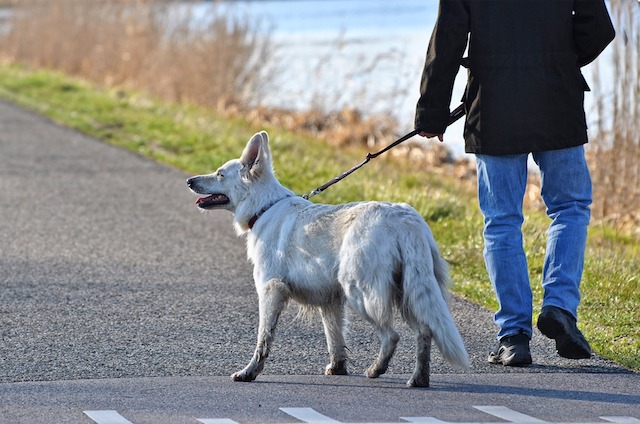 (Photo by MabelAmber/Pixabay)
 McElroy, who has worked as a technical writer and editor as well as in several animal-related occupations, writes largely from her experience on a small Wyoming farm. Insights from people who wrote to her after reading her previous book are included.
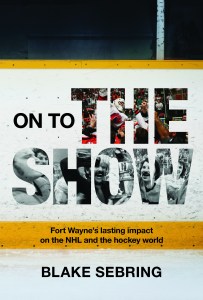 In what may be the most goal-oriented installment yet, the Seven Questions series continues with Blake Sebring, Fort Wayne author and longtime sportswriter for
  Every former Komet I reached out to called me back within a day, if not sooner. I told them it would take half an hour or so, but we usually ended up talking for two hours. The first hour would be reminiscing or catching up about past teammates and their families. There were always a lot of laughs before we ever got started on the actual reason for the conversation, and then they gave me incredible material to work with. Some of the stories I had never heard before, and that made me want to write the stories right away.
 All Creatures