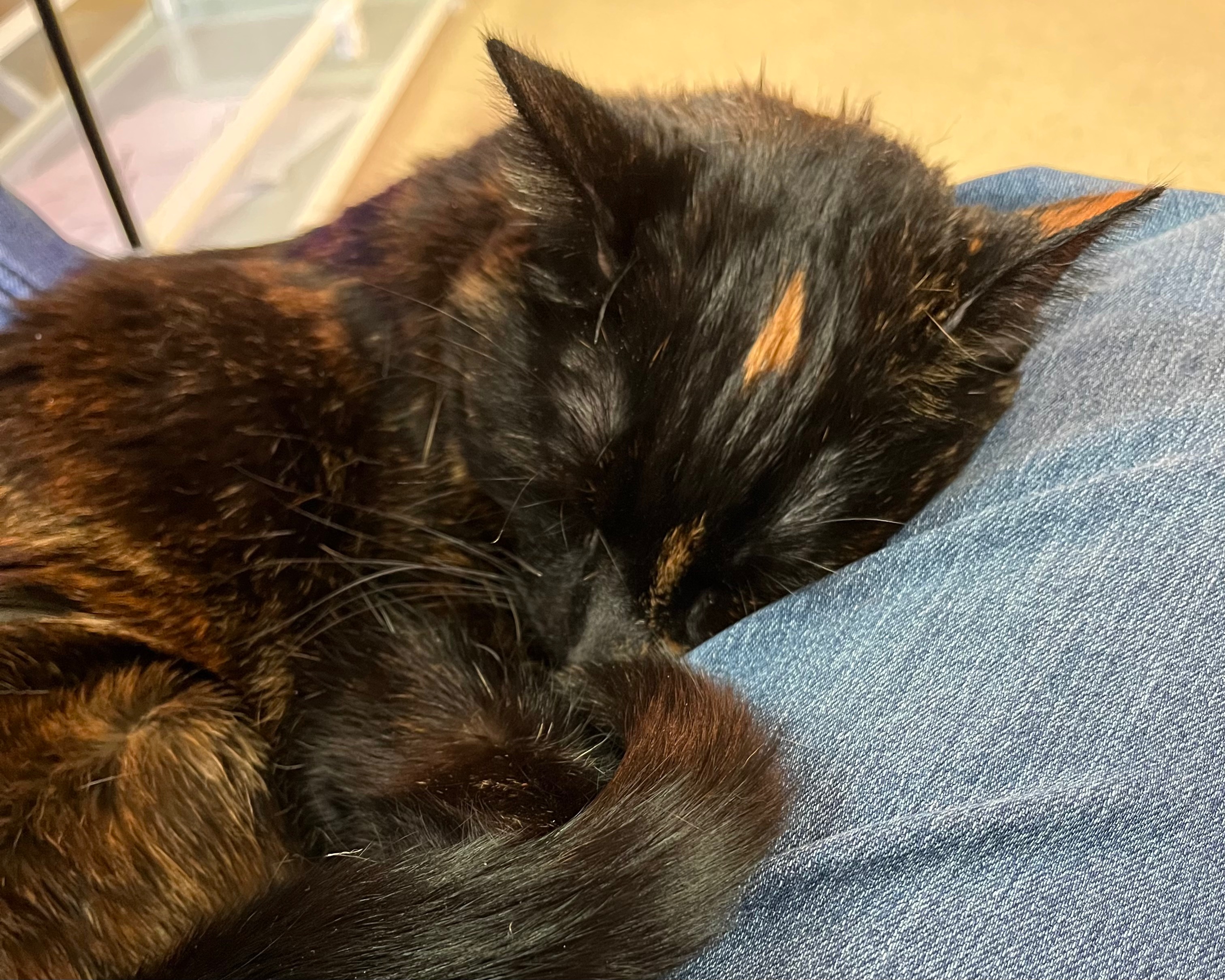
‘How to Speak Cat’ cards help decipher feline behavior

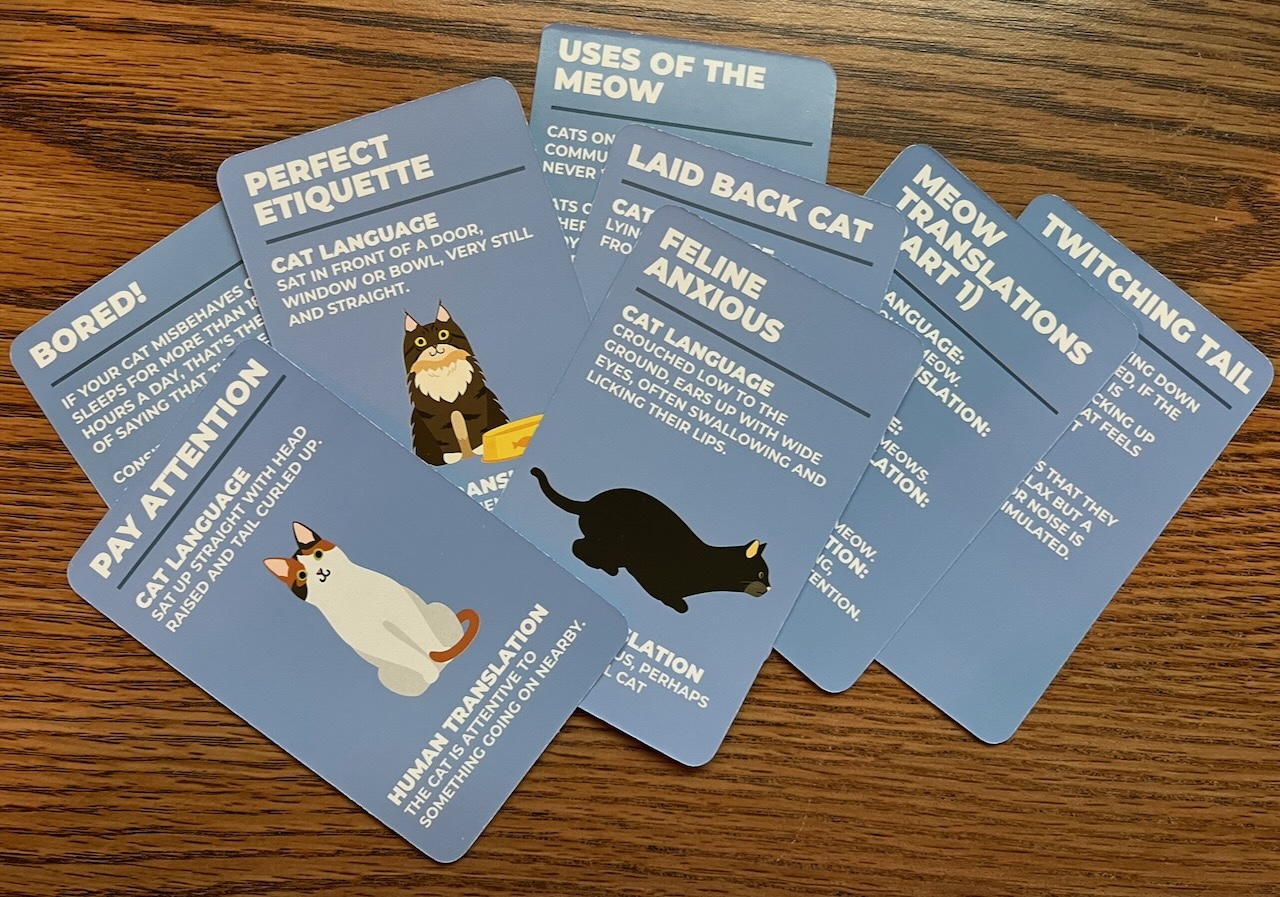
A sampling from the “How to Speak Cat” card deck.

This 100-card deck, given to me for Christmas by someone dear, is a treasure trove of tips about twitching tails, different meows and more. Animal communication has many facets, especially where cats are concerned. Though cats have a reputation for being mysterious, they’re actually not if you learn what to look for.

While I’m no stranger to cat language of all types, I found new info here. For example, when a cat lies on his back and rolls from side to side, that is called “the social roll.” It has a name and indicates a willingness to interact. “It’s safe to pick up the cat, just don’t go for the belly!” the caption explains. 

According to another card, a stretch means the cat has been stressed but is now relieved. I’m less sure about this one, as most of my cats’ stretches follow naps. There’s always that one cat who does things differently. Like my calico, who this morning did a stretch followed by a social roll. Then she declined to play with the dangle toy I offered. When I asked what she actually wanted, she went to get a drink of water. 

As a proponent of indoor cat living, I disagree with the card that suggests letting your cat out. Double ditto for the one that suggests searching after she’s been gone for three days. (Um, try three hours. Max.)

The record for the loudest cat purr, by the way, is held by a cat named Merlin who could purr at 67.8 decibels. That’s about as loud as a shower.

Lovers of cats and fun facts will find this a great conversation piece to keep on a bookshelf or coffee table. You can pull one a day to see what new insight you might find about your feline friend. It might be spot on, or it might make you wonder if only their creator truly has cats figured out. 
Remaining a trainable human

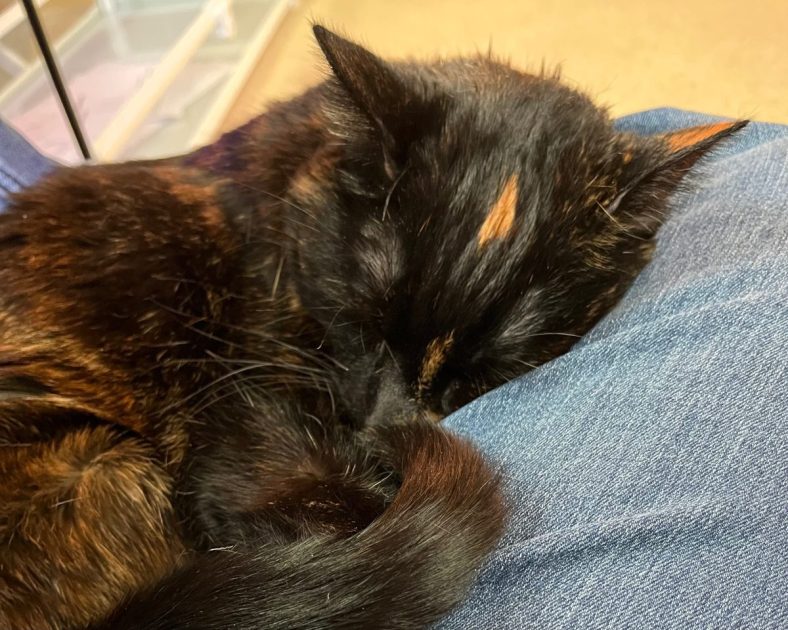
Photo by Nancy Crowe

The monthly application of flea/tick/heartworm preventive to the back of our cats’ necks is one of their least favorite things. It’s one of those tough tasks I counsel my animal communication clients to approach with calm, firm deliberation. Respectful handling is key to Fear Free for vet clinics, shelters, groomers and more.

Yet sometimes we fail to follow through on what we know. A couple of months ago, for reasons I don’t even remember, I was in a hurry. With applicator in hand, I quickly went to Lucy, bent over her and dripped the liquid onto the back of her neck. She shot me a look of reproach — and worse, hurt — and ran off.

I instantly regretted how I had administered the medication. There was no rough handling, but my “We’re getting this done. Now.” approach didn’t ease the process for Lucy or bolster her trust in me. My disappointment at having ignored my own advice, training and experience was secondary.

Nevertheless, Lucy accepted the treats I offered immediately afterward, along with an apology.

Later that day, when the stress of the moment had had a chance to wear off a bit, I invited her to join my yoga practice, something we both enjoy. For the most part she offers a classically feline “you call that a stretch?” glance and settles on a nearby chair. On this day, when she padded into the room, I told Lucy I knew better and would do better. She joined me on the yoga mat and purred.

When the time came for the next month’s dose, I took a second to remember what I knew. That’s obvious, yet so easy not to do.

I carefully approached Lucy, picked her up and held her for a moment. “I know you don’t like this, but we can manage,” I said, keeping my breathing even. I set her down on her cat tree where I could steady her without having to bend over her. I took another breath, squeezed on the topical medication and gently set her on the floor. Again she hurried off, stopping only briefly for treats.

I moved on to the day’s next task, assembling a glass terrarium to keep our other cat from nibbling on the smaller houseplants (a story for another day). I sat cross-legged on the floor with the base, sides, doors and instructions spread out, along with the enclosed bag of bolts and other itty bitty parts.

Within a few minutes, in strolled Lucy. She sniffed at the new materials on the floor, then climbed into my lap and curled up, purring.

Cats like trainable humans.