Backing up animal communication with action

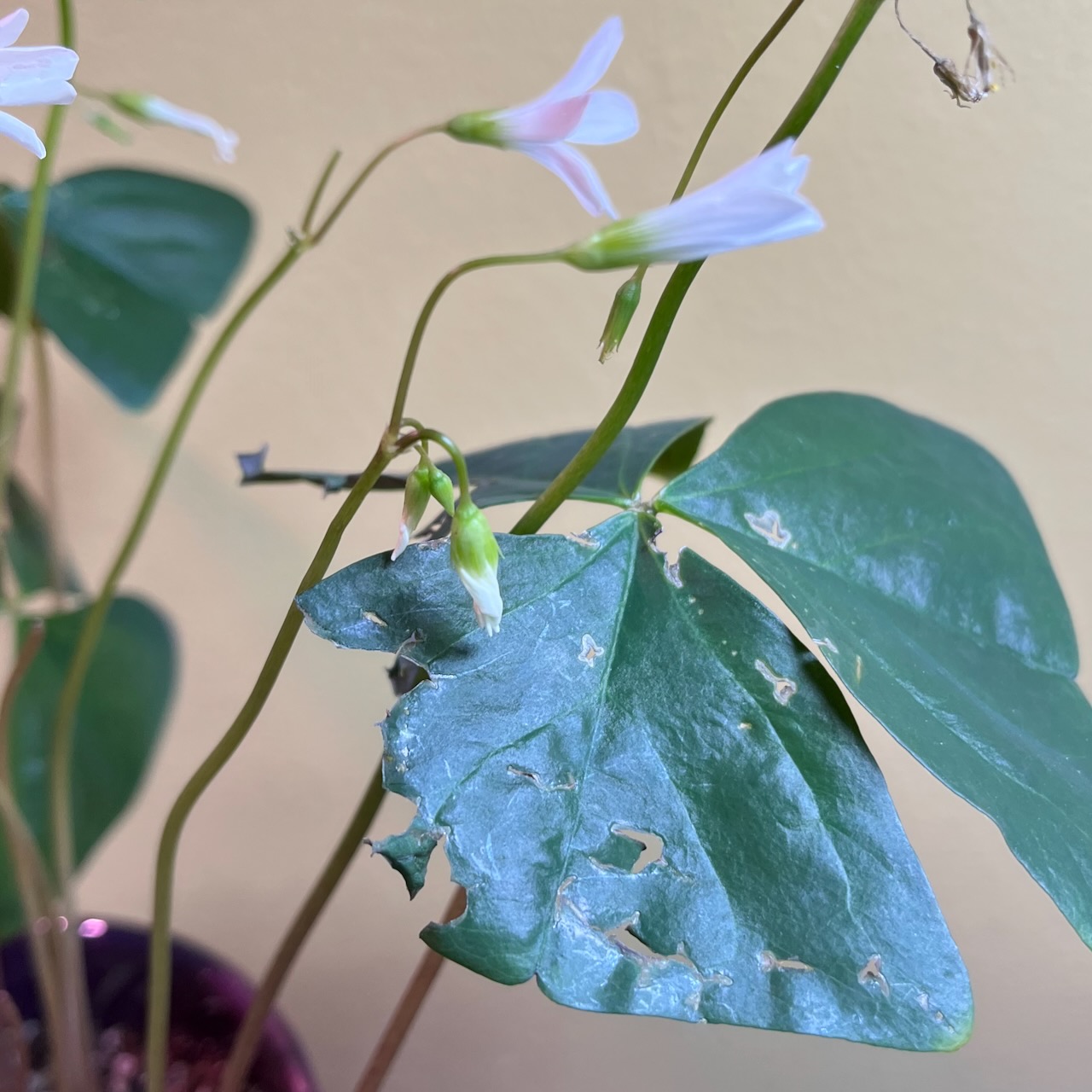
I called the vet clinic as soon as I noticed the missing shamrock leaves, and teeth marks in a few more. There was no question as to which of our two cats was responsible: Dusty, an 8-year-old calico with a history of ingesting things like fake Christmas tree needles.

Bring her in, they said.

Shamrocks are not as toxic to cats as other plants are, such as those in the lily family. Dusty still had to spend 24 hours at the vet clinic getting IV fluids and having her blood checked regularly to avert kidney damage.

I communicated with her several times from home, letting her know that she was safe and cared for and would be home soon. That she is loved no matter what. Trying my best to do so calmly, I also pictured the direct connections between her eating the shamrock leaves, my partner and me being upset and whisking her off to the clinic and her being there overnight with a tube in her leg. We also shared distant Let Animals Lead® meditations to help optimize Dusty’s treatment and keep us both calm.

The shamrock plant went into a closed room while I decided on best pet-plant safety practices.

Thankfully, Dusty came through the experience unharmed and we were able to bring her home the next day. Not an hour later, I saw her jump up on the table in my home office where the shamrock had been.

Clearly, this was going to be a process.

Dusty didn’t care for the shaved IV site on her right front leg.

Clear communication about expectations and consequences is important with any species. But for everyone’s safety and peace of mind, we often have to back communication up with action. (It’s like telling your kids the liquor cabinet is off limits, but also locking it … especially if there have been previous violations.)

My smaller plants now live in a reptile habitat, and I moved a large croton off the floor to be less tempting. All plants in the house are surrounded by bits of sticky tape and sprayed weekly with Bitter Yuck. I also keep a kitty scratching pad and toys in my office for enrichment and diversion from the plants.

For harmony of animal and plant life, and to avert horrible outcomes, I recommend these steps. All of them.

  1. Know what’s toxic before planting it in your garden, adding it to the pasture, or bringing it into your home. The ASPCA maintains a list of plants known to be toxic and non-toxic to dogs, cats, and horses, but advises that ingesting any plant material can cause vomiting and gastrointestinal problems.
  2. Know your animal companion, his curiosity level and interest in plants or other unauthorized objects. For example, if your dog is a shoe guy and has never looked twice at your flowers, you may have less worry than if his tastes are more universal (i.e., gets into everything).
  3. Be clear with your animal about what will happen if they chew on or eat plants. “If you eat this, you’re going to feel very dizzy, your tummy will hurt really bad, and I’ll have to rush you to the vet. I’d be so upset and frightened if that happened.” Picture all of this as you speak. “So find something better to do.” Then picture him calmly walking away from the plant and picking up a favorite toy, going to look out the window, or coming to you to be petted.
  4. Keep plants and pets apart. These, short of barbed wire, are my current methods.
Plants behind glass with bits of sticky tape for good measure … because that’s how we roll now.

Bottom line: If you know or suspect your animal may have ingested something poisonous, contact your veterinarian, emergency vet clinic, or the ASPCA Animal Poison Control Center, (888) 426-4435.
Remaining a trainable human

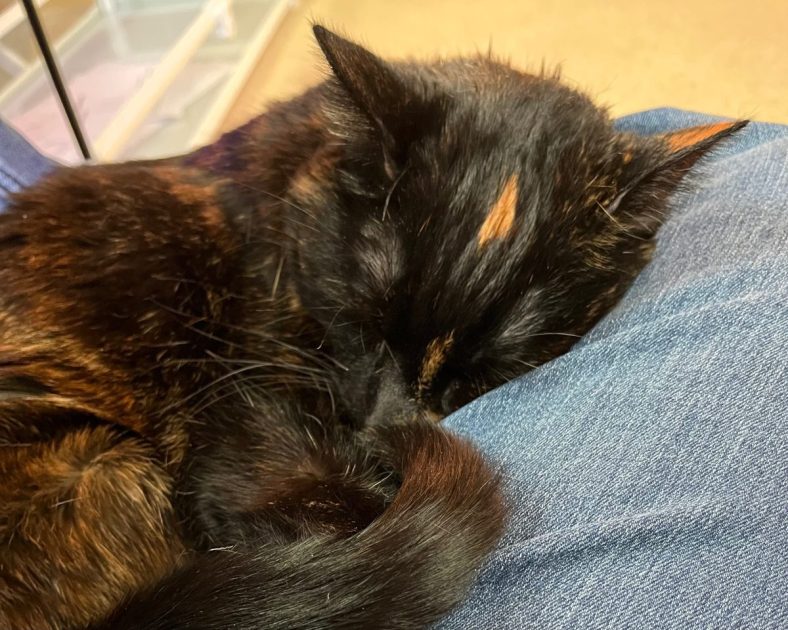
Photo by Nancy Crowe

The monthly application of flea/tick/heartworm preventive to the back of our cats’ necks is one of their least favorite things. It’s one of those tough tasks I counsel my animal communication clients to approach with calm, firm deliberation. Respectful handling is key to Fear Free for vet clinics, shelters, groomers and more.

Yet sometimes we fail to follow through on what we know. A couple of months ago, for reasons I don’t even remember, I was in a hurry. With applicator in hand, I quickly went to Lucy, bent over her and dripped the liquid onto the back of her neck. She shot me a look of reproach — and worse, hurt — and ran off.

I instantly regretted how I had administered the medication. There was no rough handling, but my “We’re getting this done. Now.” approach didn’t ease the process for Lucy or bolster her trust in me. My disappointment at having ignored my own advice, training and experience was secondary.

Nevertheless, Lucy accepted the treats I offered immediately afterward, along with an apology.

Later that day, when the stress of the moment had had a chance to wear off a bit, I invited her to join my yoga practice, something we both enjoy. For the most part she offers a classically feline “you call that a stretch?” glance and settles on a nearby chair. On this day, when she padded into the room, I told Lucy I knew better and would do better. She joined me on the yoga mat and purred.

When the time came for the next month’s dose, I took a second to remember what I knew. That’s obvious, yet so easy not to do.

I carefully approached Lucy, picked her up and held her for a moment. “I know you don’t like this, but we can manage,” I said, keeping my breathing even. I set her down on her cat tree where I could steady her without having to bend over her. I took another breath, squeezed on the topical medication and gently set her on the floor. Again she hurried off, stopping only briefly for treats.

I moved on to the day’s next task, assembling a glass terrarium to keep our other cat from nibbling on the smaller houseplants (a story for another day). I sat cross-legged on the floor with the base, sides, doors and instructions spread out, along with the enclosed bag of bolts and other itty bitty parts.

Within a few minutes, in strolled Lucy. She sniffed at the new materials on the floor, then climbed into my lap and curled up, purring.

Cats like trainable humans.

‘Am I making my animal sick?’

Image by Mirko Sajkov from Pixabay

You’re in the thick of a stressful time, and now your animal friend is sick or has developed a puzzling behavioral issue. That’s hard enough.

Since the link between illness and stress cannot be denied — nor can the link between you and your animal — you may even wonder if you are part of the problem. Did the animal take on your stress? Were you so distracted that you didn’t notice your pet was having problems?

“Am I making my animal sick?” is a question I’ve heard from friends and my animal communication clients. I’ve heard it from myself, too.

Before you go down this rabbit hole (I’ve been there; would not recommend), remember that the first person to talk to is a licensed veterinarian. Take the opportunity to learn and make recommended changes in your pet’s diet, environment or routine.

For that matter, this could also be a great time to top up your own coping skills. Exercise, for example — more dog walks, barn time, or cat play sessions — could benefit both of you.

Benefiting both of you is what this is about.

When I’m communicating with an animal, he or she will often show me stress in the household or barn. That can come through in, say, the image of a person angry or downcast. It could also be the sound of raised voices or just a heaviness I can feel in my chest.

Animals may not understand what’s going on, but they feel it. Some animals are afraid, perhaps for good reason. Most want to help.

Bentley, a 12-year-old Westie mix, developed digestive issues just as his person, Aileen, was grieving a huge loss. The vet prescribed medication and a change in diet. Still, she wondered if her stress had exacerbated his condition. “Am I driving him nuts?” she asked.

That notion hadn’t occurred to Bentley, who showed me a grey fog surrounding Aileen and her heart intact. “We’re doing this together,” he told me. They both have continued to heal.

It reminded me of when I feared I was making my tiger cat, Idgie, sick. I took her to the vet, we began treatment for her hypothyroidism and I took some important steps to heal myself and my life. On the night before her thyroid surgery, instead of the usual worrying I sat down to at least try a meditation. She curled up in my lap and purred. “OK, I think you’re starting to get it,” I heard before she drifted off to sleep. She inspired me to take better care of myself as well as her, and we enjoyed several more years together.

I’ve never had an animal tell me their person’s distress made them ill. What they tell me instead is that they and their beloved humans are tackling stress, illness and whatever else as a team. They can’t solve your problems (though your shepherd dog would gladly try), but they will sit, stand and walk with you every step of the way. That may be the best medicine of all.