Chasing trains, good tunes and goodwill

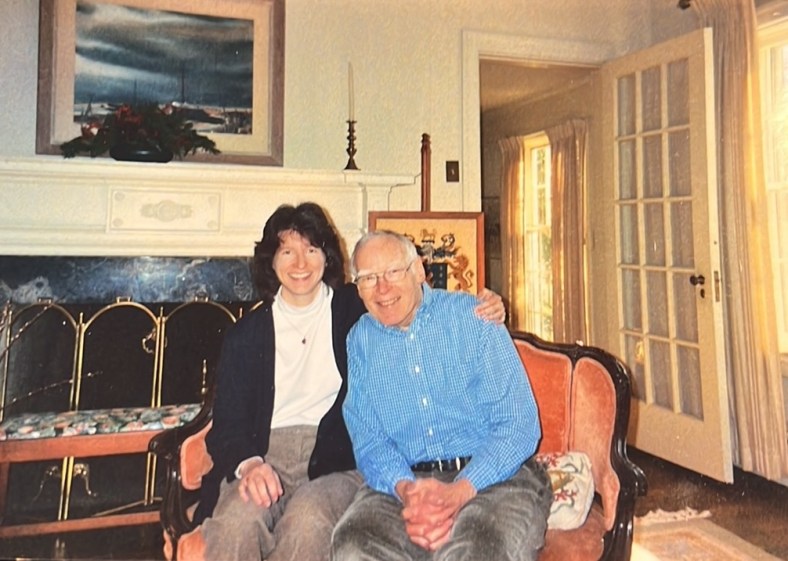
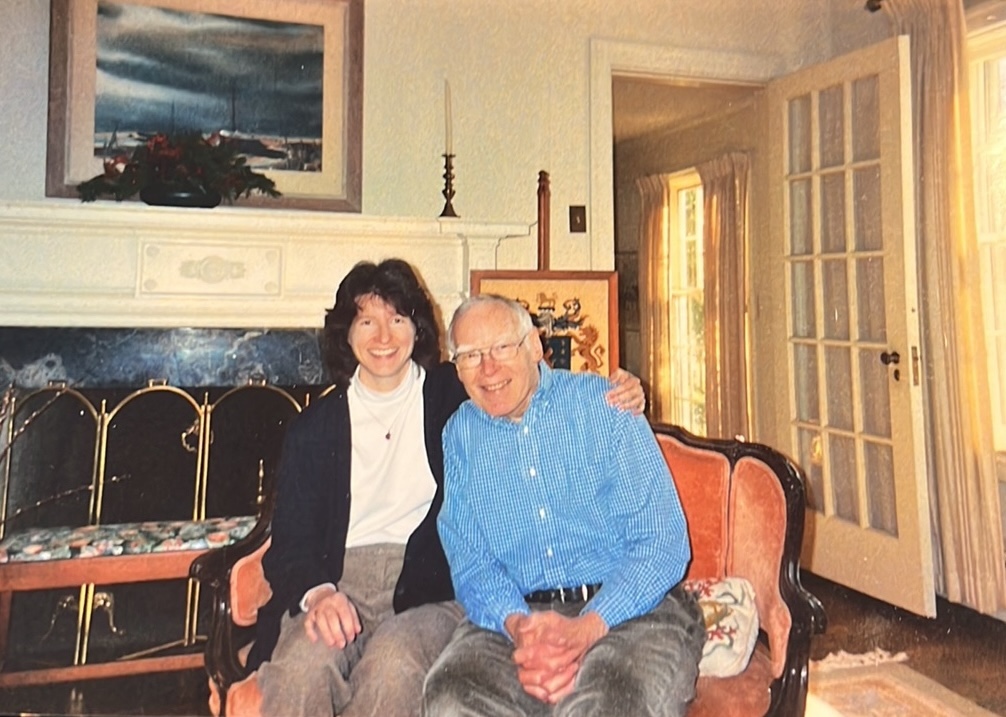
Charlie and me when I came back to Louisville for my 10-year seminary reunion in 2006.

We were saying our goodbyes outside the restaurant when a train came roaring by. Charlie, then well into his seventies, sprinted across the parking lot for a closer look. Having known him for years, I knew he was taking note of what kind of train it was and its probable route and cargo. He’d be able to tell us its history.

But my partner, Kathy, who’d met him more recently, whirled around and stared after him.

“He’ll be back in a minute,” I said.

Charles Beaumont Castner Jr. — aka Charlie, or CBC in notes and emails — was retired from a storied public relations career with Louisville & Nashville Railroad (later CSX) by the time we met in 1994. We both worked with Religious Leaders for Fairness, which advocated passage of Louisville’s Fairness Amendment to protect LGBTQ rights.

Charlie was a seasoned Second Presbyterian Church elder and PFLAG dad. I was a twenty-something student at Louisville Presbyterian Theological Seminary, had just lost my father and was trying to figure out a ministry without a clear path.

The Presbyterian Church (USA) at that time was in the midst of study and dialogue on what to do with gay folk — to ordain, welcome or continue with “don’t ask, don’t tell.” Though single at the time, I knew I couldn’t ask a partner to stay in a secretive corner of my life. What was a theologically educated journalist to do?

Charlie and I became fast friends. He’d become an advocate for LGBTQ inclusion when his daughter Louisa came out, and we shared a vocation in storytelling. Along with writing about railroads and organizing tons of train documents, Charlie edited the Louisville Presbytery Pipeline, news of all the PCUSA churches in the Louisville area. It was part of the Synod of Living Waters newspaper covering all things Presbyterian in several Southern states. He was ready to scale back on that, and I became his co-editor with the plan of eventually taking over for him.

We went to monthly communications committee meetings. We covered presbytery meetings, which were all-day affairs with a meal, a worship service and scads of handouts. Then there were all the other events that called for photos and copy … bluegrass gospel quintets, food drives, forums, fellowship with a family of new Bosnian immigrants and more. Some of these took us to the outer reaches of the presbytery, and Charlie and I had great talks on the way.

To him I was not an issue; I was just me. Questions around LGBTQ inclusion were tough for church and society, but to Charlie, a way forward was possible with faith, constructive conversation and goodwill. He’d tell you that shared music — hymns sung in the church choir, boogie-woogie piano jams and more — helped too.

My work with Charlie, and the connections made through him, helped me reshape my career into writing and editing for church-based publications and organizations. Eventually I began doing communications and healing work with animals, too. You just never know where God’s call will lead. It’s never been the pastoral ministry I initially planned, but Charlie helped me see what was possible and craft something even better.

Charlie and his wife Katie remained my Louisville parents after I graduated from seminary and moved back to Indiana. Over the decades I’ve been blessed to know their adult children as well: Beau, Louisa and Fenner, all smart and musical.

Charlie and Katie sold their classic Indian Hills house and moved into a nearby Episcopal Church Home apartment; the Presbyterians were taking over, he jokingly warned his new friends.

Music lifted and powered Charlie through Katie’s passing, recovery from a stroke and a move to assisted living. Getting around with a walker slowed him down, but gave him more time to greet people in the halls. Everybody knew Charlie, and a whole lot of folks are missing him since he passed into the eternal Feb. 3 at age 97.

Somewhere, I’ll bet he’s sprinting after another train.
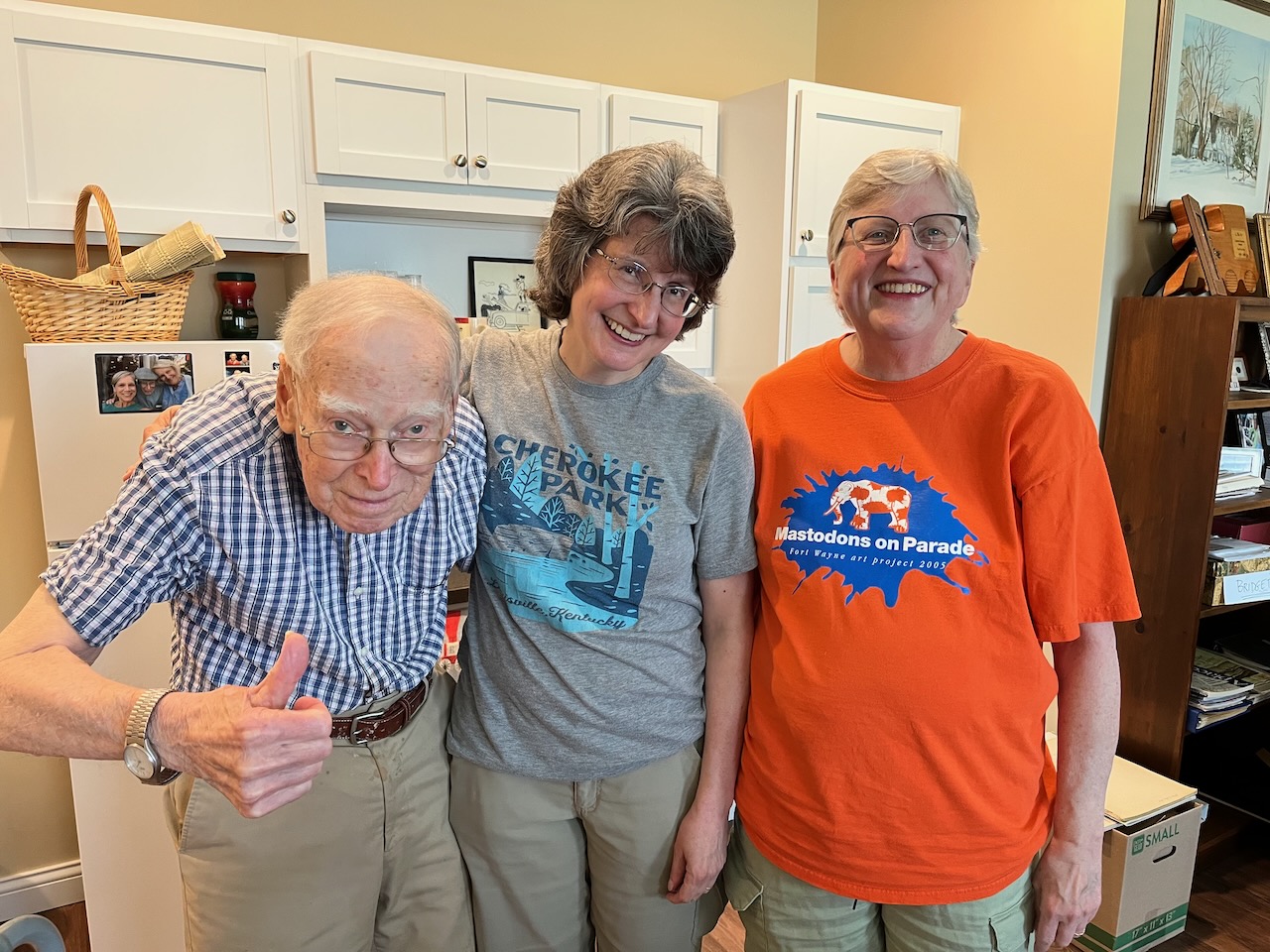
Charlie, me and Kathy in 2025.

Salem: Which was witch

TheWitches

See stacyschiff.com

As we have seen, especially in recent days, fear makes people do crazy, horrific things.

It’s the same old crap we dealt with three centuries ago. The people of Salem, Massachusetts in 1692 were nothing if not scared. They lived in a new, untamed land under constant threat of Native American attack and abduction. Their Puritan beliefs had them either righteously lording it over others or falling miserably short despite their best efforts and greatest sacrifices.

The notion that there were witches among them — women (mostly) who had signed a pact with the devil and were torturing people like 12-year-old Ann Putnam — gave all that free-floating fear a place to land.

Pulitzer Prize-winning author Stacy Schiff helps us see and feel this brief but devastating chapter of American history in The Witches: Salem, 1692 (Little, Brown and Company, 2015). In particular, she helps us see the day-to-day realities that allowed it to unfold.

My interest in the Salem Witch Trials increased a few years ago when I discovered a genealogical connection to some key players. Deacon Edward Putnam is my seventh great-grandfather, and he was among the accusers whose testimonies sent several innocent people to their deaths. His older brother, Thomas Putnam, appears to have been a ringleader, and Thomas’s daughter Ann was one of the young girls whose bizarre behavior set the whole mess in motion.

This was a rare moment in history in that females, and young ones at that, were calling the shots. Betty Parris, daughter of the Reverend Parris, and her cousin Abigail Williams began to have convulsive, screaming fits. Soon Ann Putnam and other girls showed similar symptoms. A doctor said the girls were bewitched, and the girls began to name a series of local women as their tormentors, also claiming to see ghosts, spectral versions of the living, and the devil.

It was a reality show-worthy spectacle, by all accounts. Then, as now, nobody does drama like a girl on the threshold of womanhood. Then, as now, people at the bottom of the heap are apt to misuse power when they suddenly find it in their hands. If one of these young ladies accused you of witchcraft, you were as good as convicted. The only defense against an accusation of witchcraft was a good offense — shifting the accusation onto someone else.

Schiff notes that young Ann Putnam predicted future events and recalled others that predated her birth. And without question, Thomas Putnam had suffered many losses at that point in his life — inheritance, land, and children. It’s not hard to believe he was motivated to use the force of the law to settle some scores. However, as Schiff says, “Putnam had a much-loved, perceptive, desperately convulsing twelve-year-old at home. He was soon to have a deranged wife as well. It is difficult to believe he had a long-range strategy at the start.”

Thomas and his wife both died in 1699, leaving Ann to raise her younger siblings. At age 27, Ann, seeking full church membership, apologized to the Salem village congregation for her significant role in the events of 1692. Out of the 19 who had been put to death, she had testified against all but two. It was a “devil made me do it” apology, but it was more than any of the other accusers offered. She died a decade later.

If you’re looking for the Cliff’s Notes version of the Salem witch trials, or easy answers, you won’t find them in this dense, detailed work. You will, however, find the humanity behind this surreal chapter of America’s story.

What was, and what’s left

Indianapolis Star photo by Greg Griffo

Indianapolis Star photo by Greg Griffo

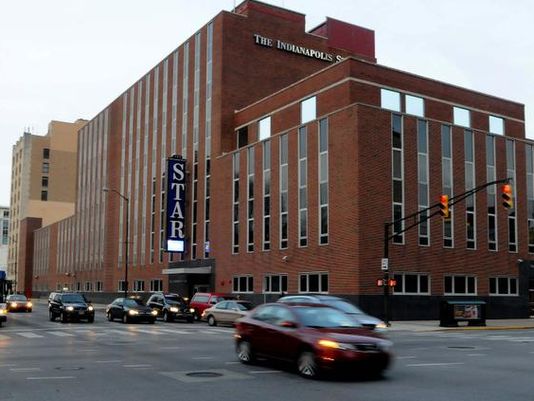
This is the Indianapolis Star building, which until a few weeks ago stood at 307 N. Pennsylvania St. The newspaper called it home for some 100 years before moving to what used to be a department store at Circle Centre mall downtown. For a relative snippet of time, I called it home, too.

My dad, Tom Crowe, worked there from 1960 to 1990, as an ad salesman, advertising director, and finally as vice president and general manager. Long before Take Our Daughters to Work Day was a thing, Dad was taking me with him to “the plant” with the rich, sharp smell of newsprint and ink and the inky footprints in the first-floor hallway. I peered over the desks of God knows how many poor souls trying to get their work done as I followed Dad around the building. He almost always whistled. The place reminded me of a Chutes and Ladders game, with ramps, steps, and corridors going off every which way. That’s what happens when you morph two or three old buildings into one.

The mailroom was the best, because you could watch and hear the presses running. The stories the people on the second floor had written — wrapped around the ads the people on the third floor had sold — were all coming out on those big sheets of paper rattling through the machinery. The finished, folded papers that came out on the conveyor belt would then go into homes all over the city. People read the paper. They talked about what was in it. Printed words mattered.

Many drawings and homework assignments were completed at the small conference table in the office Dad moved into after being promoted to general manager. It was off the New York Street entrance — just out of the frame in this photo. There were no windows, and while the daylight addict in me hated that, I never felt anxious or claustrophobic in there. Decades later, during an energy healing session, I was asked to picture myself in a place where I felt absolutely safe and at home. I went not to a beach, shady grove, or cozy fireside, but to Dad’s office, puzzling through social studies or perhaps just reading the comics in that day’s paper while he worked.

We were a large, often dysfunctional extended family. Charlie Simmons, one of Dad’s coworkers in the advertising department, sat with Mom and me through several of Dad’s heart surgeries. Other employees confided in Dad about their battles with depression or alcoholism, or their confusion over decisions their own children had made. We went to one another’s weddings and funerals, watched the fireworks together at the Fourth Estate employee park every Fourth of July, and knew at least something about what was going on in one another’s lives.

When I went to work in the business office during the summer as a college student, Don Bates in personnel — a sideline photographer who had taken my baby pictures — took the photo for my ID badge. “No bearskin rug this time,” he said, grinning as he clicked the shutter.

I could not have asked for a more educational, and fun, introduction to the working world. Wednesdays in the cashiers’ office were hectic, as all the circulation district managers brought in their checks, cash, and money orders. Frazzled after totaling everything up and balancing on one such day, we got into a rubber band fight. Without even trying, I managed to loop one over a sprinkler head. About 15 years later, when I stopped by for a visit, I happened to look up and that same rubber band still hung there.

At the News during another break, I got to practice the copyediting and headline writing skills that would become a large part of my career. Bo Connor at the Star helped me get my first full-time journalism job at The Republic in Columbus, Ind.

Dad passed away in 1994, just four years after retiring. The first phone calls I received that day — after Mom, telling me the news — came from 307 N. Penn.

A few years later, the News closed down. Then the Star was sold to Gannett. Then came the move to Circle Centre and the sale of the building. Then came the demolition.

Nothing stays the same, and really, nothing should. Not all change is for the better, and often more change is needed because of it. If we are smart, we learn. Dad, who kept a brick from the old Detroit Times building in his office, would be the first to tell me it’s OK to let go of what was and make room for what will be.

What can we pull from the past and retrofit to work for us now? That’s a question we in print media are going to have to figure out. Most days, I think it comes down to caring about what we do and why, and caring for one another in the process. That’s probably a gross oversimplification, but it’s a place to start.

In the meantime, after we make our next deadline, I just may fire off another rubber band.