
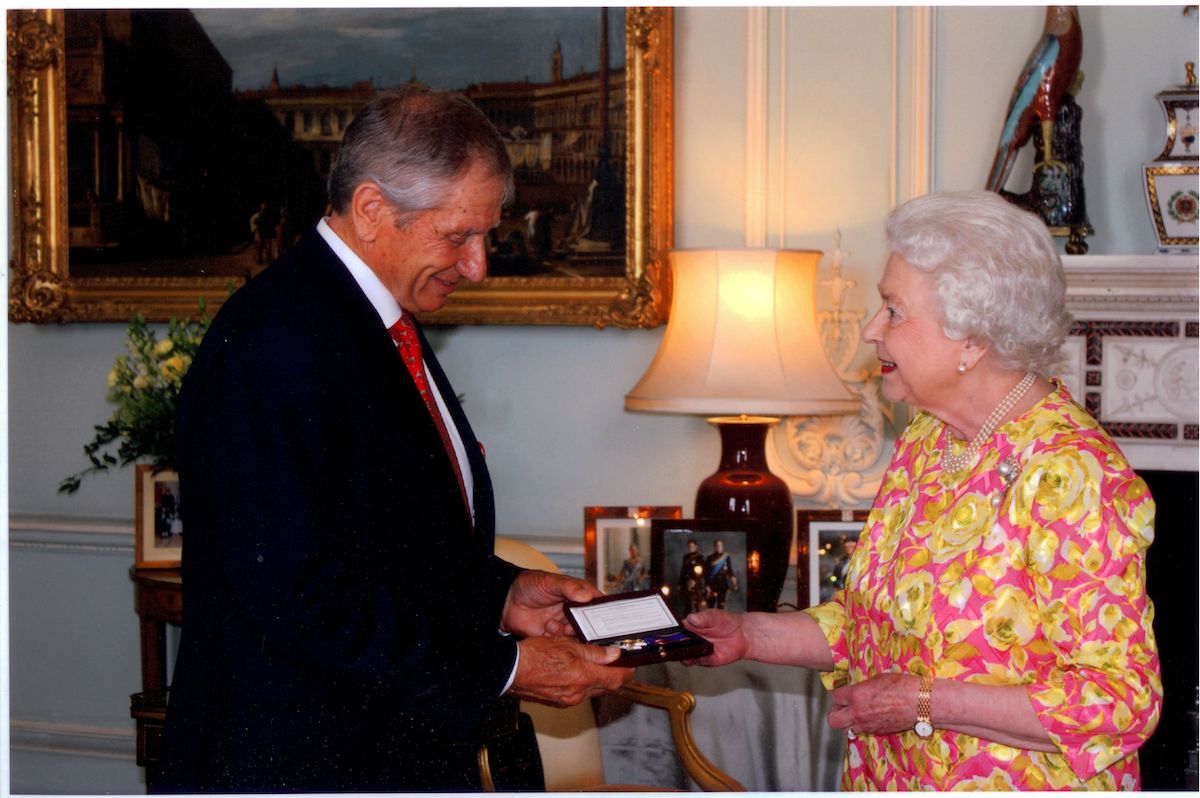
I love seeing the connections between my work and that of others in the horse world — in this case, trainer Monty Roberts.
Listening to horses (in their language) and building their trust propelled the career of this “California cowboy” and earned the trust of the late Queen Elizabeth II. After listening to Roberts’ Horsemanship Radio podcast for some time, I decided to read his 1996 autobiography, The Man Who Listens to Horses. Though I am not a horse handler, his Join Up® method of starting horses struck a familiar note. I wanted to know more.
Roberts, born in 1935, described a childhood of hard work and harder knocks. His father used traditional and often brutal methods to break horses in body and in spirit. Despite or perhaps because of this, young Monty figured out early that kindness and giving the horse a choice yielded better results.
His father and other horsemen called his methods foolish and dangerous, Roberts recalled. Dad drove home the point with abuse, prompting the younger Roberts to keep quiet about nonviolent horse training until he was out from under his father’s roof.
Word about Roberts’ work eventually got out. In particular, it got into a horse magazine read by Queen Elizabeth II, who invited Roberts to England to demonstrate Join-Up®. The trip was a game changer, not only for Roberts and the monarch who would become a friend, but for a growing number of horses around the world.
Join-Up® uses the natural language of the flight animal to gain the horse’s trust. The aim is for the horse to accept — by his own choice, never force — saddle, bridle and rider.
To my mind, this puts Join-Up® in the same family as Kathleen Prasad’s Let Animals Lead® meditation method, which I practice. It’s all about animal agency. Ditto for Fear Free, in which I’m also certified, which teaches techniques trainers, veterinarians, shelter workers, groomers and pet owners can use to reduce animals’ fear, anxiety and stress.
Likewise, though the book describes Roberts as a real-life horse whisperer, he claims no mystical ability. I agree that communicating with animals isn’t some mysterious mystical thing or the human telling the horse what to do so that the horse understands and complies. It’s about learning how horses experience the world, listening without expectation and respecting the inherent worth of another being.
So many descriptions of horse work in this book, including the step by step Join-Up® guide in the appendix, left me wanting a visual — so here’s a video of Roberts demonstrating with a young horse. Roberts explains what he and the horse are doing at every turn, though the image quality isn’t the best.
Also check out this one of Roberts and British actor Martin Clunes (“Doc Martin”) working with one of Clunes’ beloved Clydesdales.
A few parts of the book about Roberts’ business dealings read like something out of film noir. The depiction of his police officer father killing a black suspect, which he admits family members asked him not to include, is very difficult to read. The introduction and afterword, both by author Lawrence Scanlan, could have been pruned too.
I also found myself wondering why nonviolent horse training (or nonviolent interaction in general), was such a hard sell … but obviously, it was and in many arenas still is.
Whatever your background or philosophy, if you have or work with horses in any capacity, learning more about Monty Roberts’ method is worthwhile.
 All Creatures