Frustrated dog, cat, and horse owners will often enlist an animal communicator to get the animal to do what they want. They’ve tried and tried to get the cat to use the litter box, the dog to stop digging up the dahlias or the horse to just get on the trailer.
These are all legitimate concerns and ones I’m happy to address. However, animal communication is not about compliance. It’s about gathering information that will help animals and their humans find a way forward.
For example, a communication session can tell you:
• A noise from the water heater startles the cat in mid-pee. Moving the litter box out of the utility room, or adding one in a different spot, could make a big difference.
• Your dahlia-digging dog needs more enrichment. Which seems obvious, but he may also tell me that nose work or agility training would be even more fun than additional walks.
• The horse’s previous owner used force to get him to load. A small change — even you doing some deep breathing before you lead him to the trailer — would let him know he is safe now.
As with human brains, making the link between actions and consequences can be a work in progress. Nevertheless, knowledge is power, both for the animal knowing what the human wants and the human knowing where the animal is coming from. Why ask for compliance when communication gets you so much more?
Itchy with bug bites, Megan the gypsy horse was in no mood to have her teeth done. I’d been told she had dental issues and, even with sedation, anxiety to the point of rearing. Now her turn was coming up.
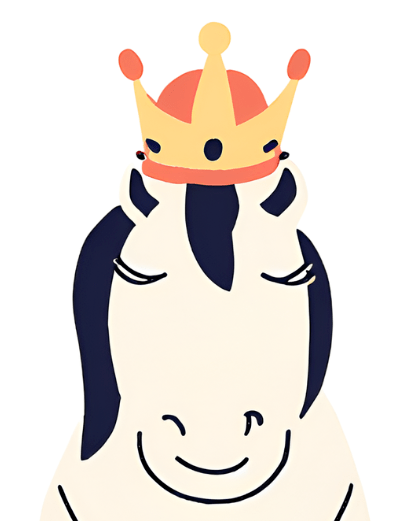
I told her what was happening and that I knew firsthand that tooth and skin problems are no fun … but not insurmountable. She’d indicated a few weeks earlier that she was “the queen around here” — so I said: “Be the queen. You’ve got this.”
She was skeptical but shared a meditation session with me. I pictured her bathed in a gentle light, regal and unbothered.
Megan reportedly had a good visit with the equine dentist. As befits a queen, all four feet stayed on the ground.
We all require maintenance now and then. If an air of royalty helps you get it done, go for it. Just reign kindly.
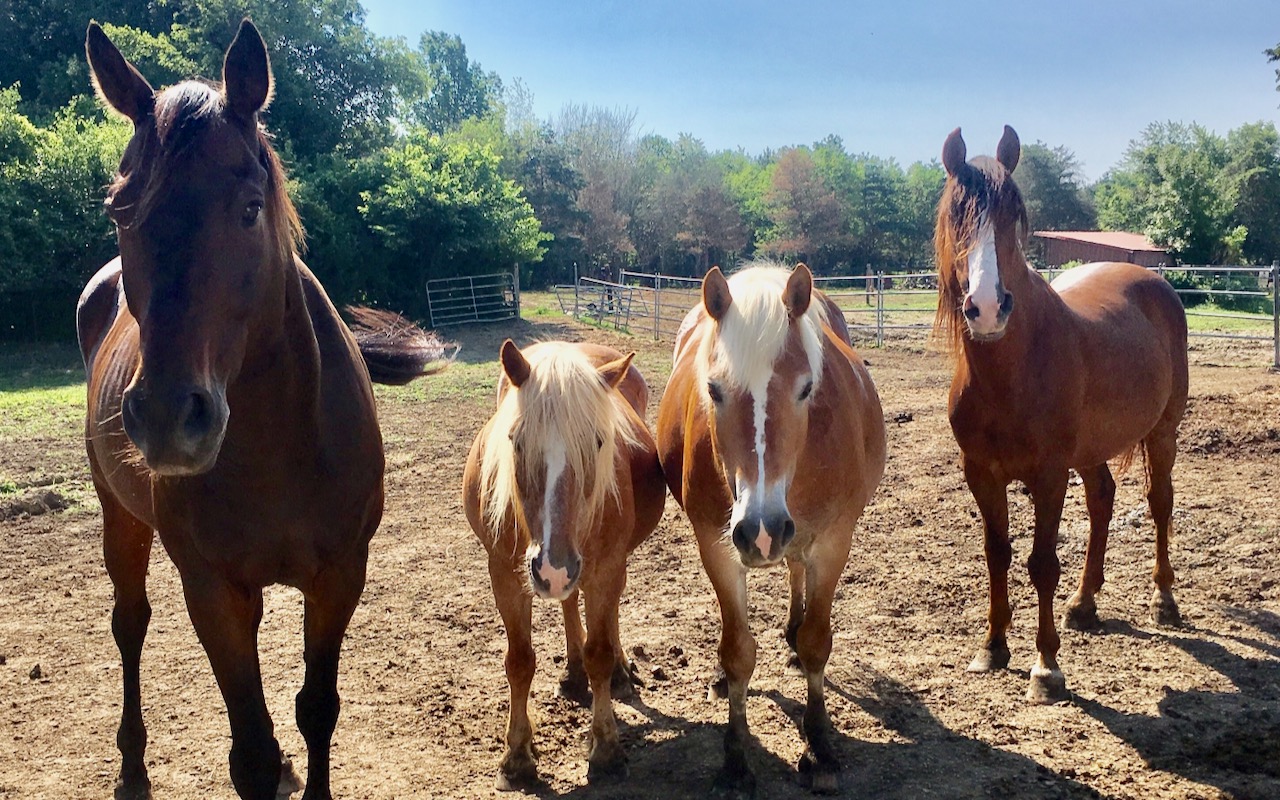
A thoroughbred, two Haflingers and a mustang walk into a bar … and chances are, Emmie (second from right) would get everyone home safely.
Reading the second, revised and updated edition of Mark Rashid’s Horses Never Lie: The Heart of Passive Leadership immediately brought Emmie to mind. This unassuming Haflinger stepped up — as she does for so many other duties as a therapy horse — as herd matriarch after the much-loved Lola passed three years ago. I’ve had the pleasure of working with Emmie and many of her herd mates for several years as an animal communicator and Let Animals Lead® animal Reiki practitioner.
Though she has her moments, Emmie is not one to nip, kick, shove, or use other aggressive tactics. Leading by example and not force is what makes her effective. Once I watched her stand quietly with Geronimo (at far right in the photo) after Geronimo’s behavior got him grounded, so to speak. I didn’t get the feeling Emmie was conveying either reproach or sympathy. Just standing nose to nose with him in the pasture helped him calm down and see how not to mess up.
Rashid, over years working at a ranch, discovered that mimicking just this sort of lead horse helped the humans gain the horses’ trust. “A horse that is extremely dependable and confident, one that the vast majority of horses will not only willingly choose to follow, but that they actually seek out,” he wrote in the introduction.
Key to this leadership is “finding the try,” which Rashid discovered as a youth working for an unnamed “old man” who turned out to be one of his greatest (human) teachers. After Rashid repeatedly tried and failed to teach a horse to back up, the old man taught him to notice the subtle ways the horse was actually trying to do what he wanted, and to respond in kind.
“There was a little brace here, a little give there, a slight jiggle of the bit, a tipping of her nose, a little bending at the poll — all within a few seconds,” Rashid recalled. Responding to these with released pressure, a pet on the neck or even just a pause led to more tries, and soon the horse was backing up with ease.
Fight with a horse and the horse will fight back, the old man advised, but “even during those fights, the horse is still trying to figure out what you want. The sad part is, because you’re so busy fighting with them, you’ll never feel those tries.”
It made me wonder how many times I’ve failed to notice someone trying to meet me halfway. Any of us can get so caught up in our own efforts that we don’t see how the other person, or animal, is actually trying to work with us.
It’s worth pausing and getting quiet enough to listen to the subtleties.
In his second-edition notes, Rashid wrote: “In the years since writing this book, and in particular this chapter, I have come to understand that a horse’s ‘try’ is very often even smaller than what I understood it to be back then!”

 All Creatures