Animal health info: what I do (and don’t do) with it

Having Mojo tell me what he needed, and relaying that to his human and an equine bodyworker, helped us all help him feel better.

As a non-veterinarian, I do not diagnose or treat. As an animal communicator, I do sometimes get information about sore hips and hooves, tummy discomfort, itchy spots and more.

Sometimes the animal’s human caretaker tells me about any health issues going in. When I’m on regular rounds I always check in with the humans ahead of time for any updates (health included). Sometimes the animal himself will tell me about a health issue — or show me through images or feelings — during the communication session.

“What does your vet say?” is always my first question when a client arranges a session. I want to make sure that any medical reasons for the cat not using the litter box or the dog’s increasing anxiety have been addressed and ruled out.

Medical or otherwise, “what’s wrong” is never the focus of a communication session anyway. That’s because all of us living beings are so much more than our symptoms, illnesses, injuries and seemingly odd behaviors. Nothing that happens to an animal changes the fact that she is a unique creation with an inner light all her own.

I relay any information the animal chooses to share, including anything that might relate to health, to the human carer. The human can then choose to ignore it, keep an eye on it or share it with the vet. As I always tell clients: Take from this only what resonates and is helpful, and leave the rest.

Much the same goes for my Let Animals Lead® sessions. In this specialized form of Reiki, the practitioner never “beams” energy to the animal or any body part thereof the way a practitioner might in a human Reiki session. Because Let Animals Lead® is meditation-based, a session is a quiet time to relax and reset. Though this method is not about fixing anything (and I keep the Serenity Prayer close), relaxation can only help with healing, whatever healing might mean for the animal in that moment.

It’s important to note that Let Animals Lead® is hands off unless the animal initiates contact … and many do, especially if they’ve been working with me for a while. Animals know what they need. I once had Mojo, a Tennessee Walking Horse, back up against the fence between us and ask for hands-on energy. He showed me some pain in his hips and along the left side. I placed both hands on his hips and began my meditation. After a while he began licking and chewing, then walked off to join the rest of the herd. I passed this along to Mojo’s human and to the equine bodyworker who also worked with him. After her session with him a day or two later, she told me she adjusted a misalignment on the left.

The codes of ethics I follow for both animal communication and Let Animals Lead® are clear about not dispensing medical advice or treatment. They’re also pretty clear about showing up and doing what we can do. It does take a village, and I try to do my part in it.
Managing anxiety (yours, too) when moving horses

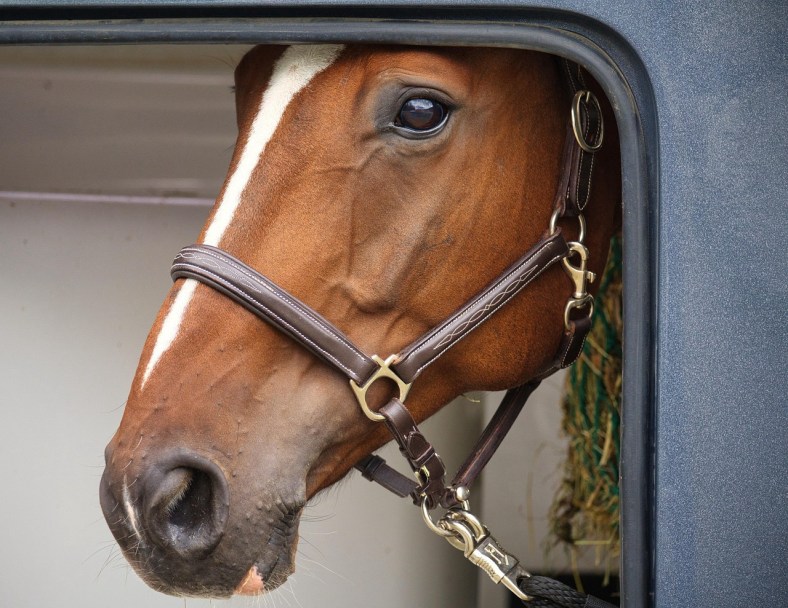
Image by Juncala from Pixabay

The horse didn’t know he was moving that day, let alone why. He had no idea what awaited him at the end of that trailer ride.

As an animal communicator and Let Animals Lead® practitioner, I was working with other animals at the farm when this newcomer, an off-track thoroughbred named King, arrived.

With each attempt to coax him down the ramp, he panicked more. Once the humans finally got him off the trailer and into a round pen, he ran back and forth, stopping every minute or two to whinny.

The humans went into the barn. The horse took little notice as I slowly approached.

“Hi, King,” I said softly. “This place must look pretty scary to you, but you’re safe.”

I don’t recall how long I stood or sat next to the round pen. I turned to the side, as animals under stress can feel threatened by a human facing them head-on, and offered a quiet meditation. The running and whinnying continued.

It was one of those times when the animal’s nervous system was so activated that I wasn’t sure if the session was doing any good. Holding space for King, and letting him choose whether/how to connect with me when he hadn’t been able to choose or even know about this move, was all I could do.

Over the next few years, King found horse and human friends and gave it his all as a working horse. Then his person asked me to ask him how he’d feel about going to a different home as a pleasure horse with one or two other horses. It was up to him, she said, and he could come back if he wanted.

King thought that sounded good. He was loaded and unloaded without incident, and at last report was flourishing in his new home.

Things happen. Horses get moved. It may be for the best, and it may even save the horse’s life. Volunteers with a local rescue carried a miniature horse with badly overgrown hooves onto a trailer during a severe storm a few years ago, and I know they did so with as much calm and communication as humans can muster in such circumstances.

If you are moving, re-homing, selling or rescuing a horse, you both might be dealing with a fair amount of stress right now. Some self-care and animal communication techniques can help the horses and humans involved navigate the change in a way that offers everyone peace.

Here are two things to consider:

1. You set the tone.

Your horse already knows something’s up; changes like these rarely come out of nowhere. She may not understand financial hardship, divorce or barn drama, but she feels its effects. She is very likely to pick up on what you tell yourself about the situation and the pictures you hold in your mind. There is no blame here; we are only human and horses are only equine. Just know that how you handle it from here matters more than you think.

If you and your animals are all moving to the same place, picture all of you loading up and traveling, then all together in the new place. Picture everyone helping one another adjust even though it may be hard. If a horse is going to be with the horse friends he’s used to, emphasize that.

Maybe you’re moving your horses to a new barn. Again, picture an uneventful loading, trailering and unloading at the new place, along with the buddies he’s traveling with or any horse he knows there.

If you and your horse are parting, let her know she’s going to live with someone who can care for her better than you can right now, or where you think she’ll be happier. Picture the trailer ride, the new home, the new owner and friends, even the temporary safe space. If any animals are staying behind, let them know they’re staying and everyone will be cared for.

If you are moving a horse for rescue or evacuation, stay as calm as possible. Let him know his safety is your priority and he can help by trusting you … even just a tiny bit.

2. Help is available. Please ask.

I am not a horse owner myself, but have observed that horse people can judge one another mercilessly or help in a heartbeat if you’re dealing with major manure (literal or otherwise). A friend or neighbor of the latter variety makes a big difference and might be closer than you think.

I can help by communicating the situation to your horse and listening to what he needs. I can support him, you, and the other animals with Let Animals Lead®, a meditation-based stress reduction modality. Both of these also work from a distance and can bring greater peace of mind to even the hardest transitions.

Most importantly: If you are having trouble caring for your animals, please reach out to your vet or a reputable rescue or animal welfare agency. They’d rather help you now than deal with a more serious situation down the road.

Backing up animal communication with action

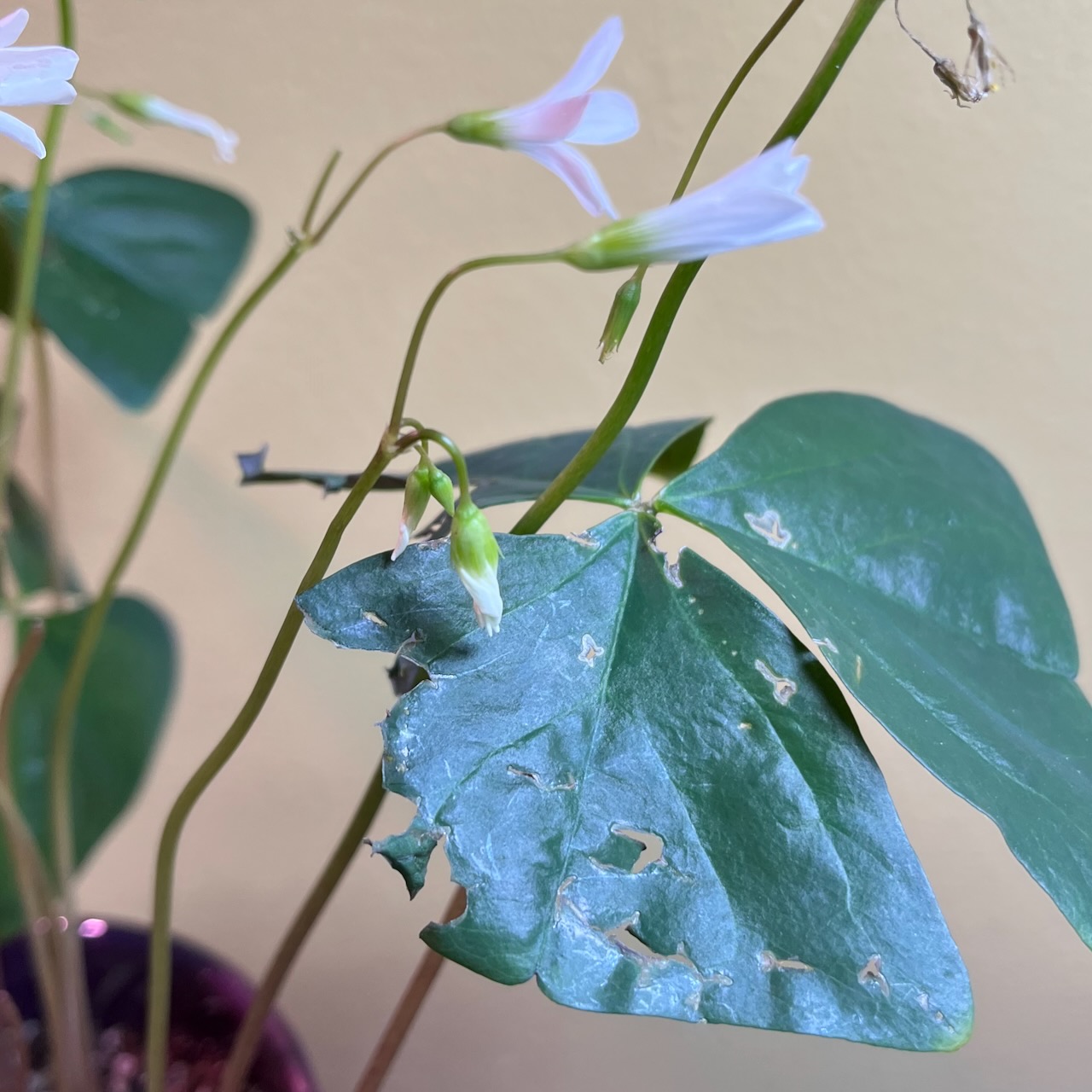
I called the vet clinic as soon as I noticed the missing shamrock leaves, and teeth marks in a few more. There was no question as to which of our two cats was responsible: Dusty, an 8-year-old calico with a history of ingesting things like fake Christmas tree needles.

Bring her in, they said.

Shamrocks are not as toxic to cats as other plants are, such as those in the lily family. Dusty still had to spend 24 hours at the vet clinic getting IV fluids and having her blood checked regularly to avert kidney damage.

I communicated with her several times from home, letting her know that she was safe and cared for and would be home soon. That she is loved no matter what. Trying my best to do so calmly, I also pictured the direct connections between her eating the shamrock leaves, my partner and me being upset and whisking her off to the clinic and her being there overnight with a tube in her leg. We also shared distant Let Animals Lead® meditations to help optimize Dusty’s treatment and keep us both calm.

The shamrock plant went into a closed room while I decided on best pet-plant safety practices.

Thankfully, Dusty came through the experience unharmed and we were able to bring her home the next day. Not an hour later, I saw her jump up on the table in my home office where the shamrock had been.

Clearly, this was going to be a process.

Dusty didn’t care for the shaved IV site on her right front leg.

Clear communication about expectations and consequences is important with any species. But for everyone’s safety and peace of mind, we often have to back communication up with action. (It’s like telling your kids the liquor cabinet is off limits, but also locking it … especially if there have been previous violations.)

My smaller plants now live in a reptile habitat, and I moved a large croton off the floor to be less tempting. All plants in the house are surrounded by bits of sticky tape and sprayed weekly with Bitter Yuck. I also keep a kitty scratching pad and toys in my office for enrichment and diversion from the plants.

For harmony of animal and plant life, and to avert horrible outcomes, I recommend these steps. All of them.

  1. Know what’s toxic before planting it in your garden, adding it to the pasture, or bringing it into your home. The ASPCA maintains a list of plants known to be toxic and non-toxic to dogs, cats, and horses, but advises that ingesting any plant material can cause vomiting and gastrointestinal problems.
  2. Know your animal companion, his curiosity level and interest in plants or other unauthorized objects. For example, if your dog is a shoe guy and has never looked twice at your flowers, you may have less worry than if his tastes are more universal (i.e., gets into everything).
  3. Be clear with your animal about what will happen if they chew on or eat plants. “If you eat this, you’re going to feel very dizzy, your tummy will hurt really bad, and I’ll have to rush you to the vet. I’d be so upset and frightened if that happened.” Picture all of this as you speak. “So find something better to do.” Then picture him calmly walking away from the plant and picking up a favorite toy, going to look out the window, or coming to you to be petted.
  4. Keep plants and pets apart. These, short of barbed wire, are my current methods.
Plants behind glass with bits of sticky tape for good measure … because that’s how we roll now.

Bottom line: If you know or suspect your animal may have ingested something poisonous, contact your veterinarian, emergency vet clinic, or the ASPCA Animal Poison Control Center, (888) 426-4435.