

Animals speak energy like a Ph.D. We speak energy like a kindergartner.
Kathleen Prasad
“You practice Reiki with animals? How does that work?”
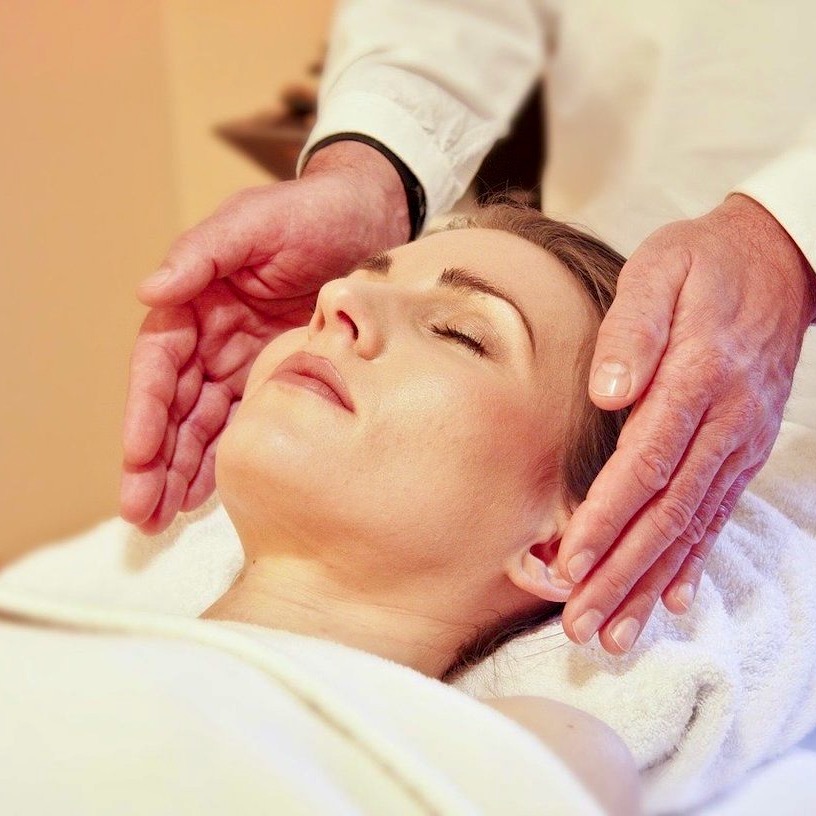
Great question! Reiki is a Japanese stress relief modality, and relaxation helps the two-legged and four-legged alike feel and function better. While the benefits are the same, the methods of Kathleen Prasad’s Let Animals Lead® animal Reiki are different from the Reiki you’ll experience in human offices, hospitals, and spas.
I don’t invite the animal to hop up on a massage table (cats leave and horses laugh). The hand positions I learned in my “people” Reiki classes don’t apply, and that’s not because of different anatomies. Animals are much more sensitive to physical space and presence. Touch is unnecessary, even invasive, for them. A person can feel energy from the practitioner’s hands, but a horse can feel energy from a person standing across a pasture.
When I began studying animal Reiki years ago, I used the hand positions with my dog Ellie as I sat with her on the floor. If she had a hot spot on her foot, I lightly held her foot. More often than not, she’d get up and leave. I now understand that was too much for her. When I sat quietly and meditated — and better yet, ditched any expectation about the “problem” or what should happen — Ellie was more likely to come and lie down nearby.
My teacher, Kathleen Prasad, had a similar experience. That’s how she developed the Let Animals Lead® method I now practice. It’s based on meditation, not touch. Moreover, it puts the animals completely in charge of whether and how they participate in a session. They are free to decline. They can come closer, move away, sit, walk around, eat, sleep, etc. while the practitioner holds space in quiet meditation. Letting animals lead is important for a couple of reasons.
First, it respects the animals. They may have been abused, neglected, moved around, treated by veterinarians, or had their hooves worked on for the first time in years. Mind you — rescue efforts and veterinary treatment may be for their best and highest. So is the chance to choose.
That’s why I always ask for the animal’s permission before I begin. If I get a no, either telepathically or through body language, I thank the animal for letting me know and move on.
Second, how much more can animals relax when doing so is up to them? (Raise your hand if you relax on command. Didn’t think so.)
Every animal is different. Some will immediately come and lean on me or want to be petted; others soak in the energy from a distance. It works regardless.
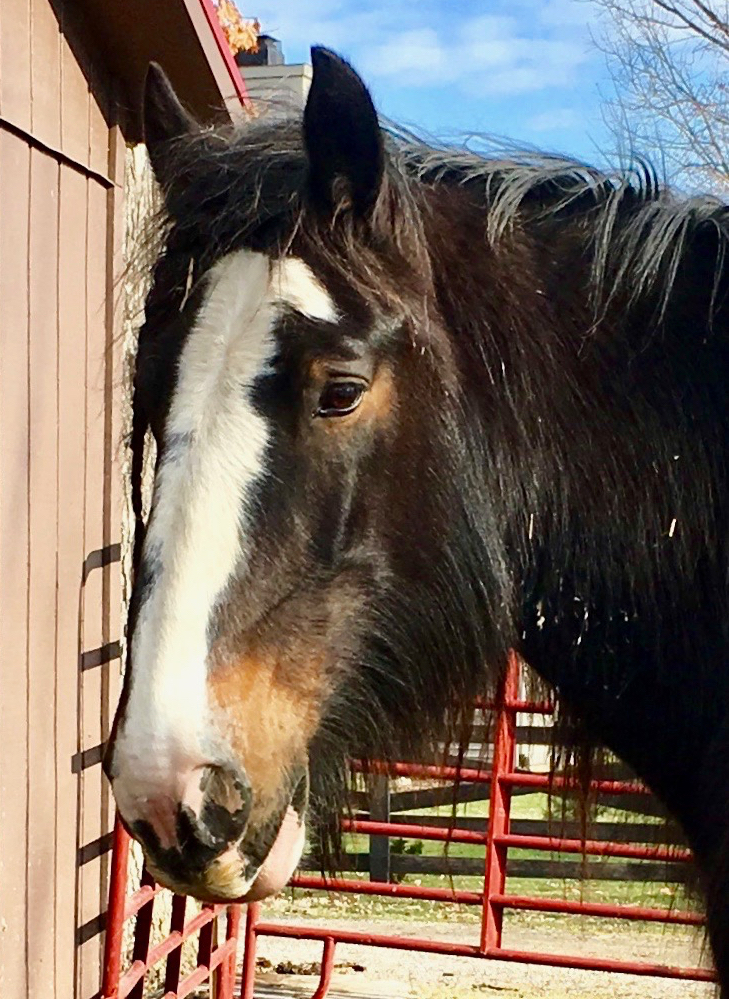
I’ve worked with rescued horses who have rarely, if ever, had a chance to choose or say no to anything. One day a retired draft horse, recovering from trauma, decided he’d had enough and walked back into the shed. I thanked him and moved on to the chickens a few yards away. A short time later, he stuck his big head out of the shed and asked: “You got any more of that?” (I did.)
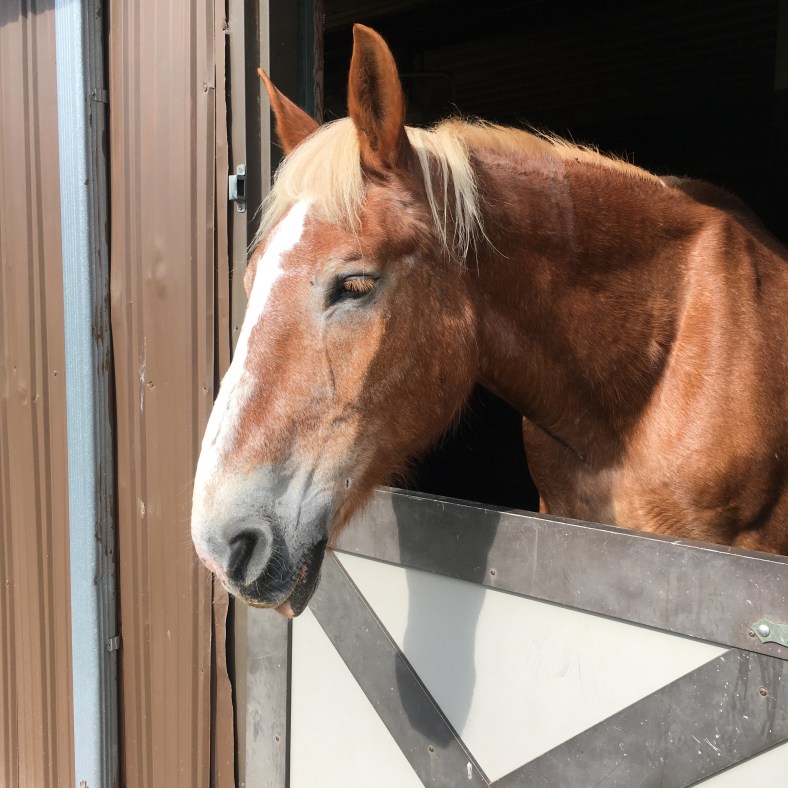
Another horse, recently rescued from a kill pen, declined the session and moved away. A few minutes later, she came back to where I stood at the pasture fence and asked for more. This happened several times in the course of half an hour or so. She was astonished that interacting was her choice. The next time I saw her, I tentatively held up my hands, telling her I’d lower them or step away if she preferred. She placed her head in my hands and stood perfectly still. (The photo above is of her drifting into a post-session nap.)
Animals understand energy better than we do. A horse senses the presence of a predator in the distance. A cat curls up next to someone who is sick. The kids’ new puppy stays away from Mom because he’s the only one in the house who knows how angry she is.
Just don’t ask that puppy to stay still for the practitioner. He doesn’t have to … and Mom is welcome to join in.


 All Creatures