
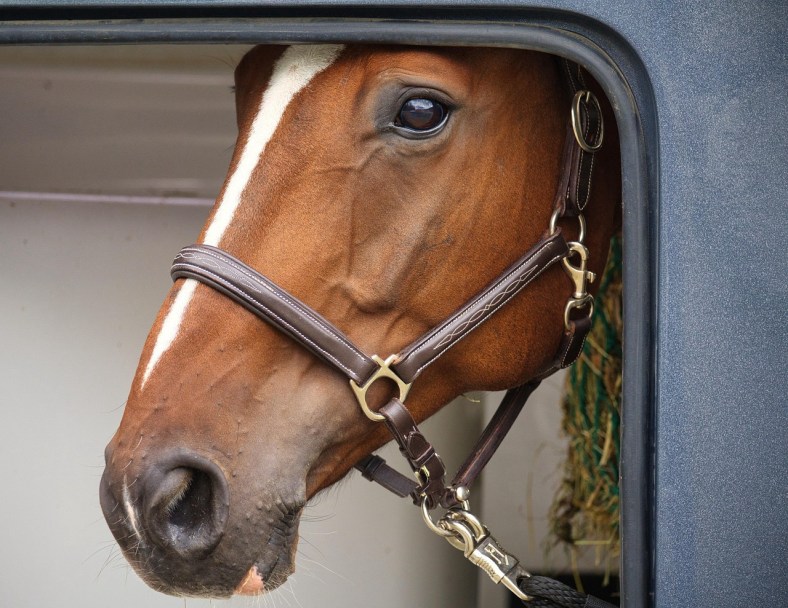

The horse didn’t know he was moving that day, let alone why. He had no idea what awaited him at the end of that trailer ride.
As an animal communicator and Let Animals Lead® practitioner, I was working with other animals at the farm when this newcomer, an off-track thoroughbred named King, arrived.
With each attempt to coax him down the ramp, he panicked more. Once the humans finally got him off the trailer and into a round pen, he ran back and forth, stopping every minute or two to whinny.
The humans went into the barn. The horse took little notice as I slowly approached.
“Hi, King,” I said softly. “This place must look pretty scary to you, but you’re safe.”
I don’t recall how long I stood or sat next to the round pen. I turned to the side, as animals under stress can feel threatened by a human facing them head-on, and offered a quiet meditation. The running and whinnying continued.
It was one of those times when the animal’s nervous system was so activated that I wasn’t sure if the session was doing any good. Holding space for King, and letting him choose whether/how to connect with me when he hadn’t been able to choose or even know about this move, was all I could do.
Over the next few years, King found horse and human friends and gave it his all as a working horse. Then his person asked me to ask him how he’d feel about going to a different home as a pleasure horse with one or two other horses. It was up to him, she said, and he could come back if he wanted.
King thought that sounded good. He was loaded and unloaded without incident, and at last report was flourishing in his new home.
Things happen. Horses get moved. It may be for the best, and it may even save the horse’s life. Volunteers with a local rescue carried a miniature horse with badly overgrown hooves onto a trailer during a severe storm a few years ago, and I know they did so with as much calm and communication as humans can muster in such circumstances.
If you are moving, re-homing, selling or rescuing a horse, you both might be dealing with a fair amount of stress right now. Some self-care and animal communication techniques can help the horses and humans involved navigate the change in a way that offers everyone peace.
Here are two things to consider:
1. You set the tone.
Your horse already knows something’s up; changes like these rarely come out of nowhere. She may not understand financial hardship, divorce or barn drama, but she feels its effects. She is very likely to pick up on what you tell yourself about the situation and the pictures you hold in your mind. There is no blame here; we are only human and horses are only equine. Just know that how you handle it from here matters more than you think.
If you and your animals are all moving to the same place, picture all of you loading up and traveling, then all together in the new place. Picture everyone helping one another adjust even though it may be hard. If a horse is going to be with the horse friends he’s used to, emphasize that.
Maybe you’re moving your horses to a new barn. Again, picture an uneventful loading, trailering and unloading at the new place, along with the buddies he’s traveling with or any horse he knows there.
If you and your horse are parting, let her know she’s going to live with someone who can care for her better than you can right now, or where you think she’ll be happier. Picture the trailer ride, the new home, the new owner and friends, even the temporary safe space. If any animals are staying behind, let them know they’re staying and everyone will be cared for.
If you are moving a horse for rescue or evacuation, stay as calm as possible. Let him know his safety is your priority and he can help by trusting you … even just a tiny bit.
2. Help is available. Please ask.
I am not a horse owner myself, but have observed that horse people can judge one another mercilessly or help in a heartbeat if you’re dealing with major manure (literal or otherwise). A friend or neighbor of the latter variety makes a big difference and might be closer than you think.
I can help by communicating the situation to your horse and listening to what he needs. I can support him, you, and the other animals with Let Animals Lead®, a meditation-based stress reduction modality. Both of these also work from a distance and can bring greater peace of mind to even the hardest transitions.
Most importantly: If you are having trouble caring for your animals, please reach out to your vet or a reputable rescue or animal welfare agency. They’d rather help you now than deal with a more serious situation down the road.

 All Creatures