Backing up animal communication with action

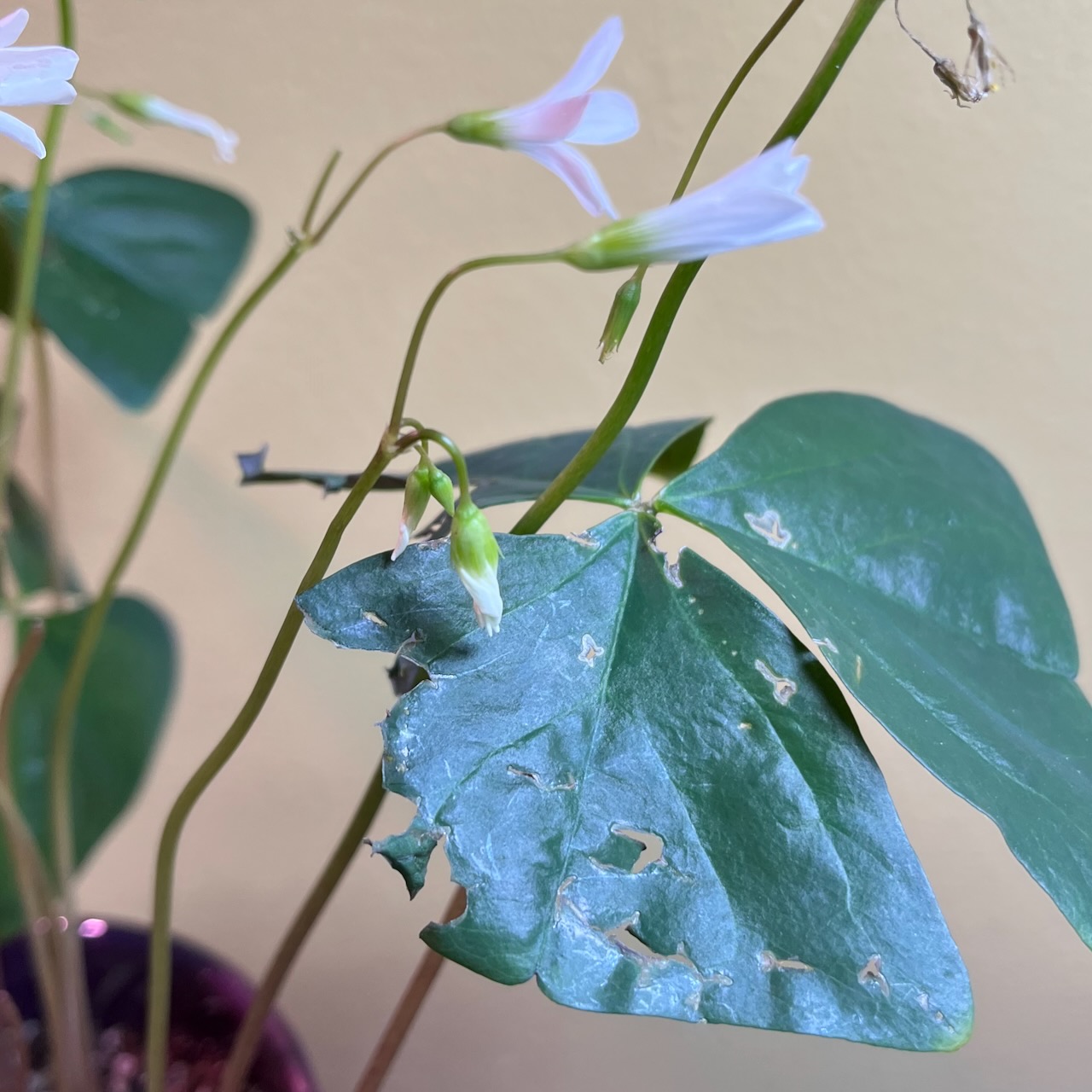
I called the vet clinic as soon as I noticed the missing shamrock leaves, and teeth marks in a few more. There was no question as to which of our two cats was responsible: Dusty, an 8-year-old calico with a history of ingesting things like fake Christmas tree needles.

Bring her in, they said.

Shamrocks are not as toxic to cats as other plants are, such as those in the lily family. Dusty still had to spend 24 hours at the vet clinic getting IV fluids and having her blood checked regularly to avert kidney damage.

I communicated with her several times from home, letting her know that she was safe and cared for and would be home soon. That she is loved no matter what. Trying my best to do so calmly, I also pictured the direct connections between her eating the shamrock leaves, my partner and me being upset and whisking her off to the clinic and her being there overnight with a tube in her leg. We also shared distant Let Animals Lead® meditations to help optimize Dusty’s treatment and keep us both calm.

The shamrock plant went into a closed room while I decided on best pet-plant safety practices.

Thankfully, Dusty came through the experience unharmed and we were able to bring her home the next day. Not an hour later, I saw her jump up on the table in my home office where the shamrock had been.

Clearly, this was going to be a process.

Dusty didn’t care for the shaved IV site on her right front leg.

Clear communication about expectations and consequences is important with any species. But for everyone’s safety and peace of mind, we often have to back communication up with action. (It’s like telling your kids the liquor cabinet is off limits, but also locking it … especially if there have been previous violations.)

My smaller plants now live in a reptile habitat, and I moved a large croton off the floor to be less tempting. All plants in the house are surrounded by bits of sticky tape and sprayed weekly with Bitter Yuck. I also keep a kitty scratching pad and toys in my office for enrichment and diversion from the plants.

For harmony of animal and plant life, and to avert horrible outcomes, I recommend these steps. All of them.

  1. Know what’s toxic before planting it in your garden, adding it to the pasture, or bringing it into your home. The ASPCA maintains a list of plants known to be toxic and non-toxic to dogs, cats, and horses, but advises that ingesting any plant material can cause vomiting and gastrointestinal problems.
  2. Know your animal companion, his curiosity level and interest in plants or other unauthorized objects. For example, if your dog is a shoe guy and has never looked twice at your flowers, you may have less worry than if his tastes are more universal (i.e., gets into everything).
  3. Be clear with your animal about what will happen if they chew on or eat plants. “If you eat this, you’re going to feel very dizzy, your tummy will hurt really bad, and I’ll have to rush you to the vet. I’d be so upset and frightened if that happened.” Picture all of this as you speak. “So find something better to do.” Then picture him calmly walking away from the plant and picking up a favorite toy, going to look out the window, or coming to you to be petted.
  4. Keep plants and pets apart. These, short of barbed wire, are my current methods.
Plants behind glass with bits of sticky tape for good measure … because that’s how we roll now.

Bottom line: If you know or suspect your animal may have ingested something poisonous, contact your veterinarian, emergency vet clinic, or the ASPCA Animal Poison Control Center, (888) 426-4435.
Three cats, one lap and other versions of ‘enough’

Healing energy is infinite. My lap is not.

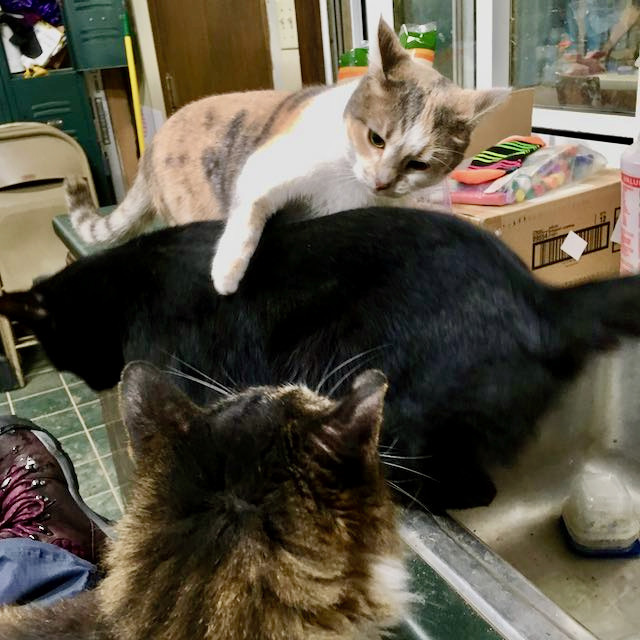
That’s what I told the three cats, thinking they wouldn’t believe me. But they worked out the logistics themselves. The tabby stayed put in my lap, the black cat sat on my shins and the calico decided it was more fun to sit on the counter and swat at everyone else. We all settled in for the meditation session … just as it was, which is what the Let Animals Lead® method is about anyway.

Of course there’s enough healing energy to go around, just as there’s enough love to go around. In a world of finite space, allotted time and the ways different species regard resources, we can still be fair. The animals, in fact, might be able to work it out themselves and teach us. Here’s what I’ve learned in my animal communication and Let Animals Lead® meditation practice … and in my own home.

When someone sticks their neck out, pay attention.

There is generally a pecking order among horses. If I want to let a herd know about a change or event, I’ll speak to all of them — but ask, say, the lead mare to help the others remain calm. That respects the horses and helps them all feel safer.

I’ve also learned that if a horse comes to the fence or sticks his head out of a stall, I need to see him first because there’s probably a reason. For example: Mojo the Tennessee Walker, above, very often walked to the fence when I arrived. His “Hey, over here! Me first!” was never subtle.

One day Mojo turned around, pressed his backside to the fence and asked for hands-on energy. After about 20 minutes he walked off, seeming a bit relieved, but I had picked up on some pain on the left side. The equine chiropractor saw him shortly thereafter and sent me a diagram of his misalignment. No wonder he was hurting. Another time he needed a kind word because his buddy left his side (and because he did not get chosen) for a special ride with a delightful eighty-something lady.

They might know who needs help first.

Animals can be astute, too, about who might need help more than they do at the moment. Two mini horses (one of whom was disabled), were hanging with a mustang who’d been battling a persistent infection. When the three of them approached me, the two minis hung back. I thanked them, worked with their mustang buddy, and made sure to see those kind minis before I left that day.

A cow at an animal sanctuary where I trained had adopted two young calves as her own. When I approached their stall and offered to share a healing meditation, the cow turned her head toward the two calves. Anything I was offering should go to them first, she told me. I assured her that all of them were free to participate — but following her lead, I turned toward the youngsters. As the session continued, I felt mama cow join us as she figured out she wasn’t taking anything away from her young charges.

Don’t placate. Just toss the ball.

Dogs are famous for their “how could you?” look if they detect another dog’s scent on you. Or if you are brazen enough to pay attention to another dog right in front of them, you cad. Canine jealousy was even documented in a University of California study.

Imploring dogs not to be jealous and/or to wait their turn is not likely to make them feel any less wronged. (Trust me; I used to do both.) With animals, actions speak louder than words, and energy speaks even louder. If I come home with the scent of other dogs on me, I let my dogs sniff without comment. Then I make sure they get some one-on-one time — a belly rub or a couple of toy tosses mean more than you know.

When we build even a little more awareness and trust, “enough” can look like plenty.

Dental anxiety? Reign it in

Itchy with bug bites, Megan the gypsy horse was in no mood to have her teeth done. I’d been told she had dental issues and, even with sedation, anxiety to the point of rearing. Now her turn was coming up.

I told her what was happening and that I knew firsthand that tooth and skin problems are no fun … but not insurmountable. She’d indicated a few weeks earlier that she was “the queen around here” — so I said: “Be the queen. You’ve got this.”

She was skeptical but shared a meditation session with me. I pictured her bathed in a gentle light, regal and unbothered.

Megan reportedly had a good visit with the equine dentist. As befits a queen, all four feet stayed on the ground.  

We all require maintenance now and then. If an air of royalty helps you get it done, go for it. Just reign kindly.

(Image courtesy of Canva’s new AI wizardry)