Pet ingestion question? There’s an app

veterinary-85925_1280 - Pixabay

Image by David Mark from Pixabay

Wondering if it’s OK to give a particular food or medication to your cat? Maybe your dog got hold of a human medication, and your vet’s office is closed. A Google search yields contradictory answers.

Dr. Mari Delaney, a veterinarian of 25 years in Elmira, New York, has developed the Vet Protect app. It gives you a quick, expert answer on foods, medications, and things like borax ant traps. It also gives you a vet bill estimate on the toxic items. Users are invited to request items that are not on the list.

Dr. Delaney developed the app after treating a 10-year-old Rottweiler whose person mistakenly gave her Aleve. With aggressive treatment, the dog recovered, but it easily could have gone the other way.

I learned about the app while hearing Dr. Delaney interviewed on Dr. Bernadine Cruz’  The Pet Doctor podcast, and downloaded it myself. You just never know when you might need help in a hurry, and I liked Dr. Delaney’s approach and energy.

As a gardener, I wish the app included more plants … but that might be something to suggest. Vet Protect is available on iTunes and Google Play.

Three ways to love your pet and our world

child-1867463_1920

Image by Pexels from Pixabay

Sometimes it feels like the problems faced by the animals of this world, and the environment we all live in, are so huge and so far gone that there is nothing we ordinary individuals can do.

You may have just seen a news report or social media post about a disaster, environmental policy reversal, cruelty case or fearful prediction that made your heart sink.

Consider this, though: If you have adopted an animal, you’ve already exercised the power to save lives and alleviate suffering. Like the young man throwing one beached starfish after another back into the ocean after a storm, we each save the world by doing what we have the power to do.

The practice of Reiki helps me do that by first getting out of the muck of fear and into a place of peace and balance. Only then can I hear God’s still, small voice. Then I can discern and do something useful, whether it’s a Reiki session with a rescued horse or a small change in the way I care for my own animals.

In the interest of ditching the defeatist crap in favor of practical solutions that add up, here are a few ideas. (I receive no compensation from any business mentioned; these recommendations come free and clear.)

1. Be wise about waste

Speaking of crap, pick up after your dog. Yes, you. Yes, really. Earth Rated makes biodegradable poop bags you can easily take on walks. They come in all sizes, some lavender scented. You can even get them in a little dispenser that clips to the leash. It preserves neighborly goodwill, saves shoes, and helps keep contaminants out of our water.

For cats, I recommend disposable, biodegradable Nature’s Miracle litter boxes. (Avoid the cheap imitations if you don’t want a peepocalypse.) You can use the biodegradable bags for the daily scoop, put the whole box in a biodegradable kitchen bag after four to six weeks, and put it in the trash. It uses less litter, avoids plastic litter boxes and liners, and you don’t have to scrub or disinfect.

There are many litter choices on the market beyond the clay or clumping varieties. Recycled newspaper, pine shavings, sawdust, and wheat are some of the options branded as earth-friendly, but I found no independent reviews or studies on this. Since both veterinarians and cats have preferences regarding cat litter, ask your vet before you switch. Then gradually mix in the old with the new. Be prepared to switch back if the new is not to Her/His Majesty’s liking. Litter box boycotts are not environmentally friendly.

By the way, I’ve found Bac-Out to be a good, nontoxic choice for removing pet stains and odors.

2. Play well, play fair

As the lottery commercials say, please play responsibly. A pet toy may not seem to have much impact on the environment, but ethical sourcing and sustainable materials make a difference. Durability makes a difference too; it’s frustrating to find the perfect toy, only to have your little darling destroy it in an hour.

Cheap plastic impulse buys happen to the best of us. However, shops such as Green Doggoods here in Fort Wayne, Indiana sell quality, eco-friendly pet toys. (Green Dog also carries the aforementioned poop bags.) Without much extra effort, you can make more eco-friendly choices, support a local business, and give your beloved animal the best.

Also remember that for cats, nothing beats a cardboard box or a randomly tossed paper wad. Both are recyclable.

3. “Put away the chocolate” notes and other memory tricks

Chocolate is a delight to us, but toxic to our four-legged friends. So any chocolate you receive for Valentine’s Day or any other occasion needs to be kept out of their reach.

It’s easy to forget to do this. When our attention is in several places at once, it’s easy to leave a box of chocolates out. Or not notice that somebody has slipped out the door, a gate was left open, or a water bowl is empty.

Again, small efforts can yield big returns. We can get in the habit of entering and exiting carefully and making sure the gate latches. We can put a “Return to cupboard” note on or inside the the chocolate box. (The little cheat sheet that tells us which truffle is which would be a good place.) We can put reminders to check the water bowl on our phones.

Being more aware of what we’re doing is better for our and our animals’ overall well-being. And in one of those “we are all connected” philosophies we might find tiresome but true, that can’t help but make for a better world.

CBD for pets? Five things to consider

A number of pet owners tout the benefits of CBD (cannabidiol) oil for joint pain, anxiety, and even epilepsy. Some say it’s the only thing that helped after other treatments failed. 
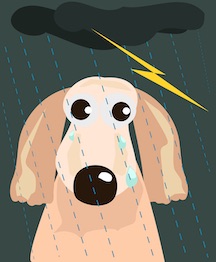
dog-160561_1280 copy

While there is little data to support the use of CBD for humans, and even less for animals, you can find it everywhere from gas stations and boutiques to specialty CBD stores, online retailers, and individual sales representatives. Some formulations are made specifically for animals.

As an animal Reiki practitioner and animal communicator, I often work with people who are trying to figure out how to help their sick, hurting, or inconsolably anxious animal companions. I’ve been there myself. As a journalist, finding accurate and unbiased information is also important. So if you’re thinking about trying CBD for your pet, I want to point you in a direction that will help you make an informed decision.

After doing my own research, asking around, paying attention to conversations on the topic, and talking with a trusted veterinarian, I suggest considering the following:

1. It’s legal, but veterinarians face restrictions.

As of March 2018, the cannabis-derived product is legal here in Indiana as long as it meets certain labeling requirements and contains less than 0.3 percent delta-9-tetrahydrocannabinol, or THC. (That’s the substance that produces the “high”). Cannabis laws vary by state.

On the federal level, the Drug Enforcement Administration still categorizes CBD as a Schedule 1 controlled substance. Veterinarians are not allowed to prescribe or recommend CBD. They can’t even discuss it unless the client brings it up. Check out this article in the Journal of the American Veterinary Medical Association.

2. Quality may vary, and interactions are unknown.

Do you know, or does the seller or manufacturer know, what’s really in your CBD oil? Is it less than 0.3 percent (the legal limit) THC? Where and how were the ingredients sourced?

There may well be some excellent animal CBD products out there with organic or responsibly sourced ingredients and airtight supply chains. Business owners and pet parents I deeply respect may be selling and using these products with due diligence and success.

With CBD relatively recently legalized and so many products hitting the market, there are probably a number of inferior, fake, or even toxic ones out there as well. The popularity and marketing of CBD products are outpacing research and regulation, Dr. Jerry Klein, chief veterinary officer for the American Kennel Club, told NBC News.

This brings up another unknown, and a question your vet cannot legally answer: How will even the purest CBD product interact with the medications or supplements your animal is already taking?

3. There may be better, safer alternatives.

CBD isn’t the only oil out there. Essential oils for animals are not without controversy, but you can at least discuss, say, peppermint oil with your veterinarian without legal restriction. The same goes for other supplements with more research behind their ingredients.

If you’re worried about the effects of traditional medications for pain or anxiety, talk to your vet about trying a lower dose, at least to start. With my own animal companions, I’ve found less can be more.

Reiki, a stress-relief modality which is part of my practice, can also help with issues such as pain and anxiety. I admit the research supporting this is not extensive, either. However, a 2017 Australian study, which looked at previous (human) clinical studies on whether Reiki provided more than a placebo effect, is encouraging. Reiki is non-invasive and substance-free, so even if you don’t see how it could possibly help, it will do no harm.

4. Trust is key.

Whether you’re giving your pet a prescribed antibiotic or considering a supplement such as CBD, you have to be able to trust 1) the person prescribing or selling it and 2) the maker of the product (whom the prescriber or seller presumably trusts).

Most important: Our trust in these folks needs to be worthy of our animal friends’ trust in us.

5. The research is ongoing.

Research on CBD for animals is in progress, so more conclusive information is likely to emerge. As it does, pay attention to what each study concludes (or doesn’t), who conducted it, who funded it, and whether any conflicts of interest were disclosed.

Also, see this story from Consumer Reports, which I consider a good source for unbiased consumer information, on the question of using CBD for animals. It includes guidance on what to look for should you decide to explore further.

What we know is expanding. In the meantime, I think caution is warranted.

Image by OpenClipart-Vectors from Pixabay