Animal communication and Reiki are different modalities

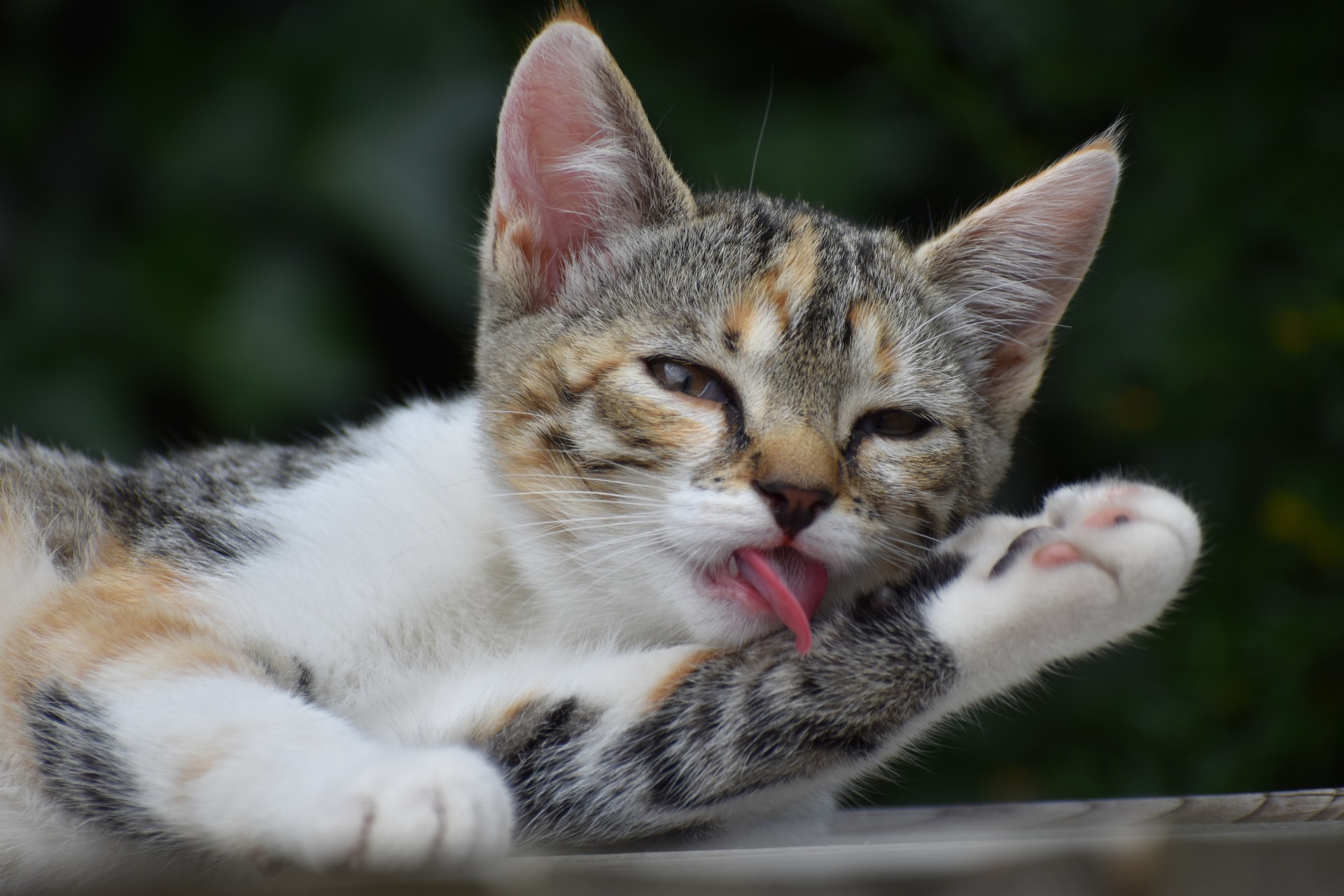
Let Animals Lead® meditation and animal communication go well together, but they’re not the same … kind of like these two. (Photo by Nancy Crowe)

While Let Animals Lead® animal Reiki and animal communication make a great pair, they are separate disciplines with unique benefits. The difference is essentially between meditation and conversation.

How they work

A Reiki session is a time of meditation, relaxation, and peace. Because I am certified in Kathleen Prasad’s Let Animals Lead® method, the animal is always in charge of whether and how he shares the energy.

During an in-person session, which I offer in the Fort Wayne, Indiana area, a cat or dog might curl up in my lap or settle across the room. A horse may stand on the other side of the pasture, hang out in a stall, or come to meet me at the fence. I’ve even had a donkey sidle up and nudge his head under my arm! Whatever the species or context might require, I go into a meditative state and let the energy do its work.

Distant sessions are much the same, except that the animal and I are not in the same physical space. She’s generally at home relaxing with her person, hanging out with the herd, or doing whatever, while I’m in my home office — again, in a meditative state, letting the energy do its work!

During an in-person or distant meditation session, I may receive intuitive information — but that is not the objective of the session.

An animal communication session, on the other hand, is an exchange of information. I don’t need to be in the same physical space as the animal or on the phone with the animal’s person for this. I connect with the animal telepathically, focusing my attention on what he has to share. No appointment is necessary for this.

With the animal’s permission, I work to gain insights into behavior. Or I tell her about a change coming up and ask what would help her adjust. Or I ask him how he feels about anything from his food to his person’s new boyfriend. Once I’ve talked with the animal, I email the person a summary of what we discussed. The client is always encouraged to take only what resonates and is helpful, and leave the rest.

Together but distinct

In some settings, such as a farm with multiple animals, I may do meditation and animal communication in the same visit, but not in the same moment.

How this works might be compared to a chaplain’s rounds. Time with each animal could be spent in conversation to begin. Then we might share a quiet meditation. After the session, we might talk a little more before I thank the animal and move to another. We wouldn’t be meditating and talking at the same time!

There is a time and a purpose to everything (Eccl. 3:1). When we let meditation and animal communication function on their own, our animal friends get the best each has to offer.

Use caution first with essential oils

Image by Charlotte Govaert from Pixabay 

When a journalist friend shared a Snopes Fact Check piece about essential oils being poisonous to pets, I took notice.

Snopes is generally good at sifting out scams and misinformation, and I already knew cats are much more sensitive than other animals to essential oils. Its rating: True. When used the wrong way or in the wrong concentration or amount, even diffused, essential oils can be toxic.

I would never suggest a client use essential oils with any animal without first seeking reliable guidance on which oils to use, how, and with what species. First, I’m not a veterinary professional. Second, there are too many variables — species, the individual animal, the condition being treated, oil quality, and use. The following is intended only as a starting point should you want to learn more about essential oil use for animals.

A veteran physical therapist and dog parent told me about animalEO, a line of essential oils and blends developed by holistic veterinarian Dr. Melissa Shelton. Her website is packed with information and instructions, and there is a very active animalEO Facebook group hosted by Dr. Shelton herself. (Good luck keeping up with the high volume of posts.) Also see her response to the viral post that led to the Snopes piece.

I’ve used a few of these blends with my own animals, mostly for diffusion and at low concentrations. The whole household benefits from a little aromatherapy. Moreover, it gives me confidence to know that the products were created for animals by an experienced veterinarian. (I receive no compensation from animalEO.)

Speaking of oil: CBD oil and other cannabinoid products for animals merit even more caution. There is very little data on their use, and your veterinarian may be restricted from even discussing it. 

Finding reliable pet health information in a sea of social media and commercial sites can be challenging. Here are some guidelines I use, both as a journalist and an animal wellness practitioner. 

If you are interested in using essential oils — either for yourself or the animals you love — there is no harm in going to animalEO to learn before you buy. Then here are my recommendations:

  1. Don’t be tempted by cheaper, lower-quality oils, or blends not formulated for animals. 
  2. Take what you learn (from whatever or whomever) and run it by your veterinarian.
  3. If you do use essential oils for or around animals, use as directed. When in doubt, use less rather than more.
  4. Observe your animal carefully. If you remotely suspect any adverse effects from the oil — stop use and contact your vet.

Remember that “natural” isn’t necessarily beneficial. As always, be mindful, not fearful.

Finding reliable pet health information

Image by Martine Auvray from Pixabay 

When we’re worried about our animal friend’s health, it’s easy to go down a rabbit hole in search of answers. It doesn’t matter if the search term is a symptom, diagnosis, or treatment. Most of us have done it and wound up even more confused or misinformed, which helps no one.

Knowing where to look and where to be wary can yield better outcomes and fewer headaches. Based on many years as a journalist, animal wellness practitioner, and pet mom, here are my suggestions for accurate, credible animal health information sources:

Your veterinarian

Your veterinarian and vet clinic should be your primary source for your pet’s health. They know you and your animals. If you don’t have a vet you trust, find one by asking fellow pet parents you trust. Online testimonials and reviews are helpful, but nothing beats a personal referral.

If you’re afraid of asking a stupid question or bothering the vet clinic staff, consider that some of the most pertinent questions are the seemingly stupid ones (i.e., “Where are my pants?”). Your vet and staff are your chief allies in your pet’s well-being. It’s OK to ask them, “Where can I learn more about this?” They’d rather steer you toward a trusted source than have you paralyzed with fear or try an unproven “miracle cure” that may do more harm than good.

Veterinary schools

Places like the Purdue University College of Veterinary Medicine (our Indiana example) educate and train tomorrow’s veterinary professionals. Vet school faculty and staff members are trained scientists whose job it is to figure stuff out — accurately and without bias. (More on bias in a moment.)

University-conducted studies can be wonderful sources of information and insight. Keep in mind that a single study is seldom, if ever, the final answer. What we know about our animals, our world, and ourselves is constantly evolving.

Also, these studies are generally written with a style and terminology that leave you wondering what on earth is wrong with plain English. They’re intended for a professional or academic audience. That’s cool, but you may want something more accessible.

Fortunately, the Cornell University College of Veterinary Medicine website’s Health Topics section is geared toward both veterinarians and pet owners. I especially like the information I’ve found on the Cornell Feline Health Center page.

Now to the question of bias. When you are reading a media report on a study that links X to Y, or which indicates A is beneficial in the treatment of B, click the link to the actual study. It may be a university study in a professional journal, or it could be a press release.

Either way, look at who paid for and conducted the study. Would they have a vested interest in the outcome? For example, if a study about the benefits of CBD oil was paid for or conducted by a company that makes CBD supplements, I wouldn’t give that study much weight. Its conclusions may prove correct in time, but show me some independent research. Also look at any conflicts of interest disclosed by the authors themselves.

Again, resist the impulse to draw conclusions from research that may not be conclusive.

Professional associations

The American Veterinary Medical Association’s website includes resources for pet owners — including, of course, how best to partner with your veterinarian for your animal friend’s best life. (There’s also a great article on getting pet health information online, which hits some points I do not here.)

The American Holistic Veterinary Medical Association’s Holistic Veterinary Therapies page is where I would start for information on complementary and alternative therapies such as chiropractic, acupuncture, and more.

Don’t overlook the library

I’ve been talking about online information here, but I’m old enough that, once upon a time, the stacks were my first stop. But my advice is similar. Look at the credentials of the author(s) and don’t get swept up in “breakthrough,” “miracle,” “revolutionary,” or similar claims.

Those are the sources to seek. Briefly, here are the sources to evaluate more carefully:

• Sites owned by businesses selling a product or service. This goes for mine, too. Do they link to reliable sources of health information? Do the claims seem too good to be true?

• Blogs (again, including mine), message boards, social media and anyplace else where people can post anything. What sources, if any, does the person reference? Is he or she angry? Grieving?

• Wikipedia. Being a free-for-all may be part of its charm. Fine. Just look in the text and footnotes for links to reliable sources.

Bottom line: When you’re evaluating a source of information on animal health, always consider the who and the why. Then — again — work with a veterinarian you trust.