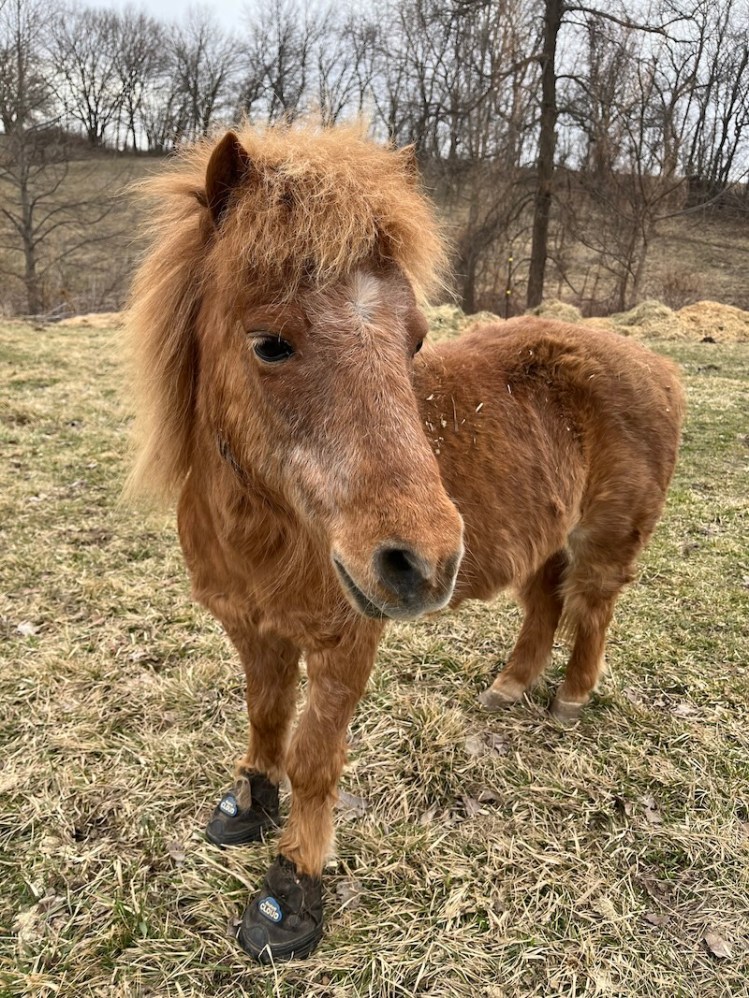
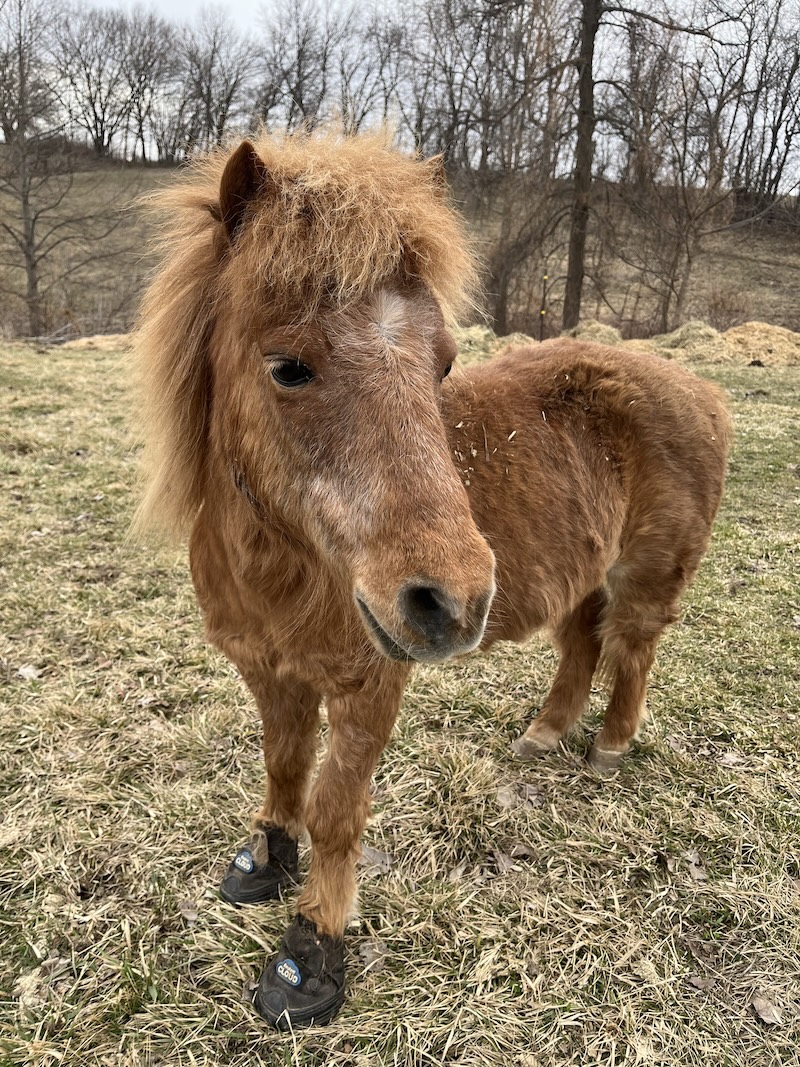
On the left is Rowdy, also known as Little Man or Little Rowdy Man. I worked with this cantankerous senior mini horse when he joined the Summit Equestrian Center herd a few years ago, as he retired to Lopin’ Along at the Farm Microsanctuary and just before he passed away last month.
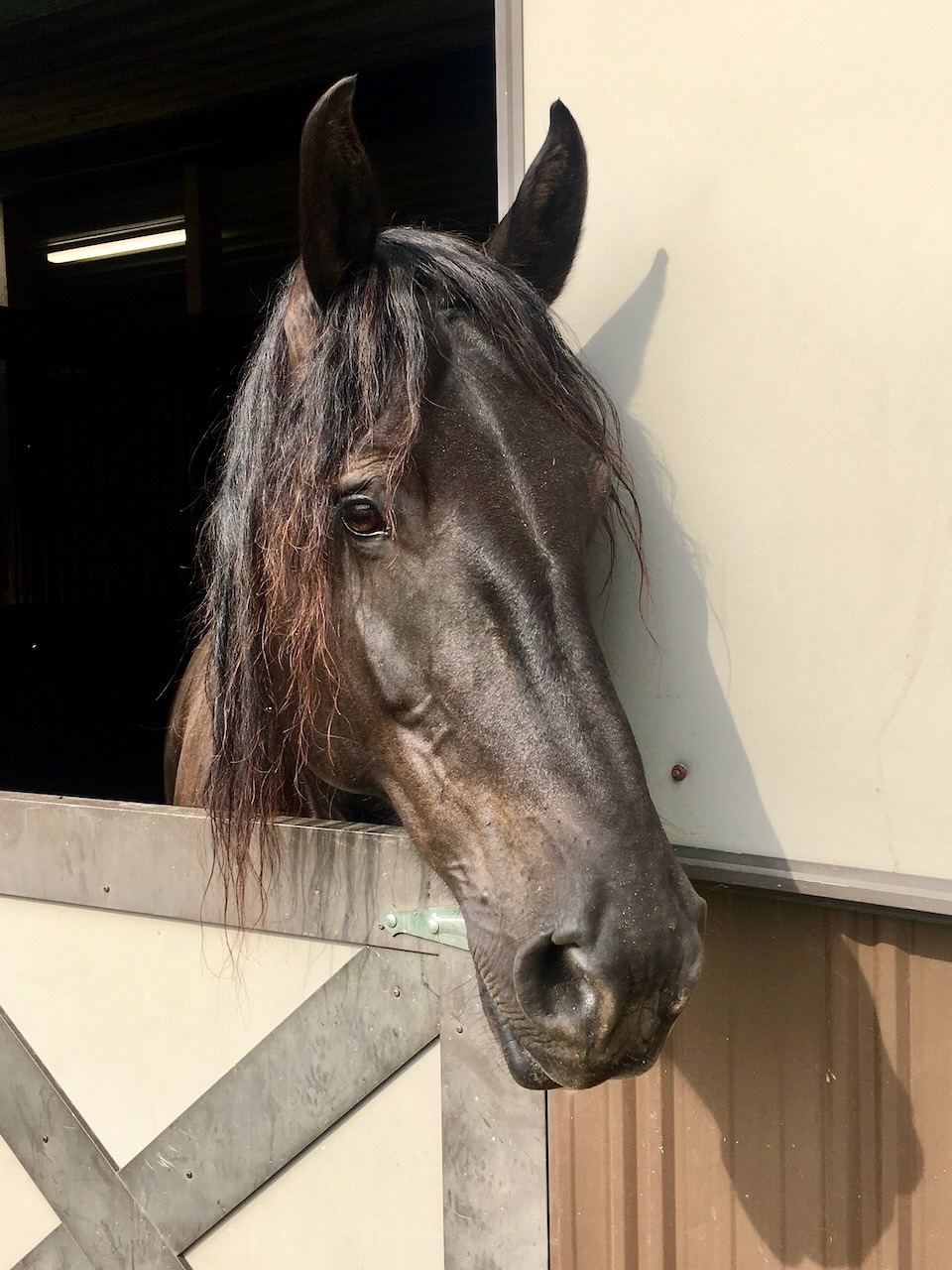
That came shortly after Maggie, Summit’s majestic (and sometimes princess-like) black Percheron, died. I’d known her since she came to Summit in 2018. Though skeptical of me at first, she decided relaxing meditation and getting her opinions heard were worth her while.
All along the way, I was able to check in with them about how they were feeling and offer meditation to help. As their conditions and pain levels became more difficult to manage, I helped assess their readiness to cross.
Anyone who lives with or works with animals has to deal with goodbyes. There are also hellos, I love yous, thank yous, inquiries about breakfast and other exchanges.
Animal loss is painful. I’ve struggled mightily with it and walked clients through its dark, sweet shadows. There are no shortcuts.
The animals deserve to be remembered and the humans who love them deserve to heal in our own way. Can we offer ourselves the grace and humor our beloved animals have given us? I have found that as we do, it helps us see a much bigger picture.
My partner and I recently made the gut-wrenching decision to let our 11-year-old dog, Molly, be put to sleep. That was preceded by weeks of: How bad is it? How bad might it get? Are her good days/minutes still outnumbering the bad? What else can we try?
Over and over, I told Molly I loved her and thanked her for the love, care and laughs she’s given us. I talked with her and the cats about what was happening and acknowledged how strange and sad it all was. I assured all of them we would get through it, one day at a time, and that Kathy and I would care for and support them. We shared healing meditations and I prayed for courage.
Every time I started down the path of worry and despair, I reminded myself to return to the present moment, which was where Molly needed me to be. Sometimes I got further down that path than other times. I kept coming back, however imperfectly.
After Molly gently departed on her next adventure, Lucy (the black tortoiseshell cat pictured above) was stoic and attentive. Dusty, her younger calico sister, kind of understood what was going on but still found it confusing. Kathy and I did our best to reassure them and cope with the raw void.
Less than a week after Molly’s passing, I noticed food-driven Lucy wasn’t finishing her kibble. She ended up having five teeth extracted. Lucy has tooth resorption, which basically means her saliva breaks down her teeth, and had had five extractions less than a year before. Tooth resorption is not uncommon in cats, but science hasn’t figured out why it happens or how to fix it.
This time her recovery was full of ups and downs — different medications for pain and nausea, trying all manner of soft foods and feeding methods to get her to eat, and trips back to the vet clinic to be checked and rechecked. We were all still slogging through the fog of loss. I shared meditation with Lucy daily but wondered if I was getting it all wrong.
On a Saturday, after another vet visit and another failed attempt to get her to eat more than a couple of small bites, I was at the end of my tether. I wanted Lucy better. Yesterday.
Lucy was getting veterinary care. Now I had to force myself to do what I’d suggest to any client in this situation: Take a breath and focus on the connection rather than “the problem.”
Only then was I able to communicate with my cat without worry butting in.
What Lucy told me was not that she was tired of going to the vet and being cajoled to eat … though who could blame her? What she told me was that her mouth was still adjusting and her body was healing. She could feel the prayers and healing energy working. What she needed was time. And steadiness. She needed me not only to show up but keep coming back. Because we humans do drift.
I began to breathe a little easier. Her appetite remained sketchy for the rest of the weekend. On Monday afternoon she followed me into the furnace room, which is off limits to the cats, and ducked underneath some shelving.
“Lucy! Outta there!”
All I could see was the faint, dark outline of a cat crouched amid the dust bunnies. Never have I been so glad to see a cat behave like a stinker.
I went back upstairs, grabbed a fork and tapped the side of her stainless steel food bowl. Out of the furnace room and up the basement stairs she ran. And ate a bit more food.
The next morning, Lucy ate her breakfast normally. Well, maybe not quite normally, but close enough that we could see she’d turned a corner.
Lucy continues to improve, and we all continue to heal. It is not a linear process, and of course there’s never a good time for an animal to be ill or pass away. We humans have enormous responsibility for our animal companions, and yet there’s so much we cannot control. I’ve discovered that returning to God, to the breath, and to the presence of the animals can only help. Sometimes it’s the only thing that does.
Even if I have to do it several times a day (or hour), I’ll keep coming back.
As an animal communicator, I walk with people and their animal friends through a lot of endings and beginnings.
The pain of loss is real and raw. It deserves respect. At the same time, you are here on earth with much love to give. Plenty of animals need loving homes.
Only you know whether and when to welcome another animal into your home, but here is my perspective along with a couple of things to consider.
Eight years ago this month, I lost my much-loved Idgie, the sweet diva of a tiger cat who inspired my first forays into animal communication and Reiki. Idgie had been sick, and she and I had been saying our see-you-laters for months. Deep down, I knew other feline friends would succeed her. At some point.
Idgie, 1996-2012
When I came home from the vet clinic and faced an Idgie-less, cat-less house, the pain hit me like the proverbial ton of bricks. It was all I could do to survive in the moment, much less think about the future.
Not long afterward, I read about a horrific animal cruelty case in which fireworks were tied to a kitten’s tail. Something opened up within me, and I realized how much I wanted to give another kitty a home. And Idgie had trained me so well.
One afternoon, I sat on my back porch and took a few deep breaths. My partner and I planned to visit the city shelter the next day. It was only six weeks after Idgie’s passing — was it too soon?
I connected with Idgie in spirit and asked her to guide us to our next feline companion, whenever and wherever it would best happen. What I received was her classic ears-back expression and: “Right. Like I wouldn’t be involved in that decision.”
At the shelter, Kathy and I met several kittens, but none seemed especially interested in us. Then the volunteer brought out one who was about to go to a satellite adoption center. The four-month-old black tortie prowled around the adoption counselor’s office, trying to figure out where she was and why. Then she came and sniffed both of us, accepting the gentle pets we offered.
This is Lucy not long after we adopted her.
When I sensed the kitten was open to it, I gingerly picked her up. I commented on her distinctive coloring, notably the gold streak between her eyes that seemed to stop and resume on top of her head.
“Doesn’t it look like God came along with a paintbrush?” the volunteer said.
I held the kitten so that we were eye to eye. She reached out with one tiny black paw and patted my face.
We’d been chosen.
Did the joy of welcoming Lucy erase the hurt of losing Idgie? No. I still felt like crying every time I saw a tiger cat or a picture of one that reminded me of her. Lucy succeeded Idgie, but did not replace her. One being cannot truly replace another, and there’s no sidestepping grief if we are to love fully. While I continued to grieve for Idgie, my heart filled with gratitude for the love she had given me. That love enabled me to recognize the connection with Lucy, who needed a home as Idgie had.
The only thing I can imagine that’s worse than losing a pet is never having had that animal in my life.
If you are struggling, or just wondering, here’s what I suggest:
Pay attention to your intuition. It’s hard to do this when you are in pain. But if you can, get quiet and ask yourself if it’s time to visit the animal shelter — or contact a rescue if you’re interested in a particular breed or type of animal. If you feel a lightness or sense of excitement and joy, that indicates a yes! If there’s a heavy, sad sensation, you might want to wait.
Adopt from a place of abundance, not lack. Another animal cannot truly replace the one you lost, or take away your pain. The last thing you want is to impose expectations on a new pet that are not about him or her at all. Stay with your grief long enough — however long that is — for your heart to open to a new and totally unique animal companion.
Remember the animal chooses, too. (Some animals would say they do all the choosing, but you get the idea.) My experience is that each dog, cat, bird, horse, human, or whoever comes into our lives for a reason. The animals probably have a better grasp of it than we do. When you meet a prospective new companion, pay attention to the way they respond and how you feel.
Whenever you and your next animal companion find each other, you are both signing on for a beautiful, painful, and totally worthwhile adventure. You both deserve no less.





 All Creatures