Seven Questions with Blake Sebring

OTTSIn what may be the most goal-oriented installment yet, the Seven Questions series continues with Blake Sebring, Fort Wayne author and longtime sportswriter for The News-Sentinel.
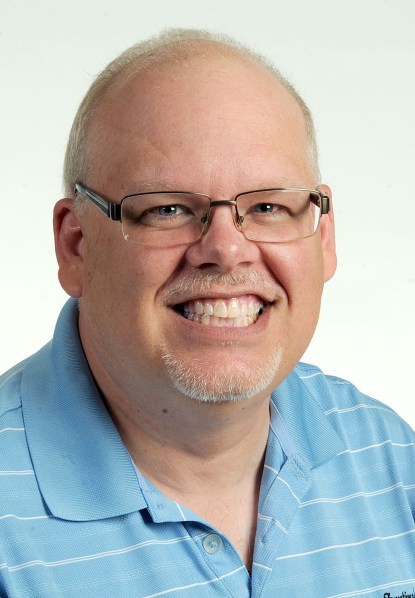
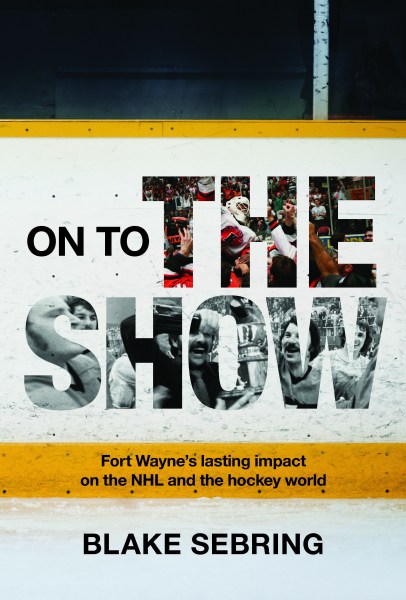
Blake has covered the Fort Wayne Komets for 27 years and authored several books, including the just-released On to the Show: Fort Wayne’s Lasting Impact on the NHL. Blake is also a colleague from my copy desk days at the N-S, one with a particular gift for finding and telling the stories of humor, faith, and perseverance that underscore every game. I don’t remember ever having to bug him about a name spelling or missing information … and you’d have to be an editor working on daily deadlines to fully appreciate that, but on to the show.

Blake’s latest includes stories with people such as Mike Emrick, Bruce Boudreau, Kevin Weekes, Dale Purinton, and others from Fort Wayne who have advanced to the highest level of the sport. Here, find out more about Blake’s laughs with legends, defining moments and what happens when a mild-manned sports reporter has murder in mind:

1. You mentioned this was the most fun you’ve ever had writing a book. Tell me what made it so.
 
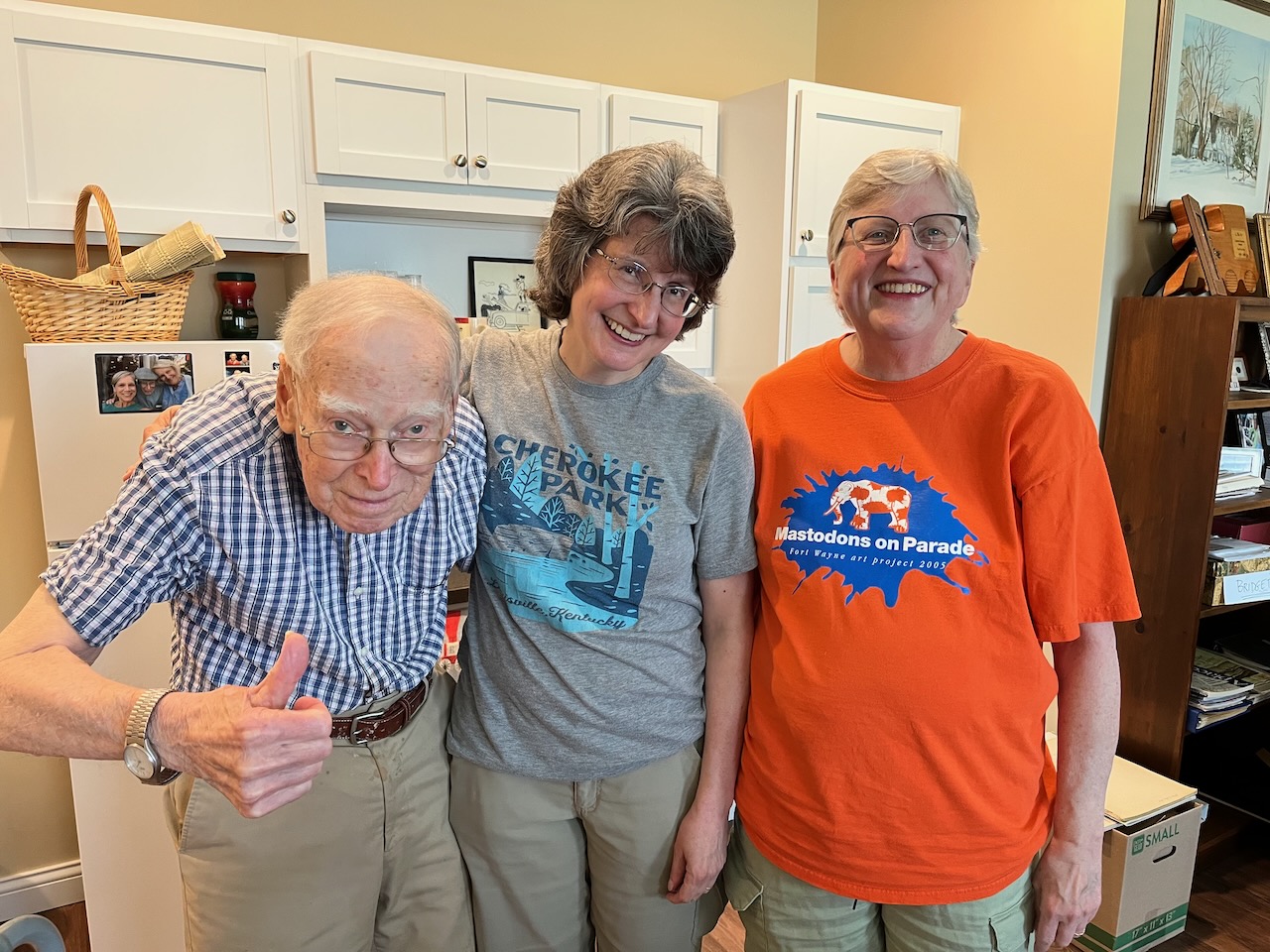
SPT 08XX Blake mug3Every former Komet I reached out to called me back within a day, if not sooner. I told them it would take half an hour or so, but we usually ended up talking for two hours. The first hour would be reminiscing or catching up about past teammates and their families. There were always a lot of laughs before we ever got started on the actual reason for the conversation, and then they gave me incredible material to work with. Some of the stories I had never heard before, and that made me want to write the stories right away.
 
2. You’ve covered the Komets for so long, telling their stories on and off the ice. What is it that you wish more people understood about hockey?
 
A couple of things. I’ve never felt the sport has done a good job of selling how much better the game is in person than it is on TV because you can see everything. The other thing is hockey players don’t get enough credit for being such incredible all-around athletes. They aren’t the biggest, fastest or tallest, but they play a game that is almost as physical as football and requires as much aerobic conditioning as basketball, and they do it three or four times per week.
 
3. When someone mentions Bob Chase, the late voice of the Komets for WOWO (and the subject of Live from Radio Rinkside), what’s the first image/memory that springs to mind? 
 
Bob’s humility. When I wrote his obituary column, I talked about how everyone always felt comfortable coming up to say hi or ask him a question at almost any time, and he absolutely loved that. Every time I talked to him about an award he received, he’d always get misty-eyed and wonder why his life was so blessed. And if you asked him about his kids, the water works would really get going. Bob was exactly the same in private as he was in public.
 
4. What’s your favorite sports movie?
Probably “Miracle.” Usually, Hollywood ruins sports movies because the action looks fake (actors are generally horrible athletes) and they change the story by adding conflict and drama, which really ruins it if you followed it as it happened originally. They didn’t have to do any of that with “Miracle.” I’ve talked to former Komets Steve Janaszak and Mark Wells enough over the years to have some insight into the 1980 U.S. Olympic hockey team and what they experienced. Their stories are in the book.
 
5. Your last book, Lethal Ghost, delves into darker territory than sportswriters (or most police reporters) encounter. What, if any, challenges did you run into in the course of writing it?
 
(Chuckles) I wanted to try something totally unexpected and out of character to challenge myself as a writer. When I write a book, I usually try to experiment with something different, and in this one I wrote the bad guy in first person and the good guy in third person, and maybe the most fun was when they interacted. I had the beginning and the ending figured out in my head before I started writing and just let everything else flow. Every time I’d run out of material, my mom would come up with a new way to murder someone or I’d let it percolate for a few days and a new idea would pop in. I’ve got two sequels planned. Bwa-ha-ha!
 
6. There is a “defining moment” theme in the fictional The Lake Effect, certainly, but also in The Biggest Mistake I Never Made, which talks about Lloy Ball’s decision to play volleyball for his dad at Indiana University-Purdue University Fort Wayne instead of Indiana University Bloomington. Can you share one of yours?
 
I was 23 years old and working as a sports editor in Sturgis, Mich., and I left after 18 months because my boss kept lying to me. I didn’t have anything else set up, other than I knew I had to do something different because the environment was so bad. I needed to stand up for myself so I came home and worked part-time at The News-Sentinel and loaded freight at the airport for six months until the paper created a full-time position for me. Loved the freight job, by the way.
 
7. What is one thing you never leave home without?
The expectation that I’m going to find something or someone new that I can tell a story about if I just keep my eyes and ears open. The absolute best part of my job is that every day, every game is unique, and I never know what I’m going to find or see. How many people are lucky enough to say they are never bored with their job? How lucky am I?
___________________
Learn more about Blake’s work at www.blakesebring.com.

Seven Questions with Alena Chapman

The Seven Questions series continues with author Alena Chapman, whose book, You Can’t Escape a Prison if You Don’t Know You’re In One: What is Blocking Your Freedom? was published in January. It quickly became an international bestseller on Amazon.com. I must disclose here that Alena is a client, and it has been my honor to work with her on bringing this book and her other resources to life.

11703585_626501670785560_1483092237041839402_oAlena is also a singer, music teacher, speaker, workshop leader, coach, mother . . . and survivor. Here’s just a snippet of what she has to say.

1. What we now know as You Can’t Escape a Prison if You Don’t Know You’re In One  started out as journaling about the transformational “tools” you’d acquired. At what point in the process did you realize you were writing a book?

Yes, I did start by sitting in a coffee shop writing in my journal. Mentors and experiences were happening so fast and I was learning so much, I really wanted to capture everything in a journal for my own memory. Soon I was giving examples of these tools being used by me and by other people. The journal entries grew into chapters with each chapter heading being the new tool I learned. One day, I took a look at all the journal entries and said to myself, “Wow, I wish I had a book like this when I started breaking out of my prison.” That is when it hit me — I was writing a book.

2. How have your sons adjusted to your more public persona since the publication of your book?

How they act with me is the same. However, when You Can’t Escape From a Prison If You Don’t Know You’re In One: What Is Blocking Your Freedom? became an international bestseller, I heard from other people how proud my boys were of me and they were telling everyone. The hardest adjustment is that I am working at home and very busy. My children are not used to me being home, but not really available. So we all have had an adjustment.

3. Describe the role of music in your life.

Music has played and continues to play an important role in my life. I started studying music at fifteen years of age. I sang classical/opera or operettas for a long time. In 1989, when traveling around the country to sing was not as feasible, I started teaching in area universities and colleges. I taught voice, gave opera workshops, vocal-coached musicals, taught music history, and directed choirs. This is when I found my love for directing.

For the past nine years, my love has been self-development and helping others grow in their awareness and their lives.

However, my house is filled with music of all types. If you see me driving by, I am the one dancing in the car.

Music raises our vibration, gives meaning, and just feels good.

51NTogNJ2dL._SX345_BO1,204,203,200_4. In your book, you describe being about to close on a new home for yourself and the boys, and being suddenly overwhelmed with old paradigms about not being able to do such a thing on your own — that you needed a man to take care of you. The book tells us how you got past it, but how does an independent, 21st-century woman get to that place to begin with?

Great question! Even though women have come so very far in our country, sometimes the men have not, especially the older generation. My dad was born in the early 1940s, so his ideas had not caught up with women’s liberation. Also, he always worried about me, my independence, and my creative spirit, which he did not understand.

Yes, I was very independent. I moved to another state, started my own life — but looking back, I see there were many times in my life I would hear his voice and it would alter my decisions for my life. Why? Because he was my dad, a major person in my life and I loved him dearly — along with trusting him.

However, I found that every decision I based on what another person believes or says always turns out wrong for me. I can now say from experience: I am the only one to know what is good for me. Any time I am not sure which path to choose, I may ask others their opinion, but it is my decision what I do with the information.

Really, I need to thank my dad. In a roundabout way he taught me to be even more independent, believing in myself, and strong.

5. What makes you stop whatever you’re doing and take a picture?

Beauty — awesome, ever-changing beauty. I love vistas — blue skies, sunsets, water with the sun dancing on its surface. Every day, we receive as a gift from the universe a new sky. Did you know there is never the same sky appearing to us? Each one is new and different. But if we do not notice, we miss that sky forever.

We wake to find clouds hovering below a mountain’s peak or an innocent fawn walking in our path. The old woman who shares her stories with the lines in her face and the sparkle of her eye and the two-year-old boy who holds a handful of dandelions as if they were made of gold. This is life in its splendor. A spectacular gift which, if I am lucky, I can capture with my camera to remind me of that moment.

My world always feels blessed when I open my eyes and see the beauty, the uniqueness, and the abundance of our universe.

This is what I stop whatever I am doing, become totally present, and take my picture.

6. What was on your gratitude list this morning (that you’d like to share, anyway)?

Gratitude lists start with, “I am so happy and grateful for…” Gratitude lists are a must-do to gain/keep your perspective, sharpen your focus, and raise your vibration. I always feel happier and ready to start my day.

The one constant on my list is my children. I can never be more thankful than I am for the joy and growth they give me.

This morning I also listed:

2. My ability to help so many people live lives that they love

3. My awesome friends

4. The wonderful partner in my life

5. I have a new day to achieve my desires

6. The beautiful fall day

7. All the blessings and opportunities entering my life

8. My own growth and discovery

9. The health of my family

10. Me

After I list what I am thankful for, I read through the list, feeling the thankfulness. This helps even more to internalize the gratefulness.

Next I become quiet, like a mini meditation, and I ask for guidance for the day. Then while still in this quiet state, I send love and peace to three people who are bothering me.

If you have never done a gratitude list or are trying to change your life for the better, it is best to write a list first thing in the morning and another before you go to bed. Soon you will find yourself being grateful throughout your day.

Gratitude is the attitude changer!

7. What are you working on now?

Right now I am very busy. I have a new program and course coming out in October. The program is recorded by me and includes a workbook, the CDs or mp3s, and my international bestselling book: You Can’t Escape From a Prison If You Don’t Know You’re In One: What is Blocking Your Freedom? The course is eight weeks, covers the areas in the program, and much more. Also, the course includes four half-hour private consultations with me, an empowering mastermind group with people from the course, and eight meditation CDs or mp3s. I am very excited to offer and teach these wonderful tools to people in such a great way.

Nov. 7, 2015 will be a highlight of the year. I will be having a one-day seminar at the Manchester University College of Pharmacy in Fort Wayne at 10627 Diebold Road next to Parkview Hospital. This is a great way to discover and see the opportunities and start on bettering your life or achieving your dreams. I will give you tools and plans to begin right away. If you seriously want a difference in your life — this is the event to attend. (Check www.alenachapman.com for more details and registration.)

And if all that is not enough, there is a new book just starting. It should be out in the summer of 2016.

•  •  •

Many thanks to Alena for being my guest today. Check out her podcast, “Conversations with Alena,” available on her website (above) and on iTunes. Happy Labor Day, everyone!

Build a better press release

???????????????????????????????????????????????????????????????????????????Now we turn to writing a more detailed press release. Here are my top tips for producing press releases the media will use:

1. Hire someone who knows what they’re doing. OK, grammatically speaking, hire someone who knows what he or she is doing. Heck, just hire me.

Still want to do it yourself? Read on.

2. Send your press release by email; see my previous news-release how-to about finding email addresses and putting them in the bcc field. You can put your message in the body of the email, but if you send the press release in an attached file, Word is the most usable format. A .doc (rather than .docx) file is safer since not everyone has upgraded to the latest version of Word.

Name the file according to your organization, the subject, and, if applicable, the date. For example, if you work for Company B and are sending out a press release about the company’s annual Boogie Woogie Bugle Boy Festival coming up on April 21, your filename (or slug, as we used to call it) could be CompanyB-BoogieFest-04.21.15.

This way, when the recipient downloads that and every other file she’s received that day, she can identify and sort it at a glance. A file named “Press Release” is much more likely to get lost in the shuffle.

3. Keep your formatting simple. Fancy email stationery, fancy fonts, or intricate coding to work around a logo or info box — fuhgeddaboudit. Impress me with the efficiency of your words.

4. Keep it short, simple, and businesslike. Answer the four W’s and the H — who, what, when, where, why, and how — in the first paragraph. Do not put the organization’s mission statement or any conversational fluff in the first paragraph. Just the facts, plus the name, phone number, and email of at least one person to contact with questions about the release.

Here’s an example of a press release that came to us in good shape “as is” from the University of Saint Francis in Fort Wayne. Let’s look at it paragraph by paragraph.

Sept. 10, 2012 FORT WAYNE, Ind. – The University of Saint Francis will expand its downtown Fort Wayne presence with the purchase of the Greater Fort Wayne Chamber of Commerce building at 826 Ewing St. as a home for its Keith Busse School of Business and Entrepreneurial Leadership. A fall closing date is anticipated.

This is the most important part of the press release: The lead. This succinctly tells you who is doing what, where, and approximately when. Granted, it does not address why USF is expanding its downtown presence or how it’s going to be funded.

The purchase locates the business school near the USF Performing Arts Center at 431 W. Berry St. The university purchased the former Scottish Rite Center in January as a performance hall and as a location for its Media Entrepreneurship Training in the Arts (META) program.

But see, here’s more information and a little more background in the very next paragraph.

“Locating the school of business near the USF Performing Arts Center supports the META program’s downtown momentum,” said Sister M. Elise Kriss, university president. “Since META intersects with business courses, locating the study centers near one another creates convenience for our students while partnering with the city to draw visitors to an enhanced downtown. The move also provides more space for the business school’s other programs and opens up main campus space for the School of Arts and Sciences.”

Ah, the obligatory quote from the president, leader, or spokesperson. This one would actually be worth printing since, to the credit of Sister Elise and the press release writer, it gives more of the logistics and the “why.” However, it could also be cut without leaving any gaping factual holes.

The chamber building has been for sale since 2010. The chamber is expected to remain in the building through the spring of 2013 while a search is undertaken for new office space in the downtown area.

Here we have a bit more background and timeframe for what is going to happen.

“We certainly appreciate the historical significance of the Chamber building in so many of Fort Wayne’s business dealings over the past 84 years,” said Chamber President and CEO Mike Landram. “Selling the building to the University of Saint Francis is the best and highest use of the building in service to the business community. We couldn’t be happier with this arrangement. We’ve been preparing for this day for quite some time. It’s now time to evaluate available spaces within the downtown area that will allow us best serve chamber members.” Questions regarding the sale of the building can be directed to Landram at 260.424.1435 or mlandram@fwchamber.org.

There is nothing at all wrong with this quote; it’s full of goodwill and forward thinking. If the editor or whoever has space to fill, it can legitimately be included. If not, it can legitimately be cut. The last sentence about where to direct questions about the sale of the building might be left in if the editor feels it is relevant (say, in a business or real estate publication). I would have made it a separate paragraph since it’s not part of the quote.

The Greater Fort Wayne Chamber of Commerce is a non-profit organization with a membership of 1,700 northeast Indiana businesses. It supports economic growth through member business resources and facilitating strategic connections across business, education and government.

The University of Saint Francis, founded in 1890 as a comprehensive university in the Catholic Franciscan tradition, offers more than 60 undergraduate and 14 graduate programs in five schools: The School of Health Sciences, School of Arts and Sciences, Keith Busse School of Business and Entrepreneurial Leadership, School of Professional Studies and School of Creative Arts. It enrolls more than 2,300 students from a broad geographic region. The university has a regional campus in Crown Point, Ind.

These are the official descriptions that go at the bottom of every press release and rarely, if ever, make it into print. But if you have to include them at your end, you have to include them. We get that.

As I said earlier, good photos are welcome — either attached or available on request.

Keep it simple, get to the point, and get it right. You’ll create a much more abundant flow of information between your organization and the people you want to reach.