Seven Questions with Blake Sebring

OTTSIn what may be the most goal-oriented installment yet, the Seven Questions series continues with Blake Sebring, Fort Wayne author and longtime sportswriter for The News-Sentinel.

Blake has covered the Fort Wayne Komets for 27 years and authored several books, including the just-released On to the Show: Fort Wayne’s Lasting Impact on the NHL. Blake is also a colleague from my copy desk days at the N-S, one with a particular gift for finding and telling the stories of humor, faith, and perseverance that underscore every game. I don’t remember ever having to bug him about a name spelling or missing information … and you’d have to be an editor working on daily deadlines to fully appreciate that, but on to the show.

Blake’s latest includes stories with people such as Mike Emrick, Bruce Boudreau, Kevin Weekes, Dale Purinton, and others from Fort Wayne who have advanced to the highest level of the sport. Here, find out more about Blake’s laughs with legends, defining moments and what happens when a mild-manned sports reporter has murder in mind:

1. You mentioned this was the most fun you’ve ever had writing a book. Tell me what made it so.
 
SPT 08XX Blake mug3Every former Komet I reached out to called me back within a day, if not sooner. I told them it would take half an hour or so, but we usually ended up talking for two hours. The first hour would be reminiscing or catching up about past teammates and their families. There were always a lot of laughs before we ever got started on the actual reason for the conversation, and then they gave me incredible material to work with. Some of the stories I had never heard before, and that made me want to write the stories right away.
 
2. You’ve covered the Komets for so long, telling their stories on and off the ice. What is it that you wish more people understood about hockey?
 
A couple of things. I’ve never felt the sport has done a good job of selling how much better the game is in person than it is on TV because you can see everything. The other thing is hockey players don’t get enough credit for being such incredible all-around athletes. They aren’t the biggest, fastest or tallest, but they play a game that is almost as physical as football and requires as much aerobic conditioning as basketball, and they do it three or four times per week.
 
3. When someone mentions Bob Chase, the late voice of the Komets for WOWO (and the subject of Live from Radio Rinkside), what’s the first image/memory that springs to mind? 
 
Bob’s humility. When I wrote his obituary column, I talked about how everyone always felt comfortable coming up to say hi or ask him a question at almost any time, and he absolutely loved that. Every time I talked to him about an award he received, he’d always get misty-eyed and wonder why his life was so blessed. And if you asked him about his kids, the water works would really get going. Bob was exactly the same in private as he was in public.
 
4. What’s your favorite sports movie?
Probably “Miracle.” Usually, Hollywood ruins sports movies because the action looks fake (actors are generally horrible athletes) and they change the story by adding conflict and drama, which really ruins it if you followed it as it happened originally. They didn’t have to do any of that with “Miracle.” I’ve talked to former Komets Steve Janaszak and Mark Wells enough over the years to have some insight into the 1980 U.S. Olympic hockey team and what they experienced. Their stories are in the book.
 
5. Your last book, Lethal Ghost, delves into darker territory than sportswriters (or most police reporters) encounter. What, if any, challenges did you run into in the course of writing it?
 
(Chuckles) I wanted to try something totally unexpected and out of character to challenge myself as a writer. When I write a book, I usually try to experiment with something different, and in this one I wrote the bad guy in first person and the good guy in third person, and maybe the most fun was when they interacted. I had the beginning and the ending figured out in my head before I started writing and just let everything else flow. Every time I’d run out of material, my mom would come up with a new way to murder someone or I’d let it percolate for a few days and a new idea would pop in. I’ve got two sequels planned. Bwa-ha-ha!
 
6. There is a “defining moment” theme in the fictional The Lake Effect, certainly, but also in The Biggest Mistake I Never Made, which talks about Lloy Ball’s decision to play volleyball for his dad at Indiana University-Purdue University Fort Wayne instead of Indiana University Bloomington. Can you share one of yours?
 
I was 23 years old and working as a sports editor in Sturgis, Mich., and I left after 18 months because my boss kept lying to me. I didn’t have anything else set up, other than I knew I had to do something different because the environment was so bad. I needed to stand up for myself so I came home and worked part-time at The News-Sentinel and loaded freight at the airport for six months until the paper created a full-time position for me. Loved the freight job, by the way.
 
7. What is one thing you never leave home without?
The expectation that I’m going to find something or someone new that I can tell a story about if I just keep my eyes and ears open. The absolute best part of my job is that every day, every game is unique, and I never know what I’m going to find or see. How many people are lucky enough to say they are never bored with their job? How lucky am I?
___________________
Learn more about Blake’s work at www.blakesebring.com.

Salem: Which was witch

TheWitches

See stacyschiff.com

As we have seen, especially in recent days, fear makes people do crazy, horrific things.

It’s the same old crap we dealt with three centuries ago. The people of Salem, Massachusetts in 1692 were nothing if not scared. They lived in a new, untamed land under constant threat of Native American attack and abduction. Their Puritan beliefs had them either righteously lording it over others or falling miserably short despite their best efforts and greatest sacrifices.

The notion that there were witches among them — women (mostly) who had signed a pact with the devil and were torturing people like 12-year-old Ann Putnam — gave all that free-floating fear a place to land.

Pulitzer Prize-winning author Stacy Schiff helps us see and feel this brief but devastating chapter of American history in The Witches: Salem, 1692 (Little, Brown and Company, 2015). In particular, she helps us see the day-to-day realities that allowed it to unfold.

My interest in the Salem Witch Trials increased a few years ago when I discovered a genealogical connection to some key players. Deacon Edward Putnam is my seventh great-grandfather, and he was among the accusers whose testimonies sent several innocent people to their deaths. His older brother, Thomas Putnam, appears to have been a ringleader, and Thomas’s daughter Ann was one of the young girls whose bizarre behavior set the whole mess in motion.

This was a rare moment in history in that females, and young ones at that, were calling the shots. Betty Parris, daughter of the Reverend Parris, and her cousin Abigail Williams began to have convulsive, screaming fits. Soon Ann Putnam and other girls showed similar symptoms. A doctor said the girls were bewitched, and the girls began to name a series of local women as their tormentors, also claiming to see ghosts, spectral versions of the living, and the devil.

It was a reality show-worthy spectacle, by all accounts. Then, as now, nobody does drama like a girl on the threshold of womanhood. Then, as now, people at the bottom of the heap are apt to misuse power when they suddenly find it in their hands. If one of these young ladies accused you of witchcraft, you were as good as convicted. The only defense against an accusation of witchcraft was a good offense — shifting the accusation onto someone else.

Schiff notes that young Ann Putnam predicted future events and recalled others that predated her birth. And without question, Thomas Putnam had suffered many losses at that point in his life — inheritance, land, and children. It’s not hard to believe he was motivated to use the force of the law to settle some scores. However, as Schiff says, “Putnam had a much-loved, perceptive, desperately convulsing twelve-year-old at home. He was soon to have a deranged wife as well. It is difficult to believe he had a long-range strategy at the start.”

Thomas and his wife both died in 1699, leaving Ann to raise her younger siblings. At age 27, Ann, seeking full church membership, apologized to the Salem village congregation for her significant role in the events of 1692. Out of the 19 who had been put to death, she had testified against all but two. It was a “devil made me do it” apology, but it was more than any of the other accusers offered. She died a decade later.

If you’re looking for the Cliff’s Notes version of the Salem witch trials, or easy answers, you won’t find them in this dense, detailed work. You will, however, find the humanity behind this surreal chapter of America’s story.

Chosen by cats

If you are in transition, chances are an animal is or is waiting to be your teacher. Cats in particular choose us for these missions, although some cleverly let us think we do the choosing.

For example: A tiny, loudmouthed tiger kitten adopted me at a Southern Indiana animal shelter when I was just out of graduate school and unsure of the next step. When I picked her up, she looked me straight in the eye and meowed. I’d passed muster.
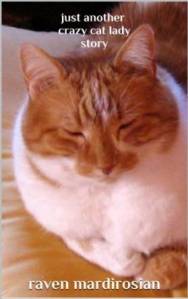
UnknownRaven Mardirosian describes a similar experience in “Just Another Crazy Cat Lady Story” (2014). She had just arrived in Fort Collins, Colorado for graduate school. On the East Coast, she’d left behind her fundamentalist Christian family and her “sort-of” girlfriend at their Christian college, which banished Mardirosian from campus when their relationship was uncovered (by said girlfriend).

It was the beginning of many years of wandering — if not running — and yet there she was in an animal shelter, about to take on the commitment of adopting one of two kittens. She was drawn to the darker one, as the orange tabby reminded her a little too much of the beloved family cat whose loss she still grieved. But when the orange tabby’s tiny white paw grabbed her finger, Mardirosian knew she’d been chosen.

That orange tabby, Avery, became Mardirosian’s link to a kinder, gentler way of being amid a return to the East Coast and a series of jobs, schools, apartments and girlfriends. People in her life asked: When are you going to grow up? When are you going to get right with the Lord? Avery just napped in her lap, knowing she would figure it all out.

While living in New York City, Mardirosian adopted Zoey, a little gray street cat, through a fellow CCL (crazy cat lady). After thoroughly vetting Mardirosian and her living space, CCL brought Zoey for a trial visit.

Zoey turns her eyes my way: jade green, with just enough of a razor slit to show that I’m not the only bitch in the room. …

Then she decides to come over and say hello.

She likes you.

The magical three words. All of the chasing after my parents’ love, the attention of the beautiful redhead or blonde or black-haired girl at Henrietta’s … flies back in one terrifying sword of truth — she likes you — as Zoey remains in my lap, not quite seated, not quite standing.

She does, doesn’t she?

Still, in the beginning there was fearsome hissing and screaming, broken glass and an abscessed injury to the base of Avery’s tail. Though Zoey did settle down, she remained moody and opinionated — much like Idgie, my aforementioned loudmouthed tiger cat.

Mardirosian developed a unique relationship with each of her feline charges: “I’m much more aligned to Zoey, the secret observer. The runner. I’ve got that skill down pat. Avery challenges me to remove the labyrinth that winds its way around my heart and let others love me.”

Her account of Avery’s illness and the agonizing decision to let him go, after nearly two decades of life and love, is wrenching. Though deeply moving in and of itself, it brought back the loss of Idgie, who passed at age 16, quite vividly.

Even in her grief, Mardirosian recognizes, as I did, that her friend and guide is “safe, happy and free. … This crazy cat of mine will fly on. I may not know how — but trust the energy that propels him forward will move me in the same way.”

At our city shelter, I met a tortoiseshell kitten. I picked her up, and she reached out and patted my face with her paw. Lucy is now an easygoing 3-year-old, a very different cat with a new set of lessons.

My education continues.