Changing your flooring? Paws and explain

Dog lying on carpet looking concerned

Simple animal communication techniques can help your pet adjust to new flooring. (Image by Fran__ from Pixabay)

Once the noise is over, animals generally adapt to home improvements.

Unless you’ve changed the floors. Then, as Ricky Ricardo would say, you’ve got some splainin’ to do.

Animal communication can help you do the splainin’ up front and preserve everyone’s peace of mind.

Here’s an example of why it matters:

A friend’s cat developed raw bald spots from over-grooming and retreated to a back bedroom instead of snuggling or playing the way she usually did. My friend couldn’t figure out why. As it turned out, she and her husband had just replaced most of the flooring in their house.

Flooring changes can be traumatic because cats and dogs navigate the world through their feet in a way we do not. Your pet knows your carpet, tile, or hardwood intimately — its contours, textures, smells, and squeaks — and has left his scent with his paws. He knows how to walk on it so his feet don’t skid.

So when you rip out that carpet with years’ worth of daily debris, you’re removing part of what he knows as home. Whatever you replace it with might look and feel tons better to you, but to him it’s strange, smelly, maybe even hazardous.

Some distant Reiki, reassurance, and one-on-one time soon had my friend’s feline purring and playing again, and her fur growing back.

But what if we could make these home improvement projects easier on our pets from the start?

This was on my mind when my spouse and I swapped out carpet and linoleum for vinyl planking on most of the main floor. The planks were delivered ahead of time, so our dog and two cats had a chance to check the new stuff out. A day or two before the install, I told them the carpet and linoleum would be going away and the planks would go down in their place.

As I spoke, I pictured the new look and texture, and how much happier the overall feel of the house would be. (A happier atmosphere, with happier humans, is a selling point for even seemingly aloof cats.)

Our animals know and love Sam, the remodeler we work with, as well as his crew. So I pictured them when I told the animals who would be coming in to do the work. During this time, the cats would be kept in an upstairs room with water, litter box, and a view of the front of the house so they could monitor all comings and goings. I let the dog know she’d be allowed to say hello to the guys, and then she and I would keep out of the way in my home office behind a baby gate. I told all three there would be noise and strange smells, but they would be safe.

During the two-and-a-half-day install, there were a few meows of protest from behind the closed door. The dog got tired of the confinement but refrained (mostly) from barking.

As soon as the crew left for the day, I let everyone out to inspect what had been done so far. While they did so, I pictured all the furniture back where it was on the new floor, and them getting used to the new surface under their paws. Even when fully informed, animals are skeptical about change — but they went with it.

Once the work was done and everything back in place, they walked gingerly, especially in the rooms that previously had carpet and therefore better traction. Within a day or two, our older cat acted as if nothing had changed, and what were the other two edgy about? The younger cat soon discovered that skidding around corners just added to the fun of thundering through the house. For about a week, the dog stayed on area rugs as much as possible to avoid the new surface. Gradually, she figured out how to sit, lie down, and stand up on it without her feet skidding out from under her.

Still: no loss of hair, no behavior changes, and no pee-mail. The new floor did in fact improve the energy of the house. I call that a win.

If you plan on making changes to your flooring or floor covering, here are a few quick tips to help all family members keep their feet on the ground:

1. Buy pet-friendly flooring

It’s worth doing this right. Invest in eco-friendly, pet-friendly materials that wear well and clean up easily. Get information from unbiased sources (Consumer Reports is a time-tested one) and work with a contractor you trust.

2. Brief the troops

Using words and mental pictures, tell the animals what will change in which area(s) of the house, where they will be while the work is being done, about how long it will take, and that there may be some noise and new smells. If you have the new material or even a sample, let them sniff it. Hold a positive picture in mind of how much nicer the house will feel once it’s done, and assure them you will keep them safe. You may still face some resistance just on principle, but keeping them informed eases the overall process.

3. Create a safe space

Animals should be kept where they will not be in the way, get hurt, or get outside, and they should have access to water, a litter box, and maybe a blanket or favorite toy. I try to sequester the cats before the crew arrives and resist the temptation to open the door even a sliver to check on them. Paws can get injured in doors, and entire kitty bodies can slither through and be someplace they shouldn’t in the blink of a well-intentioned eye. For dogs, baby gates generally work better, as they don’t feel as shut off. Offer reassurance along the way.

Animals absorb and understand far more than we think, so it’s important to keep your own energy calm and positive — even as you’re corralling them for the day’s work.

Progress of any sort can be messy, but you and your animal friends can help one another through it.

Science-based horsemanship comes to Fort Wayne

Mustang science based horsemanship animal Reiki animal communication
Geronimo, a mustang I’ve worked with for several years, was the star of the show in a science-based horsemanship demo with West Taylor in Fort Wayne, Indiana.

I caught a snippet of West Taylor’s science-based horsemanship seminar this weekend at Summit Equestrian Center here in Fort Wayne. Geronimo, a formerly wild mustang who trained at West’s Utah ranch last winter, was the star of the show for a Saturday demo.

Geronimo, with whom I’ve worked in my animal Reiki and animal communication practice, did a great job! Over the last few years, we’ve shared many a Reiki session — often while he was in horse time-out — and some good talks. Moment to moment, he’s had to decide that connecting and learning were worth the risk.

So I especially loved hearing from West about teaching horses to find and keep their center despite “trash-talking Tweety birds” and other threats. It’s about responding rather than reacting, which of course is something I have to work on myself.

I hear more trash talk from squirrels than birds, actually … but the point remains.

Ease anxiety of travel without your pet

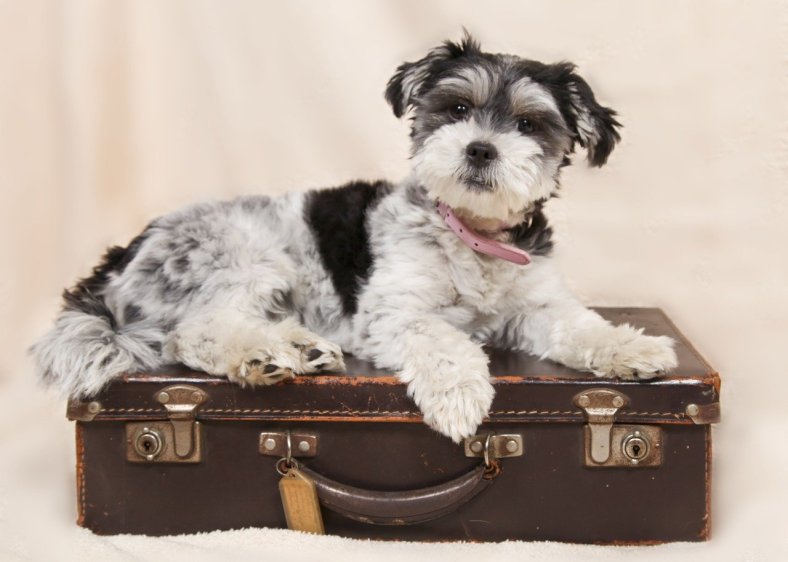
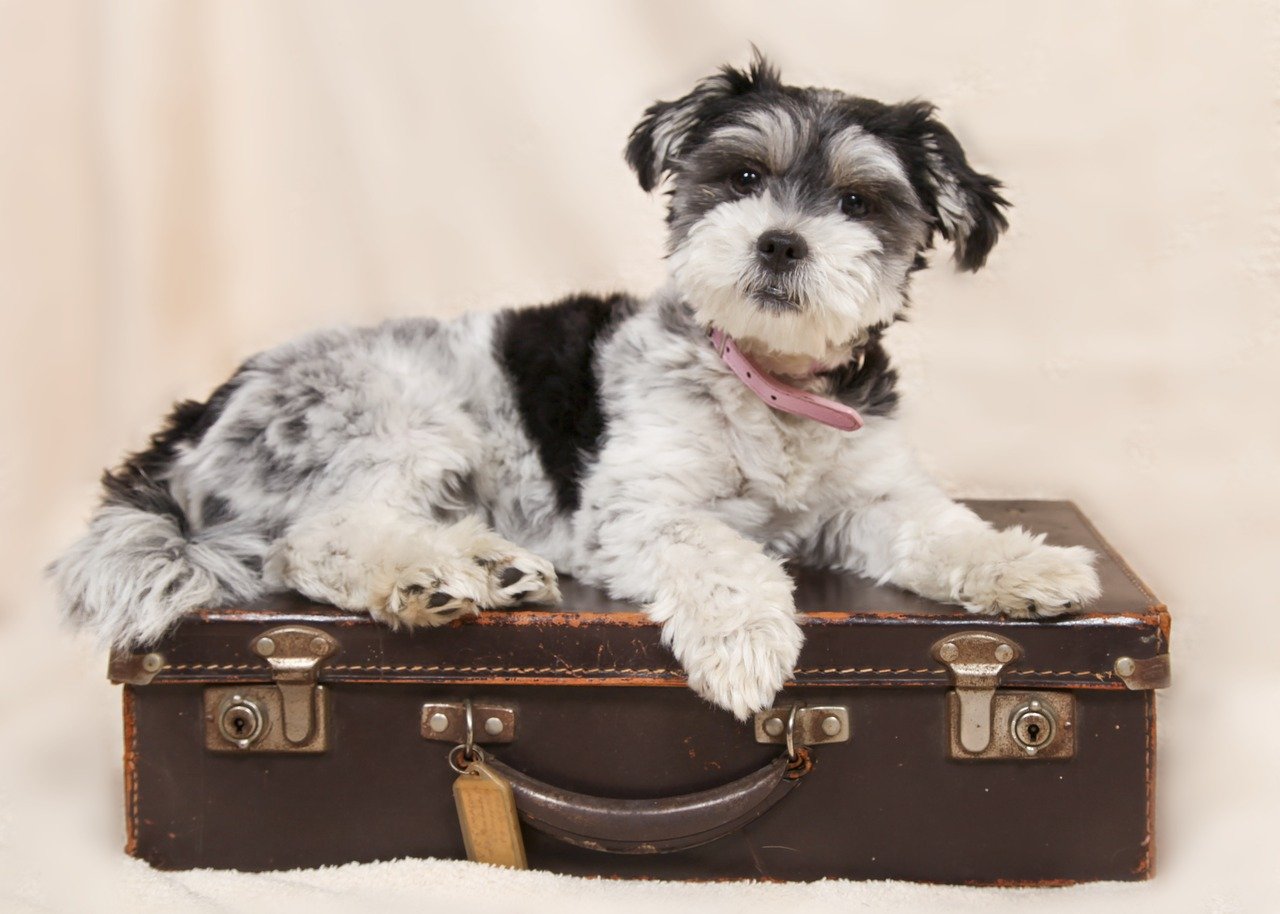
Anxious dog lying on top of suitcase
Where do you think you’re going? Use simple animal communication techniques to relay important details to your pets.

Friends of mine used to check their rescue cockapoo, Holly, into the kennel a day or two early so she wouldn’t see them packing. Holly, of course, knew they were going away long before the suitcases came out.

I have fought back tears when pulling out of the driveway or dropping somebody off at the vet clinic for boarding. Even when you trust those caring for your precious family member, when the moment comes, there may be pleading looks, trembling, and whining. The animal may not take it well, either.

One of the things I do as an animal communicator is prepare animals for change, whether it’s a trip to the trainer’s or a new home. Here are a few basic techniques you can use to make travel more tolerable:

Give it to ’em straight. With pictures.

Tell the animal what you’re going to do, who will care for him or her and where, and when you will be back. As you speak, calmly hold the corresponding images in your mind, because these — just as much as or more than your words — will get the message across.

For example, you could tell your dog: “We are going to visit Grandma next week, and Susan is going to come stay here and take care of you. Remember how much fun you had last time she was here? We’ll be back in four days.”

While you’re saying these things, picture Grandma … then Susan … then the dog playing with Susan last time … then the sun rising and setting four times … and finally, you coming back in the door with your suitcases.

Acknowledge any challenges.

“I know you got upset the last time you went to the kennel, and that was hard for me, too. We’re going to try it again. I’ll try to be braver and hope you will, too.” Again, picture it.

This respects both of you and sets the intention for a better outcome. It also affirms you as the decision maker. Again, get in charge of your own state of mind first; if you are angry or anxious, that will drown out whatever you’re trying to communicate.

Check in while you’re away.

While you’re gone, you can call and have someone hold the phone out to Fluffy while you talk to her. Then you can listen as the human comes back on the line and tells you Fluffy twitched her ear and stalked off. Or you can skip this potential awkwardness and touch base telepathically. Yes, you can; there’s a reason some dogs (and cats, and birds, and horses, etc.) know when their people are on their way.

Find a (relatively) quiet moment, bring your animal companion to mind, and just say hello. Tell her you’re thinking of her, that you love her, and remind her when you will be home. You can leave it at that, or you can ask a question and listen for a response. Either way, she will appreciate you checking in.

Try one or more of these next time you travel, and please be safe. For more help communicating with your animal friend, or for supporting both of you with a Let Animals Lead® session, visit me at www.njcrowe.com.