Animal communication and Reiki are different modalities

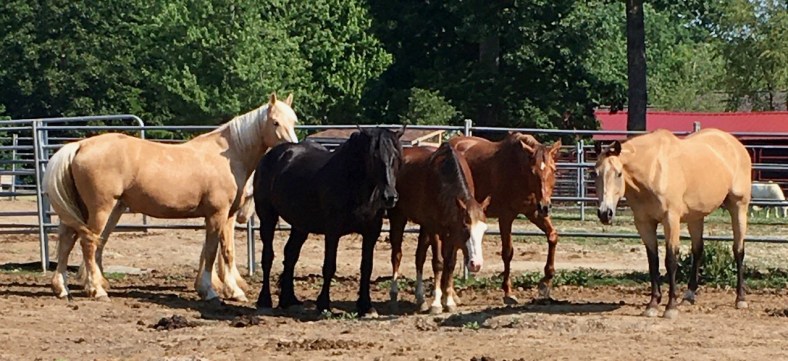
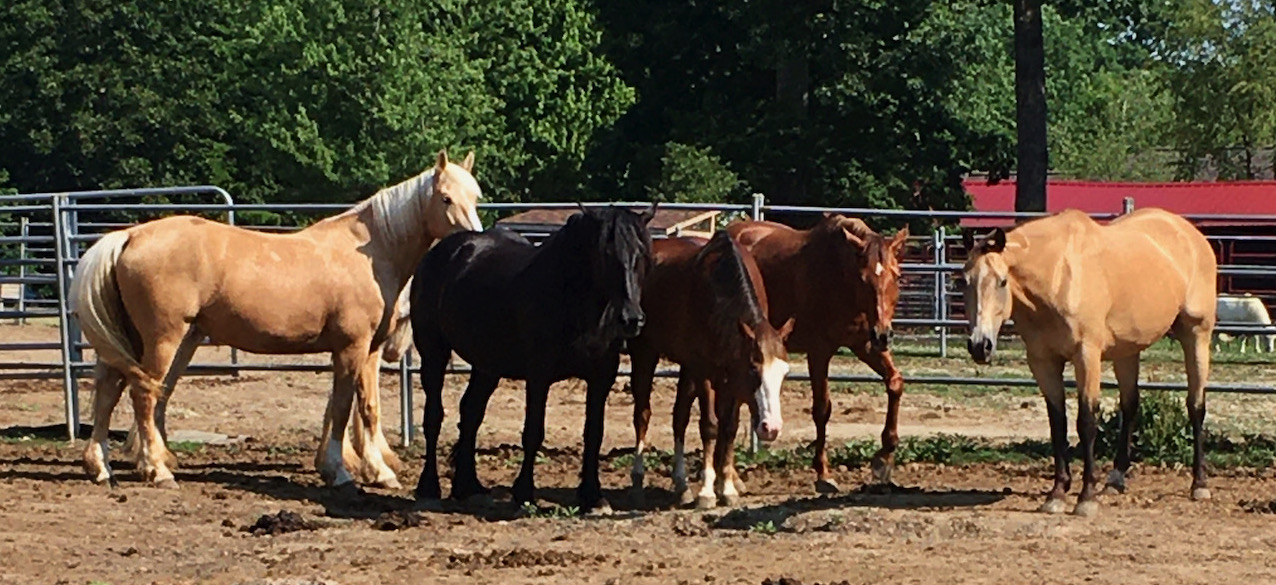
Let Animals Lead® meditation and animal communication go well together, but they’re not the same … kind of like these two. (Photo by Nancy Crowe)

While Let Animals Lead® animal Reiki and animal communication make a great pair, they are separate disciplines with unique benefits. The difference is essentially between meditation and conversation.

How they work

A Reiki session is a time of meditation, relaxation, and peace. Because I am certified in Kathleen Prasad’s Let Animals Lead® method, the animal is always in charge of whether and how he shares the energy.

During an in-person session, which I offer in the Fort Wayne, Indiana area, a cat or dog might curl up in my lap or settle across the room. A horse may stand on the other side of the pasture, hang out in a stall, or come to meet me at the fence. I’ve even had a donkey sidle up and nudge his head under my arm! Whatever the species or context might require, I go into a meditative state and let the energy do its work.

Distant sessions are much the same, except that the animal and I are not in the same physical space. She’s generally at home relaxing with her person, hanging out with the herd, or doing whatever, while I’m in my home office — again, in a meditative state, letting the energy do its work!

During an in-person or distant meditation session, I may receive intuitive information — but that is not the objective of the session.

An animal communication session, on the other hand, is an exchange of information. I don’t need to be in the same physical space as the animal or on the phone with the animal’s person for this. I connect with the animal telepathically, focusing my attention on what he has to share. No appointment is necessary for this.

With the animal’s permission, I work to gain insights into behavior. Or I tell her about a change coming up and ask what would help her adjust. Or I ask him how he feels about anything from his food to his person’s new boyfriend. Once I’ve talked with the animal, I email the person a summary of what we discussed. The client is always encouraged to take only what resonates and is helpful, and leave the rest.

Together but distinct

In some settings, such as a farm with multiple animals, I may do meditation and animal communication in the same visit, but not in the same moment.

How this works might be compared to a chaplain’s rounds. Time with each animal could be spent in conversation to begin. Then we might share a quiet meditation. After the session, we might talk a little more before I thank the animal and move to another. We wouldn’t be meditating and talking at the same time!

There is a time and a purpose to everything (Eccl. 3:1). When we let meditation and animal communication function on their own, our animal friends get the best each has to offer.

Helping your pet when schedules shift

Image by Moshe Harosh from Pixabay 

Going from summer break to “back to school” can bring a learning curve for our dogs and cats, too. After having more of their humans around for three months, they may find themselves home alone for hours.

Some might be glad of a break. Others, especially if they don’t understand what is happening, may be sad, anxious, or bored. You could be looking at a furniture-scratching, pillow-chewing, garbage-raiding, howling back-to-whatever-passes-as-normal.

What can you do to ease back-to-school, back-to-the-commute transitions for both of you? Here are some suggestions from the ASPCA and my own experience:

  • Give the animals a treat every time you leave the house so they associate your departure with something pleasant.
  • Stuff treats in a rubber toy such as a Kong to give them something to work on.
  • Leave a radio on low volume. I like NPR for its calm voices and classical music, but if there is a particular kind of music your animal companion is used to or seems to like, go with that. 
  • Tell them where you’re going and when you expect someone will be home.  They understand more than you think.
  • Touch base during the day. You don’t need a phone or WiFi. Calmly bring your animal to mind, silently tell him you love him, and remind him of when you (or someone else in the household) will be home. Again — they get it.
  • When you’re at home, remind the animal that even though things are changing and perhaps stressful, you are doing your best. Thank her for all she does to help you. 
  • Keep school backpacks and lunchboxes not just closed, but out of pets’ reach. Many animals are poisoned when they get into things like raisins, sugar-free gum, and inhalers. (For an accessible, authoritative guide to what is and is not poisonous to dogs and cats, I recommend the Vet Protect app developed by an experienced veterinarian. It’s available on iTunes and Google Play.)
  • If your dog or cat’s separation anxiety persists, consult your veterinarian for help and to rule out any physical causes. 
  • Provided your animal has been seen by a vet for any concerns: As an animal communicator, I can also work with you to prepare pets for change, resolve behavior problems, and gain other important insights. All sessions are done remotely. I also offer animal Reiki sessions (in person in the Fort Wayne, Indiana area; distant anywhere) to help ease separation anxiety.

Here’s to a season of learning, however it may evolve, with the animals in our lives.

Let animals know about fireworks, thunderstorms

Animal communication and meditation help animals frightened by fireworks, storms, and other loud noises.
After a ground-shaking firework went off nearby, I talked it through with the horses.

Five horses and I had just settled in for a Reiki session on a summer morning at a nonprofit equestrian center. Reiki is a meditation-based stress reduction modality that helps horses — especially during a busy season of camp, riding lessons and equine assisted therapy sessions — relax.

Suddenly a loud boom shook the pasture. The horses scattered, then huddled. Then they looked at me.

This wasn’t an isolated incident. A nearby pop-up fireworks store kept demonstrating its wares, neighbors were intermittently setting off their own, and nightfall would bring formal fireworks displays.

But this boom happened when I was there, and damned if we weren’t going to get a teachable moment out of it.

I switched into animal communication mode. Both animal communication and Reiki help animals cope with stressful events … but you know what they say about the right tool for the job, and it was time to talk about what was happening.

“Yeah, that was scary,” I told the horses, “but we’ve got this.”

Silently, using images along with the words, I explained that it’s OK to be unnerved (they’d seen me jump too!) but it was just noise and they could handle it. I also let them know they’d hear more of it in the coming days and nights. I pictured them standing together at night, alert but not panicked, amid the pops and bangs and streaks of light.

Then we continued with Reiki.

Many horses, dogs, and other animals (not to mention humans) are frightened to the point of severe distress by fireworks. The ASPCA offers strategies to help them cope with both fireworks and thunderstorms; ask your veterinarian if you think sedation might be needed.

Otherwise: Keeping calm yourself, letting the animals know what’s happening, and affirming your confidence in their ability to cope can speak louder than the booms.