Animal communication: too much to believe?

As a practicing animal communicator who is also a longtime skeptical journalist, I understand the questions about whether animal communication is legitimate. To believe we can communicate telepathically with animals can be a stretch. To believe it can happen at a distance, without benefit of phone or WiFi, is even more challenging.

In an age of science, and when we have to be careful who we trust, is this not appropriate? I say it’s very appropriate.

So why would anyone even consider that communicating with animals is possible … or work with an animal communicator in order to help a pet?

It comes down to why we believe in anything: our lived experience, the credible evidence we see, and what we stand to gain.

1976 Garlocks' lake home w Lassie & Mugsy the kitten I found
This is me at age 9 with a friend’s collie, Lassie; and a tiger kitten who’d happened by that morning. I called her Mugsy. Though I don’t remember specifics, I know I talked with both of them. Mugsy followed me around for the rest of the day.

Experience: Been there, done that

As a young person, I spent a lot of energy hiding — or shutting down — my sensitivity. I did so in order to survive bullying and generally function in the world. I still communicated with animals, but knew better than to call it that.

Like most journalists of my generation, I learned to seek reliable sources and verify everything. “If your mother says she loves you, check it out,” was the motto. I prided myself on getting the facts right, spelled correctly, and presented with perfect grammar and Associated Press style. (I still do.)

When I was about 40, my cat Idgie developed inflammatory bowel disease, hyperthyroidism, and crippling anxiety. She received good veterinary care, but at the same time, my intuition was beginning to open back up. I knew there had to be more I could do.

There were “pet psychics” on TV, but I never thought much about them. Then I heard about someone here in Fort Wayne, Indiana who did intuitive work with animals — an animal communicator, she was called. Almost before I knew what was happening, I’d emailed her about my cat and signed up for the next class.

We learned. We practiced sending and receiving information telepathically with one another. Each of us then did a distant communication with an animal whose species, age, and gender we were told, with a specific question to be addressed. 

I was stunned at the accuracy of the information I received. Holy crap, I knew this was real, but now it was tried-and-tested-real.

My cat and I began some tentative, yet heartening talks about trust, needed changes, and giving ourselves a chance. Her physical challenges continued, but there was a profound shift in the way we both viewed them. She felt heard in a new way, and we were able to move forward with more faith and less fear.

I moved through the intermediate and advanced animal communication classes over the next couple of years. We brought in photos and communicated with one another’s animal companions. We did an in-person communication with a dog our instructor brought in. Afterward, on my own, I practiced connecting with other animals.

This discipline is much more “practice” than “woo,” I discovered. I had this natural ability, but I had to use and develop it in order to truly help animals and their people. Which, I increasingly realized, was something I very much wanted to do.

Evidence: Tell me something good

Most of my clients are referred by others who have worked with me and found it helpful. Credible word of mouth beats Yelp any day. 

Show me the science on animal communication, you say? Here are a few relatively recent scientific studies indicating there’s more to interspecies communication than previously thought. As always, judge for yourself. Also recognize that we may be just scratching the surface in this field.

Dogs understand what we say and how we say it, Hungarian scientists found. They trained a group of family dogs to enter an MRI machine and scanned the way their brains responded to not only words but their tone. 

Two books reviewed in the Christian Science Monitor further delve into research on how attuned our canine companions are to our emotions, speech, and behavior. 

Cats react to the sound of their names, according to a group of Japanese scientists. 

Goats prefer positive human facial expressions, says a UK-based study. 

• Not to be outdone, 23 horses were taught by Norwegian researchers to express their needs using symbol boards.

Benefit: What use is this?

In a training session at one of the newspapers where I worked, the presenter said the WGASA principle must be considered in every story we write or publish. WGASA stands for (and I am paraphrasing here): Who gives a shilling, anyway? In other words, the information we gather and present has to be relevant and useful to our readers.

It’s the same with animal communication; what are the benefits to animals and the people who love them? Maybe your animal friend has a seemingly intractable behavior problem, or you are facing a gut-wrenching end-of-life decision. An animal communicator should, at the very least, provide a compassionate “second set of eyes” on the issue.

Moreover, if you’ve chosen a reputable animal communicator whose approach resonates with you, chances are good you’ll gain something useful. It might be a tip you can act on immediately, such as moving the litter box or taking five minutes after dinner every night to toss a tennis ball for your dog. Working with an animal communicator can also yield insights about whether your dog feels a proposed surgery would help, or why your cat doesn’t like your new gentleman caller. 

All of these things help you to have a better understanding of your animal friend, and vice versa. The result is less frustration and anxiety, and more peace of mind for all.

Is talking with animals too much to believe? You decide.
‘Animals as Guides’ sheds light on difficult subjects

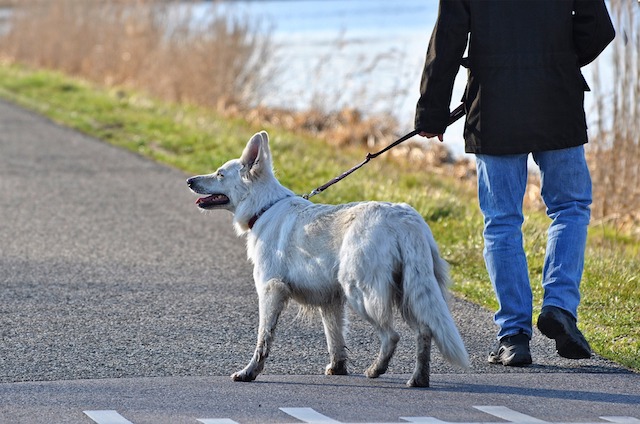
Photo by MabelAmber:Pixabay(Photo by MabelAmber/Pixabay)

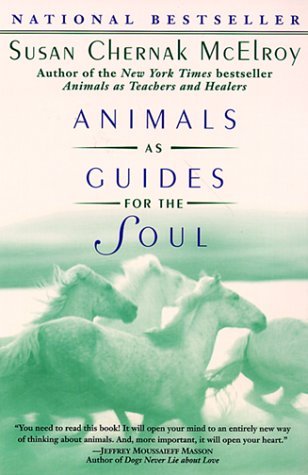
As much as Susan Chernak McElroy gets it right with Animals as Teachers and Healers (Ballantine Books, 1997), she gets right to the heart with Animals as Guides for the Soul (Ballantine Books, 1998).

This follow-up is not only a worthy exploration of the relationship between humans and animals, but also a potentially transforming walk through some of the thorniest aspects of these relationships.

8482McElroy, who has worked as a technical writer and editor as well as in several animal-related occupations, writes largely from her experience on a small Wyoming farm. Insights from people who wrote to her after reading her previous book are included.
I appreciate so much in Guides for the Soul, but here are three primary take-aways.

The first is that the healing benefits of our relationships with animals are often subtle, but no less powerful. It isn’t always the spectacular, tossing-away-the-cane miracle with the therapy dog. More often, it’s the steady warmth of the cat curled up on the patient’s lap or the jingling of tags along a quiet country road day after day. Sometimes the miracle is only seen in hindsight.

“We are so conditioned to expect drama and heroics in healing that we forget the staggering importance of all the healing that goes unseen,” says McElroy, a cancer survivor. (Check out this wonderful six-minute video about two guys — one a morbidly overweight human, the other a middle-aged rescue dog — who healed each other.)

What if, she asks, we were to believe that the being at the end of the leash, in the cat carrier, or on a perch could heal by his or her very presence, offering exactly what is needed in every moment? That the dog nuzzling a crying adult was administering critical emotional first aid, or the horse heard the bullied teen as no one else could? Is that so far off the mark?

Second, McElroy delves into the rocky territory of death in a way that can benefit anyone who has lost a much-loved animal, particularly when the loss is accompanied by shame and guilt. These experiences and memories, however long ago, stick to us until we acknowledge their multilayered impact, she says.

Quoting respected authors on pet loss as well as people confronting long-buried grief and remorse, she offers perspective and tools for healing. However, she is respectful enough not to put forth easy answers. The stories of McElroy’s precious llama, Phaedra; and Jody Seay’s elderly black Lab friend McKenzie, are likely to bring both a tear and a spark of hope.

Finally, even when the animals involved are not our own, what can we do when we witness the inexplicable and cruel? When McElroy was about 11, a young coyote with his mangled leg still dangling in a steel-jaw trap was part of a wildlife exhibit at a nearby park. Day after day, he lay in a rusting wire cage with no food or water. She pleaded with the park rangers to care for the coyote. They ignored her. She begged her parents to do something, wrote to the local paper, and contacted the town mayor and her family’s veterinarian.

No adult would intervene until she called Mrs. Roberts, the mother of a friend, who picketed the park. The exhibit shut down within a week. The coyote made the front page of the local paper and was released to Mrs. Roberts, whose veterinarian husband helped care for the coyote in a backyard pen. Months later, Mrs. Roberts drove the coyote to the desert and released him back into the wild.

“She reminded me that although it was she who freed the coyote, it was I who had brought the coyote to her attention. At the age of eleven, I learned that one person can stand up against suffering and make a difference,” McElroy recalls.

We should all have, or be, a Mrs. Roberts.

Oscar the ambassador

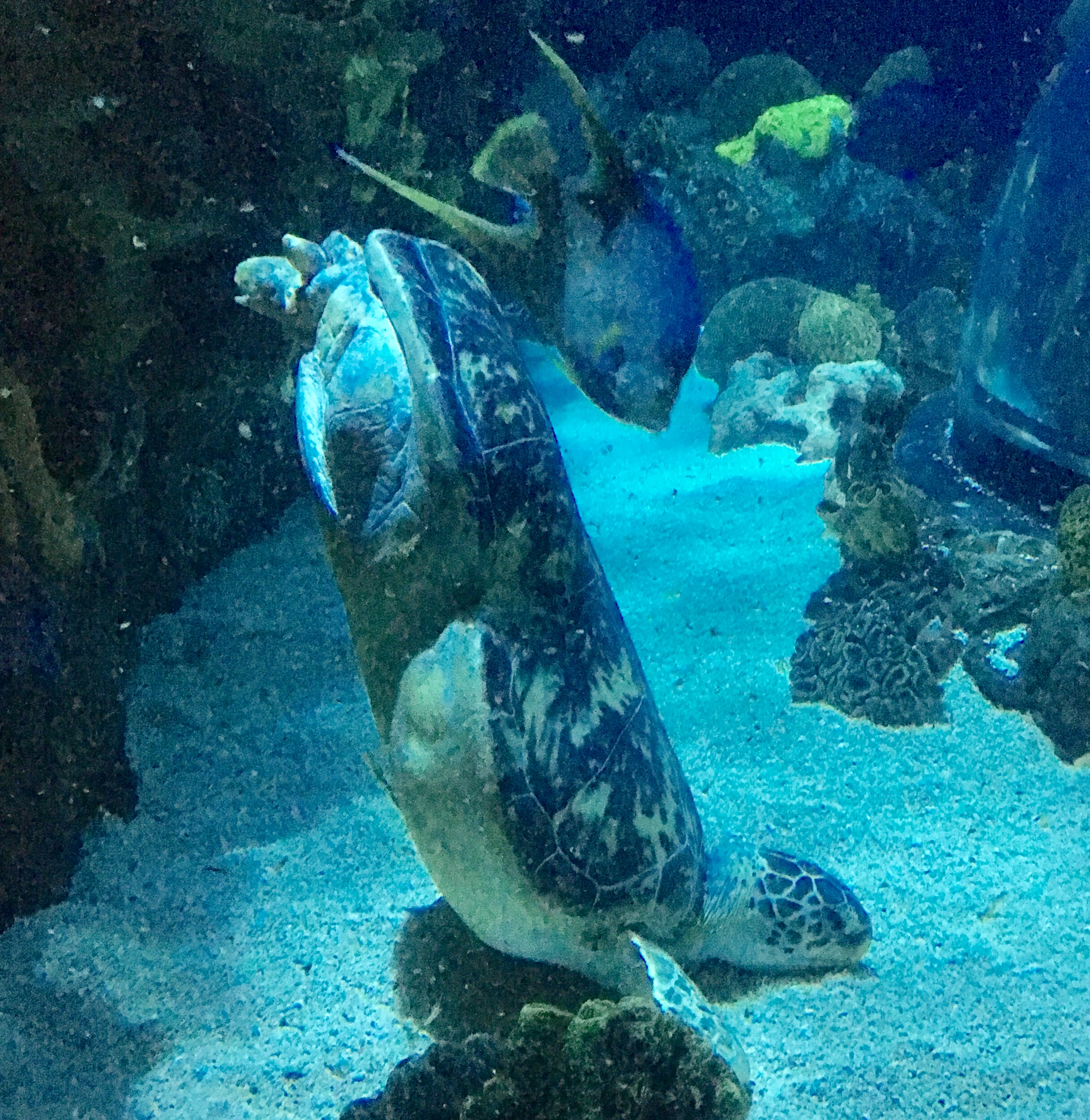
Oscar Tennessee Aquarium 05.18

Oscar, a green sea turtle, gets around at the Tennessee Aquarium. (Photo by Nancy Crowe)

I first met Oscar in 2007. The green sea turtle at the Tennessee Aquarium was missing his right rear flipper and a good part of his left rear flipper. A boat propeller had cut through his shell. Like many turtles who survive trauma, he’d developed buoyancy problems and bobbed, bottom up, like a cork in the big multi-species tank that was now his home.

Florida’s Marine Science Center had treated him initially. Covered with green hair algae, he looked just like Oscar the Grouch from “Sesame Street” — hence the name. When it was determined he could not be released back into the wild, he came to live at the Tennessee Aquarium in 2005. He was then about the size of a dinner plate.

By the time I saw Oscar, he was about the size of a saucer sled. Clearly, he was growing and had found a home where he would be protected and cared for … but still, I thought. How sad.

It is sad when animals suffer, especially at the hands (or boat propellers) of humans, and when our actions result in species becoming threatened or endangered. We should feel sad and angry about all of this.

But it’s so, so tempting to get stuck in the awfulness, which is probably what I did upon first hearing Oscar’s story. I remember my thoughts veering off to the pain he must have experienced, the terror when he was picked up and brought to the marine hospital … and could I ever, in good conscience, ride in a motorboat again? Was there such a thing as turtle-safe boating? Shouldn’t there be a law about that? And on and on.

I was new to animal communication at that point, which is to say I was still pretty cautious about trusting the intuitive information I was getting. My experience as a journalist had taught me to listen with my ears and mind. Communicating with animals requires listening first with the heart and then using a calm, clear mind to translate. However, the voice of this sea turtle was unmistakable.

“Are you kidding me? I’m the luckiest guy in the world. How many other sea turtles get to do this?”

Well, I didn’t have an answer for that, so I just stood for a few minutes and watched Oscar cut through the water with his front flippers and partially wedge himself under a rock to keep him from bobbing back up when he wanted to sit a spell. His joy — at having another shot at life, at being in a place where he was loved and cared for, at figuring out how to get around and stay put, and at showing people of all ages and walks of life what is possible after things go seriously, horribly wrong — was palpable. It carried through the water, glass, and crowd, and wrapped itself around me. I thanked Oscar for clarifying what it meant to be him.

My animal Reiki teacher, Kathleen Prasad, would echo this lesson years later during our training at an animal sanctuary. She taught us to both consider and look beyond the exteriors of what has happened to an animal to see the bright, beautiful light that animal essentially is. All of us, humans and animals, are not our wounds. We are not our histories. They are part of us, but we are so much more. Honoring this in ourselves and others helps us all heal and get around a bit more gently in the world.

I must add here that Kathleen is not in favor of zoos and aquariums. Though I agree with much of what she says, I’ve seen too many good things happen to and for animals at places like the Tennessee Aquarium and other accredited and/or mission-based facilities to write them all off. That’s my current thinking, anyway.

When we allow ourselves to move from the awfulness into seeing who an individual such as Oscar actually is and what he can do for the thousands of people who visit the aquarium, we can much more clearly see the next right action. Then we have a fighting chance at solving the cause of the awfulness. People who meet Oscar might be inclined to use less plastic to protect turtles from the waste, support wildlife conservation efforts with their time and finances, volunteer at a wildlife rehabilitation hospital, see their own injuries and limitations in a new way, or simply smile at his upside-down pluckiness. Any of these and more can have wonderful ripple effects for us and our world.

I visited Oscar this spring, and he is now at least as big as a saucer sled. He hangs out in his favorite spots among the rocks and plants, and as Emily Dickinson put it, dwells in possibility. He assured me he has plenty of work to do.