The naming of horses

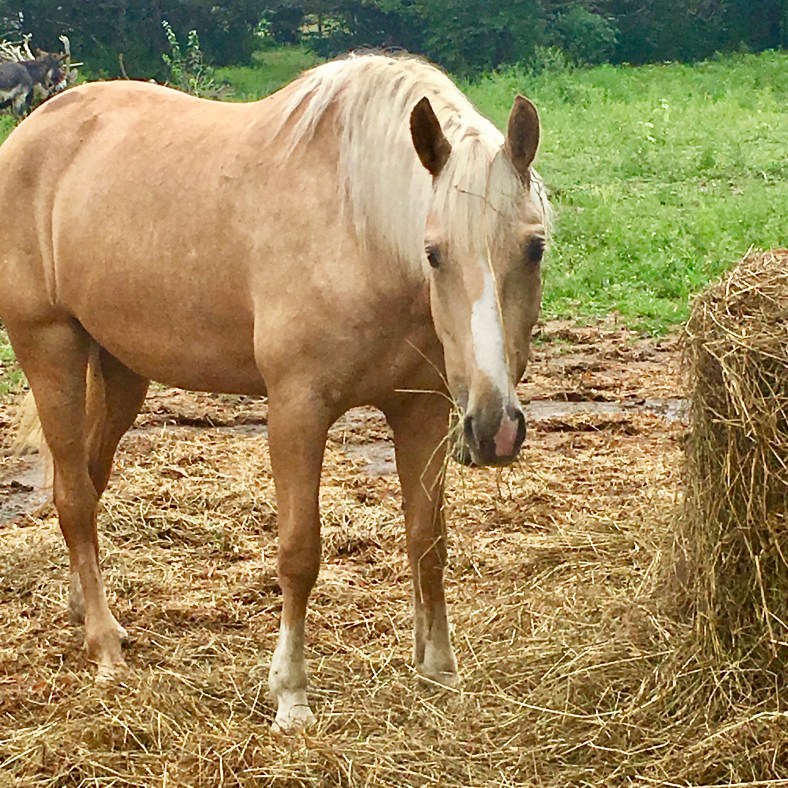
2019 08.14 Dolly 3 - edited

I caught Dolly in the middle of lunch with hay on her face, but her star quality shines through.

There are many rules for naming racehorses, but none for your average equine citizen. From what I’ve observed, horses often get new names when they get new people, new homes, new jobs, a second chance, or any combination of these. Some retired racehorses, like my friends Beau and Pirate, go by shorter versions of their racing names.

This isn’t unique to horses. Look at the way we humans take on and drop nicknames, take spouses’ names, reclaim family names, hyphenate, and depending on who’s talking, go by names like Mom.

One horse I know chose a name his new person wouldn’t have picked in a million years. Another came by hers through blonde star synchronicity. Yet another, when given the choice, kept the name she had.

Duke

I felt the sadness of the 17-year-old shire as soon as Allison Wheaton, director of Summit Equestrian Center, sent me his photo. After years as an Amish farm horse, and apparently not the best of situations, he was to become Summit’s newest resident late last year.

Duke 04.05.19 v

This is Duke a few months after his arrival at Summit Equestrian Center. He still wasn’t out with the herd, but he’d decided he liked Reiki. (Photo by Nancy Crowe)

Allison asked me to communicate with him before he arrived and find out what he needed in the transition, and what he might like to do. And would he like a new name, or would he prefer to keep the one he had (Angmar)?

The notion that he had a choice about anything was a strange concept to this heavy-hearted soul. Yet when I asked him what he wanted to be called, I heard: “Just call me Duke.”

I passed that along. Since most school/sports rivalries are not on my radar, it didn’t occur to me that Allison, a University of North Carolina grad, might wince at the name of her alma mater’s chief rival. As I learned later, she had vowed never to name a dog, horse, or anything else Duke. But Duke it was.

As fall deepened into winter, Duke acclimated and found his footing as a therapy horse. He found he appreciated being listened to and liked Reiki, especially once he realized it was his choice. Getting him to the point where he could join the rest of the horses in the pasture took months, many introductions, and a few scuffles.

Then one day this spring, Duke caught my eye from across the pasture. He was standing up straight, ears forward, with the rest of the crew.

“Do you see where I am? Do. You. See. Where. I. Am?” I heard.

Yes, Duke … I see you.

Dolly

Malibu, a Tennessee Walker-Belgian cross, had a few different homes by the time she joined the Summit herd. No one seemed to have time for her, and now she had no idea where she belonged.

Three or four days later, “Hello, Dolly!” — from the musical of the same name — got stuck in my head. I listened to the album over and over as a child and saw Carol Channing in what many consider her signature role as Dolly. But I hadn’t heard it recently or thought of it much.

The day after that, I received a text from Allison that the newcomer had settled in a bit, but Malibu didn’t seem like the right name. “Dolly? There’s got to be a sassy blonde star name that fits better,” she said.

I told her about the musical and sent a video link to the song. It includes the lyric “Tomorrow will be brighter than the good old days.”

Allison was thinking of Dolly Parton and I was thinking of the fictional Dolly Levi — but both seemed to fit. So Dolly it was, and she’s already shed stardust on a couple of participants in Summit’s veterans program.

Lulu

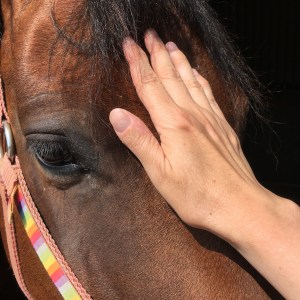
Some horses keep their names. Lulu, a beautiful paint mare, was rescued from a horrible neglect situation. As Lulu began a new chapter at Summit, Allison asked me to see if she wanted a new name as well … like Cheyenne?
2019 07.26 Lulu & my hand copy

Lulu has been learning to trust again.

When I asked Lulu, she told me she knew who she was and it didn’t matter what the humans called her. Cheyenne was fine, but she was also fine with sticking with Lulu, so that’s what we did.

Recovery is all about ups and downs, and less than two years later, Lulu’s is no exception. She has a good buddy in Pirate, one of the aforementioned retired racehorses, and she’s helped some of Summit’s human clients heal their own wounds. Every time I check in with her, even if she is struggling with the effects of her past, I see her choose to give her new life — still as Lulu — a chance.

You tell me …

How did your horse friends get their names … or new names?
Four things to know before hiring an animal communicator

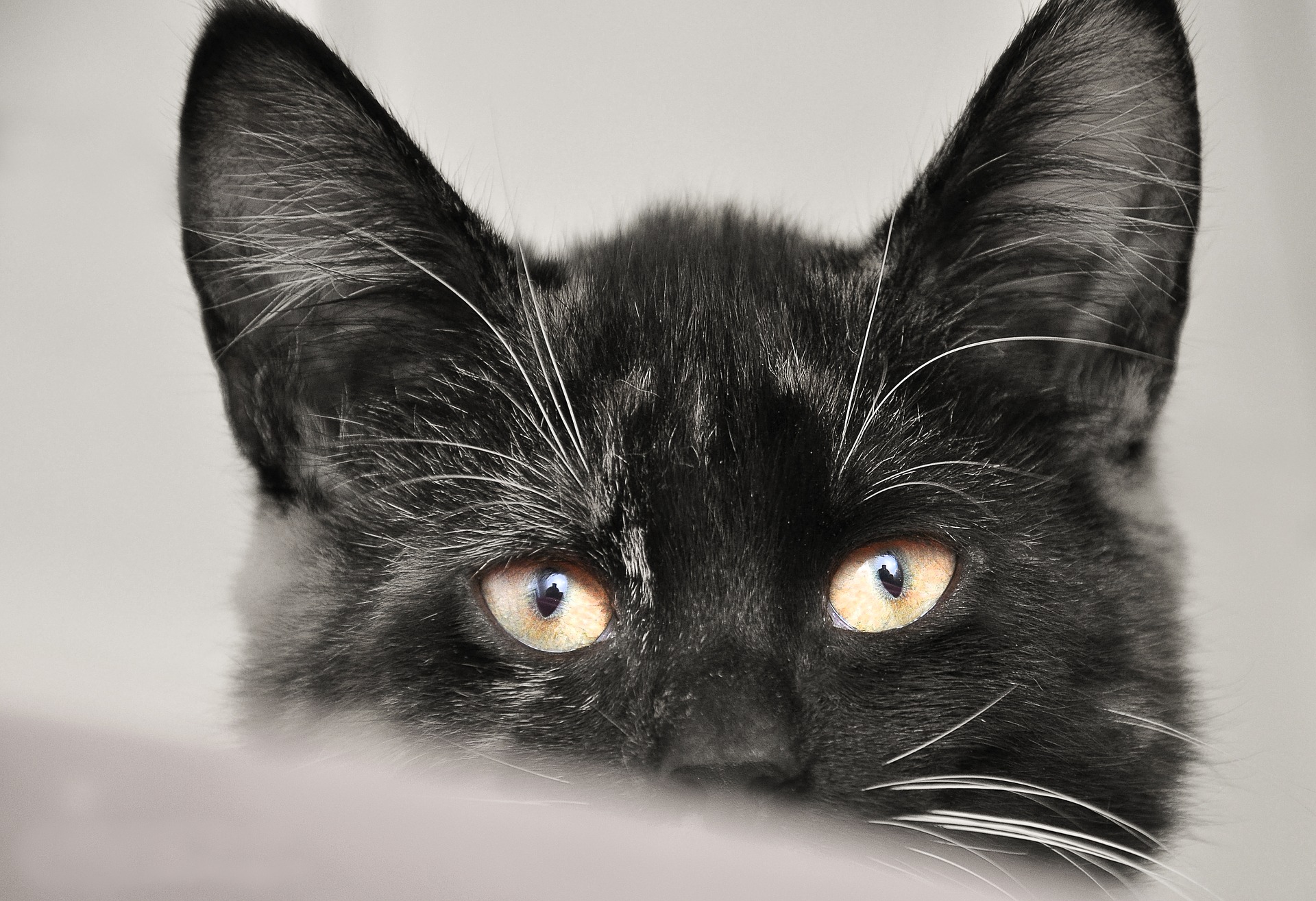
curious tortoiseshell cat
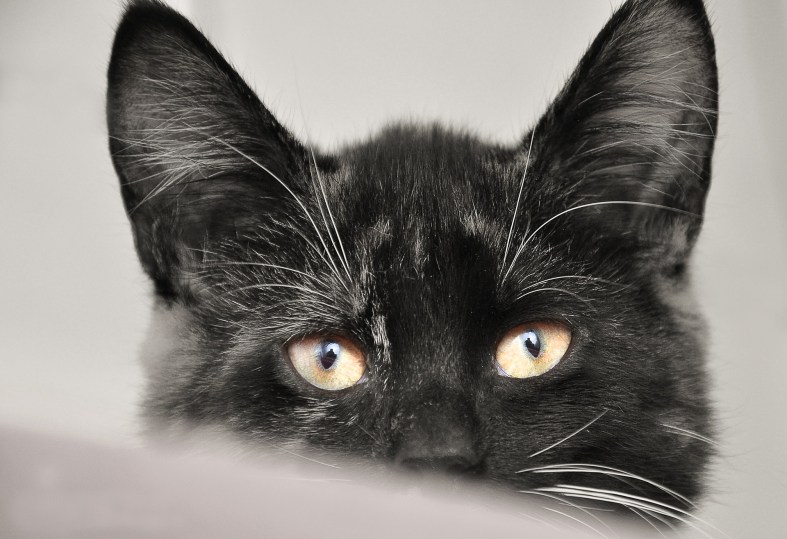
Whether you have a mischievous kitten, an anxious dog, or a sad horse, you’ll likely benefit from working with a well-chosen animal communicator. (Image by Doris Metternich from Pixabay)

Most people who contact me for an animal communication session are trying to solve a problem — a seemingly intractable behavior issue, adjustment to change, or painful end-of-life concerns. I’m sure many of them never thought they’d consult an animal communicator.

It’s hard to make decisions when you’re upset, dealing with a million other things, or both … so here are a few points to remember as you seek the right animal communicator for you and your pet.

1. You’re already on the right track.

Considering a discipline based on listening to the animal and his or her needs means you are willing to listen and learn. Maybe animal communication is a new concept, but you love your animal. You’re willing to at least think “outside the box” in order to help.

Even if you decide working with an animal communicator is not the right move at this time, you’ll be closer to finding what will help. So stop, take a breath, and give yourself credit for this alone. 

2. Trust your research AND your gut.

Referrals from people and businesses you trust are time-honored for a reason. You can also contact local metaphysical shops. Some, like Catalpa Tree Shops here in northeast Indiana, maintain directories of healing arts practitioners. A worldwide directory of animal communicators, with paid listings and ads, is on author/teacher Penelope Smith’s Animal Talk website. (I am not currently listed here, as I did not find it especially helpful before, but you never know.)

Whether you get an animal communicator’s name from a friend, directory, or random Google search, spend some time on his or her website and/or social media pages. Pay attention to how you feel as you read. Are you calmer, or more anxious? Clearer or more confused? Does the person follow the Code of Ethics for Interspecies Telepathic Communicators, or any other code of ethics or guiding principles?

3. No one is 100 percent accurate.

I am human and can’t do everything perfectly. With God’s guidance and my own self-care, I can be present, clear, and helpful to the animal and his or her family. Any animal communicator claiming 100 percent accuracy is best avoided.

4. You’ll learn something.

If you’ve chosen a communicator with whom you feel comfortable, chances are very good that you’ll find a valuable takeaway. It could be information you can act on immediately, such as moving the litter box to a quieter place or telling your horse where you’re going as you’re loading. It could be insight into how your animal views her place in your household, or his feelings and needs as his life on earth is drawing to a close.

Animals see our gifts and struggles in a way that even the humans closest to us cannot, so you may even learn something about yourself. Nothing is ever lost by listening.

‘Animals as Guides’ sheds light on difficult subjects

Photo by MabelAmber:Pixabay(Photo by MabelAmber/Pixabay)

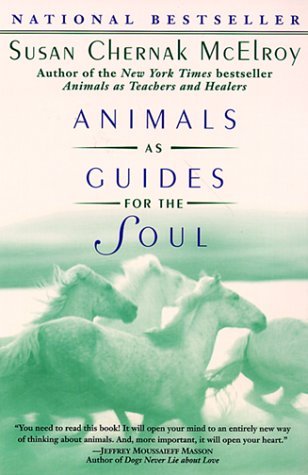
As much as Susan Chernak McElroy gets it right with Animals as Teachers and Healers (Ballantine Books, 1997), she gets right to the heart with Animals as Guides for the Soul (Ballantine Books, 1998).

This follow-up is not only a worthy exploration of the relationship between humans and animals, but also a potentially transforming walk through some of the thorniest aspects of these relationships.

8482McElroy, who has worked as a technical writer and editor as well as in several animal-related occupations, writes largely from her experience on a small Wyoming farm. Insights from people who wrote to her after reading her previous book are included.

I appreciate so much in Guides for the Soul, but here are three primary take-aways.

The first is that the healing benefits of our relationships with animals are often subtle, but no less powerful. It isn’t always the spectacular, tossing-away-the-cane miracle with the therapy dog. More often, it’s the steady warmth of the cat curled up on the patient’s lap or the jingling of tags along a quiet country road day after day. Sometimes the miracle is only seen in hindsight.

“We are so conditioned to expect drama and heroics in healing that we forget the staggering importance of all the healing that goes unseen,” says McElroy, a cancer survivor. (Check out this wonderful six-minute video about two guys — one a morbidly overweight human, the other a middle-aged rescue dog — who healed each other.)

What if, she asks, we were to believe that the being at the end of the leash, in the cat carrier, or on a perch could heal by his or her very presence, offering exactly what is needed in every moment? That the dog nuzzling a crying adult was administering critical emotional first aid, or the horse heard the bullied teen as no one else could? Is that so far off the mark?

Second, McElroy delves into the rocky territory of death in a way that can benefit anyone who has lost a much-loved animal, particularly when the loss is accompanied by shame and guilt. These experiences and memories, however long ago, stick to us until we acknowledge their multilayered impact, she says.

Quoting respected authors on pet loss as well as people confronting long-buried grief and remorse, she offers perspective and tools for healing. However, she is respectful enough not to put forth easy answers. The stories of McElroy’s precious llama, Phaedra; and Jody Seay’s elderly black Lab friend McKenzie, are likely to bring both a tear and a spark of hope.

Finally, even when the animals involved are not our own, what can we do when we witness the inexplicable and cruel? When McElroy was about 11, a young coyote with his mangled leg still dangling in a steel-jaw trap was part of a wildlife exhibit at a nearby park. Day after day, he lay in a rusting wire cage with no food or water. She pleaded with the park rangers to care for the coyote. They ignored her. She begged her parents to do something, wrote to the local paper, and contacted the town mayor and her family’s veterinarian.

No adult would intervene until she called Mrs. Roberts, the mother of a friend, who picketed the park. The exhibit shut down within a week. The coyote made the front page of the local paper and was released to Mrs. Roberts, whose veterinarian husband helped care for the coyote in a backyard pen. Months later, Mrs. Roberts drove the coyote to the desert and released him back into the wild.

“She reminded me that although it was she who freed the coyote, it was I who had brought the coyote to her attention. At the age of eleven, I learned that one person can stand up against suffering and make a difference,” McElroy recalls.

We should all have, or be, a Mrs. Roberts.