Permission is key in animal communication, meditation

Photo by Unlaw on Pixabay

Respect for animals and their people is the foundation of my work as an animal communicator and practitioner of Kathleen Prasad’s Let Animals Lead® animal Reiki meditation method. This means an animal is free, at any time, to choose not to communicate with me or participate in a meditation session. We can try again another day or I can issue a refund. Either way, the animal’s “no” is honored.

It also means that regardless of who pays, I must have permission of the animal’s owner for an animal communication or meditation session. By owner (or guardian) I mean the person who is legally responsible for the animal, whether that is an individual or an organization such as a shelter or rescue.

That permission is required is stated on my website, but it’s still come up a couple of times recently. So this is to let you know where I’m coming from and how you might handle potentially problematic situations.

Why permission is needed

Having permission from the person who is legally responsible for the animal:

  • Keeps everything above board, which naturally brings better outcomes for the animal communication or meditation session.
  • Protects the animal and respects the boundaries and relationships of all humans involved. (Put another way: Say you have a child, or an adult for whom you are legally responsible. Barring some kind of emergency, you would not want a friend or relative to arrange a counseling session or alternative treatment for that person without your permission. Anyone who tried to do so, however well intentioned, would probably lose your trust. You wouldn’t think much of the practitioner involved, either.)
  • Is in keeping with the codes of ethics I follow for animal communicators and Let Animals Lead® practitioners.

But what if …

There’s an animal you love and want to support with animal communication or meditation who isn’t technically yours. How do you handle that?

Here are some examples:

  • A rescued horse has been returned — again — to the sanctuary where you volunteer. The vet has ruled out injury or illness as a cause for his behavior issues. The director, barn supervisor, and other volunteers are all at a loss as to where or even whether to try to place him next. Asking the horse could yield information about the behavior and what kind of home he wants, and you are willing to pay for the session out of your own resources.
  • You are fostering a cat from your local animal shelter. The cat has been over-grooming to the extent that raw, bald patches are showing up on her legs and belly. The cat was thoroughly checked out by the shelter vet before coming to your home, and there is no medical cause. You know from experience that this is a common sign of stress, and the bald patches could put off prospective adopters. That is, if you don’t adopt this sweet kitty yourself. You’re happy to pay for a meditation session to help her feel more relaxed and secure.
  • Your sister is struggling with decisions regarding the care of her dog, who is severely ill. Her veterinarian has placed a couple of choices before her, and she is overwhelmed. You love this dog, too, and you’d do anything to help your sister. Should you just go ahead and book the session, see what the animal has to say, and then tell your sister?

In the above scenarios, I need the permission of the sanctuary director, the shelter director/adoption supervisor, and your sister, respectively. Talk with the animal’s owner, share a link to my website, and offer an animal communication session as a gift to support the animal — and them. They’re also welcome to contact me with questions. If the answer is yes, I am honored to help. If the answer is no, that is absolutely fine.

If you are interested in a meditation or communication session but are not sure about permission issues, contact me. Some situations are just confusing. I will do my best to help you sort it out and find the best way forward.

Giving animals a voice is a responsibility, and part of that responsibility is maintaining the trust and respecting the boundaries of the people and animals involved.

It lets us all speak, and more importantly listen, freely.

Scientific studies on Reiki and animal communication

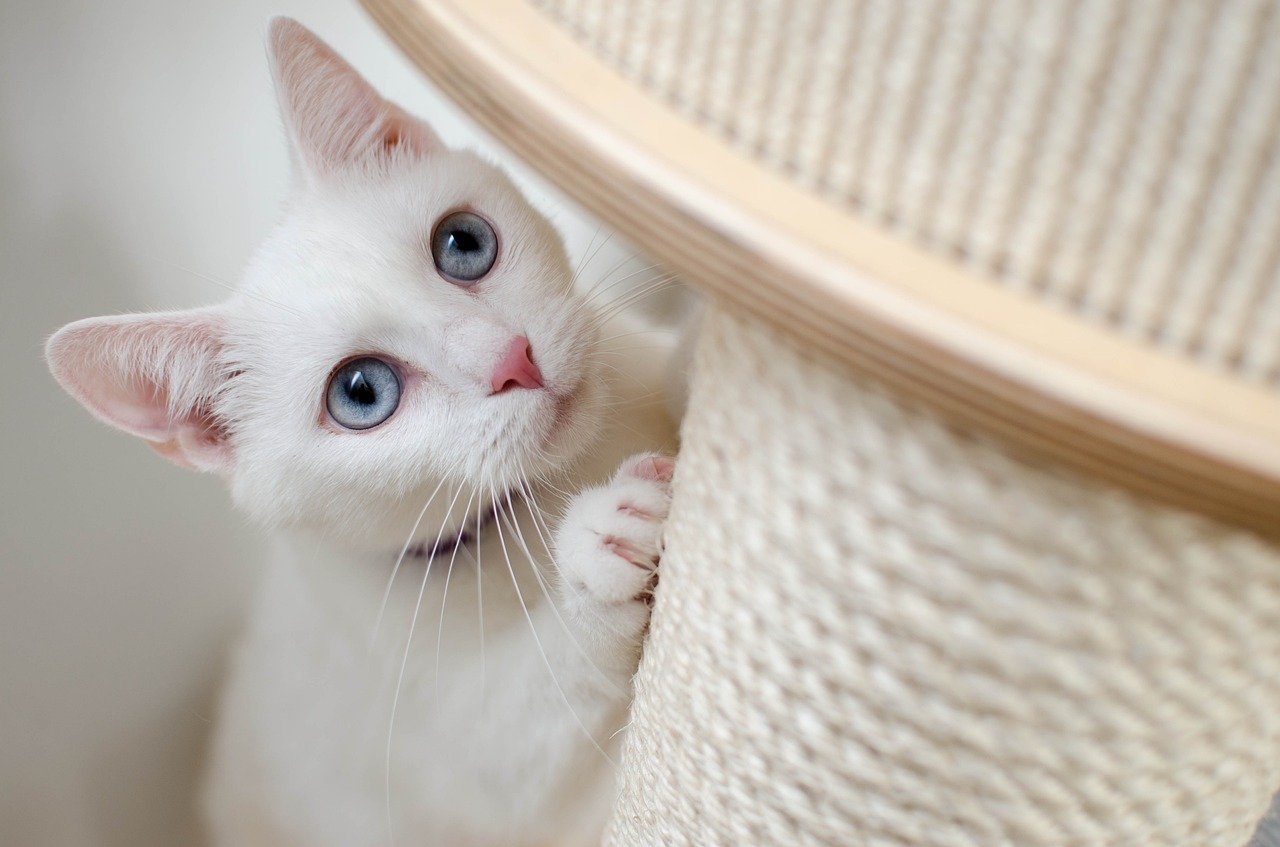
white kitten with scratching post
Several scientific studies support animal communication, animal sentience, and animal Reiki. (Image by Daga Roszkowska from Pixabay)

What does science say about whether and how animal Reiki and animal communication work?

What we know (or hypothesize) about anything today may only scratch the surface of what we’ll figure out tomorrow — but there’s more scientific knowledge out there than you might think.

Animal Reiki benefits

There are a few studies about Reiki, but not many about animal Reiki specifically. Here’s what I found in late 2021:

• The American Kennel Club recently published a story on the benefits of Reiki for pets, also citing a study you can find on the National Center for Biotechnology Information website. That 2017 (human) study, published in the Journal of Evidence-Based Complementary & Alternative Medicine, indicates Reiki is better than a placebo. In particular, it “activates the parasympathetic nervous system to heal body and mind. It has potential for broader use in management of chronic health conditions, and possibly in postoperative recovery. Research is needed to optimize the delivery of Reiki.”

• An Innovative Veterinary Care Journal article also touts the benefits of Reiki to animals, especially in clinical settings. This one cites an animal-specific 2008 study, “Reiki Improves Heart Rate Homeostasis in Laboratory Rats,” from the Journal of Alternative and Complementary Medicine. It showed Reiki reduced heart rate and blood pressure in noise-stressed rats.

• Kathleen Lester’s 2019 article in the Journal of the American Holistic Veterinary Association, “Reiki as Complementary Care in Veterinary Medicine,” cites numerous scholarly sources to discuss how Reiki can benefit not only animals but the veterinary staff caring for them. (With a shortage of veterinarians exacerbating an already stressful job, I think this will be increasingly important.)

Animal communication: dog brains, cat names and more

I found a bit more research on human-animal communication:

Dogs have some understanding of what we say and how we say it, Hungarian scientists found. They trained a group of family dogs to enter an MRI machine and scanned the way their brains responded to not only words but their tone. The study appeared in the journal Current Biology in 2014.

Two books reviewed in the Christian Science Monitor further delve into research on how attuned our canine companions are to our emotions, speech, and behavior. Alexandra Horowitz, cognitive scientist and author of Inside of a Dog, followed that bestseller up with Our Dogs, Ourselves: The Story of a Singular Bond. Clive D.L. Wynne, a dog behavioral scientist examines that bond in Dog Is Love: The Science of Why and How Your Dog Loves You.

Cats react to the sound of their names, according to a group of Japanese scientists whose study appeared in the journal Scientific Reports. Monique Udell, an animal behaviorist at Oregon State University, told the Associated Press the study shows “cats are paying attention to you, what you say and what you do, and they’re learning from it.”

Goats prefer positive human facial expressions, says a UK-based study published by The Royal Society. “These findings suggest that the ability of animals to perceive human facial cues is not limited to those with a long history of domestication as companions, and therefore may be far more widespread than previously believed,” the authors concluded.

• Norwegian researchers taught 23 horses to express their needs using symbol boards — for example, to request a blanket on a cold day. “When horses realized that they were able to communicate with the trainers, i.e. to signal their wishes regarding blanketing, many became very eager in the training or testing situation,” the authors wrote in their study, which appeared in Applied Animal Behaviour Science. “Some even tried to attract the attention of the trainers prior to the test situation, by vocalizing and running towards the trainers, and follow their movements.”

When you look at any study, pay attention to who conducted the research, who paid for it, and whether any conflicts of interest are disclosed.

Also keep in mind that many factors influence what we believe about the legitimacy of animal communication, Reiki, or anything else.

Scientific inquiry, by nature, is ongoing, so please send or post a link to any animal Reiki or animal communication study you find that I didn’t!

And, as they used to say on television: Stay tuned.

Animal Reiki and ‘people’ Reiki: key differences

Animals speak energy like a Ph.D. We speak energy like a kindergartner.

Kathleen Prasad

“You practice Reiki with animals? How does that work?”

Great question! Reiki is a Japanese stress relief modality, and relaxation helps the two-legged and four-legged alike feel and function better. While the benefits are the same, the methods of Kathleen Prasad’s Let Animals Lead® animal Reiki are different from the Reiki you’ll experience in human offices, hospitals, and spas.

I don’t invite the animal to hop up on a massage table (cats leave and horses laugh). The hand positions I learned in my “people” Reiki classes don’t apply, and that’s not because of different anatomies. Animals are much more sensitive to physical space and presence. Touch is unnecessary, even invasive, for them. A person can feel energy from the practitioner’s hands, but a horse can feel energy from a person standing across a pasture.

When I began studying animal Reiki years ago, I used the hand positions with my dog Ellie as I sat with her on the floor. If she had a hot spot on her foot, I lightly held her foot. More often than not, she’d get up and leave. I now understand that was too much for her. When I sat quietly and meditated — and better yet, ditched any expectation about the “problem” or what should happen — Ellie was more likely to come and lie down nearby.

My teacher, Kathleen Prasad, had a similar experience. That’s how she developed the Let Animals Lead® method I now practice. It’s based on meditation, not touch. Moreover, it puts the animals completely in charge of whether and how they participate in a session. They are free to decline. They can come closer, move away, sit, walk around, eat, sleep, etc. while the practitioner holds space in quiet meditation. Letting animals lead is important for a couple of reasons.

First, it respects the animals. They may have been abused, neglected, moved around, treated by veterinarians, or had their hooves worked on for the first time in years. Mind you — rescue efforts and veterinary treatment may be for their best and highest. So is the chance to choose.

That’s why I always ask for the animal’s permission before I begin. If I get a no, either telepathically or through body language, I thank the animal for letting me know and move on.

Second, how much more can animals relax when doing so is up to them? (Raise your hand if you relax on command. Didn’t think so.)

Every animal is different. Some will immediately come and lean on me or want to be petted; others soak in the energy from a distance. It works regardless.

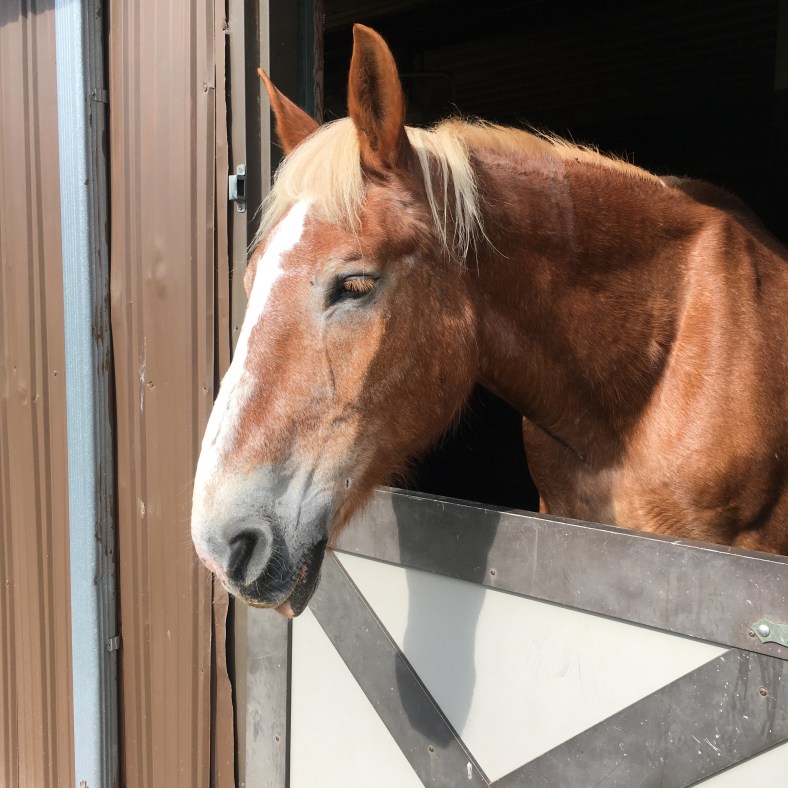
I’ve worked with rescued horses who have rarely, if ever, had a chance to choose or say no to anything. One day a retired draft horse, recovering from trauma, decided he’d had enough and walked back into the shed. I thanked him and moved on to the chickens a few yards away. A short time later, he stuck his big head out of the shed and asked: “You got any more of that?” (I did.)

Another horse, recently rescued from a kill pen, declined the session and moved away. A few minutes later, she came back to where I stood at the pasture fence and asked for more. This happened several times in the course of half an hour or so. She was astonished that interacting was her choice. The next time I saw her, I tentatively held up my hands, telling her I’d lower them or step away if she preferred. She placed her head in my hands and stood perfectly still. (The photo above is of her drifting into a post-session nap.)

Animals understand energy better than we do. A horse senses the presence of a predator in the distance. A cat curls up next to someone who is sick. The kids’ new puppy stays away from Mom because he’s the only one in the house who knows how angry she is.

Just don’t ask that puppy to stay still for the practitioner. He doesn’t have to … and Mom is welcome to join in.