Animal Reiki and ‘people’ Reiki: key differences

Animals speak energy like a Ph.D. We speak energy like a kindergartner.

Kathleen Prasad

“You practice Reiki with animals? How does that work?”

Great question! Reiki is a Japanese stress relief modality, and relaxation helps the two-legged and four-legged alike feel and function better. While the benefits are the same, the methods of Kathleen Prasad’s Let Animals Lead® animal Reiki are different from the Reiki you’ll experience in human offices, hospitals, and spas.

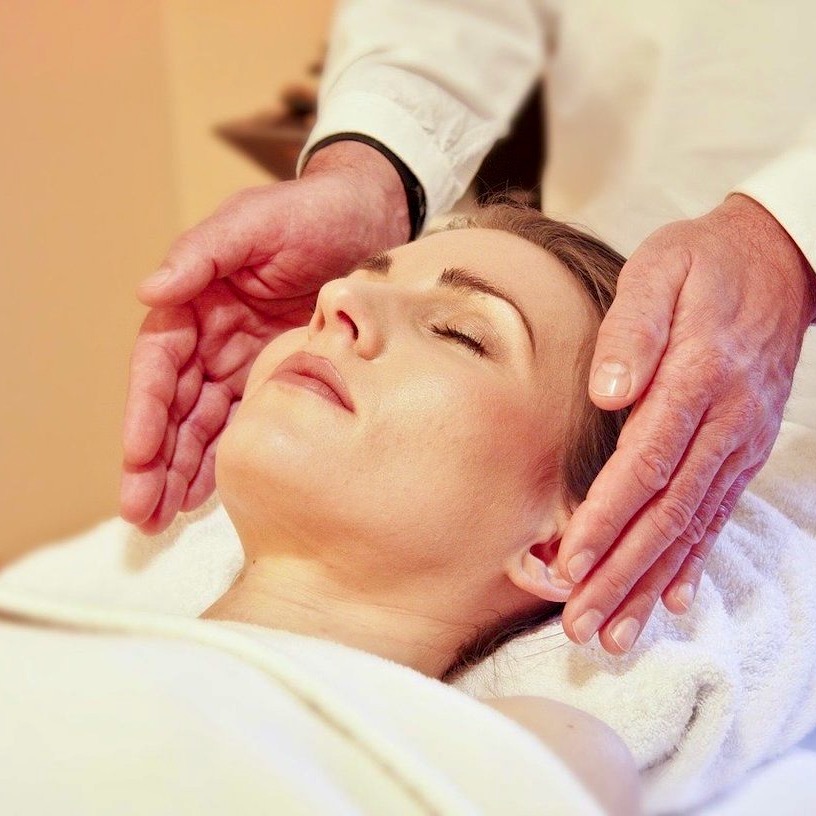
I don’t invite the animal to hop up on a massage table (cats leave and horses laugh). The hand positions I learned in my “people” Reiki classes don’t apply, and that’s not because of different anatomies. Animals are much more sensitive to physical space and presence. Touch is unnecessary, even invasive, for them. A person can feel energy from the practitioner’s hands, but a horse can feel energy from a person standing across a pasture.

When I began studying animal Reiki years ago, I used the hand positions with my dog Ellie as I sat with her on the floor. If she had a hot spot on her foot, I lightly held her foot. More often than not, she’d get up and leave. I now understand that was too much for her. When I sat quietly and meditated — and better yet, ditched any expectation about the “problem” or what should happen — Ellie was more likely to come and lie down nearby.

My teacher, Kathleen Prasad, had a similar experience. That’s how she developed the Let Animals Lead® method I now practice. It’s based on meditation, not touch. Moreover, it puts the animals completely in charge of whether and how they participate in a session. They are free to decline. They can come closer, move away, sit, walk around, eat, sleep, etc. while the practitioner holds space in quiet meditation. Letting animals lead is important for a couple of reasons.

First, it respects the animals. They may have been abused, neglected, moved around, treated by veterinarians, or had their hooves worked on for the first time in years. Mind you — rescue efforts and veterinary treatment may be for their best and highest. So is the chance to choose.

That’s why I always ask for the animal’s permission before I begin. If I get a no, either telepathically or through body language, I thank the animal for letting me know and move on.

Second, how much more can animals relax when doing so is up to them? (Raise your hand if you relax on command. Didn’t think so.)

Every animal is different. Some will immediately come and lean on me or want to be petted; others soak in the energy from a distance. It works regardless.

I’ve worked with rescued horses who have rarely, if ever, had a chance to choose or say no to anything. One day a retired draft horse, recovering from trauma, decided he’d had enough and walked back into the shed. I thanked him and moved on to the chickens a few yards away. A short time later, he stuck his big head out of the shed and asked: “You got any more of that?” (I did.)

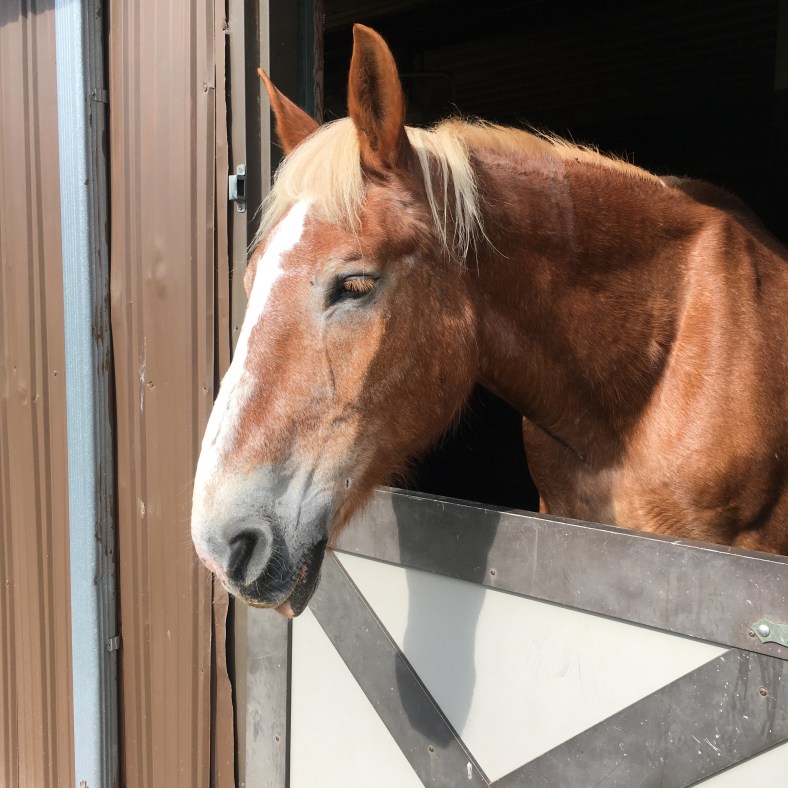
Another horse, recently rescued from a kill pen, declined the session and moved away. A few minutes later, she came back to where I stood at the pasture fence and asked for more. This happened several times in the course of half an hour or so. She was astonished that interacting was her choice. The next time I saw her, I tentatively held up my hands, telling her I’d lower them or step away if she preferred. She placed her head in my hands and stood perfectly still. (The photo above is of her drifting into a post-session nap.)

Animals understand energy better than we do. A horse senses the presence of a predator in the distance. A cat curls up next to someone who is sick. The kids’ new puppy stays away from Mom because he’s the only one in the house who knows how angry she is.

Just don’t ask that puppy to stay still for the practitioner. He doesn’t have to … and Mom is welcome to join in.
‘Animals as Guides’ sheds light on difficult subjects

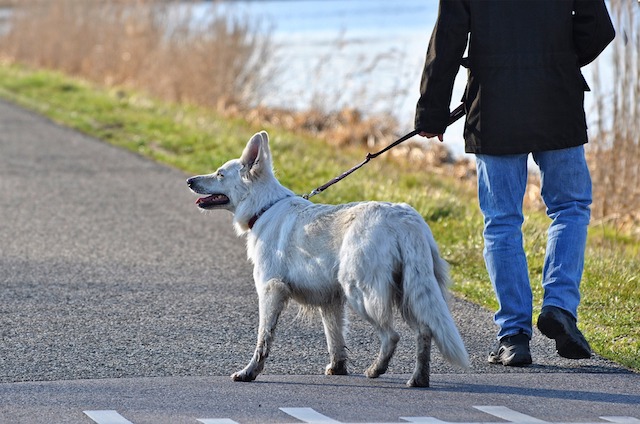
Photo by MabelAmber:Pixabay(Photo by MabelAmber/Pixabay)

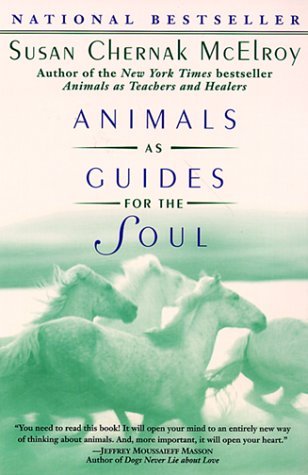
As much as Susan Chernak McElroy gets it right with Animals as Teachers and Healers (Ballantine Books, 1997), she gets right to the heart with Animals as Guides for the Soul (Ballantine Books, 1998).

This follow-up is not only a worthy exploration of the relationship between humans and animals, but also a potentially transforming walk through some of the thorniest aspects of these relationships.

8482McElroy, who has worked as a technical writer and editor as well as in several animal-related occupations, writes largely from her experience on a small Wyoming farm. Insights from people who wrote to her after reading her previous book are included.
I appreciate so much in Guides for the Soul, but here are three primary take-aways.

The first is that the healing benefits of our relationships with animals are often subtle, but no less powerful. It isn’t always the spectacular, tossing-away-the-cane miracle with the therapy dog. More often, it’s the steady warmth of the cat curled up on the patient’s lap or the jingling of tags along a quiet country road day after day. Sometimes the miracle is only seen in hindsight.

“We are so conditioned to expect drama and heroics in healing that we forget the staggering importance of all the healing that goes unseen,” says McElroy, a cancer survivor. (Check out this wonderful six-minute video about two guys — one a morbidly overweight human, the other a middle-aged rescue dog — who healed each other.)

What if, she asks, we were to believe that the being at the end of the leash, in the cat carrier, or on a perch could heal by his or her very presence, offering exactly what is needed in every moment? That the dog nuzzling a crying adult was administering critical emotional first aid, or the horse heard the bullied teen as no one else could? Is that so far off the mark?

Second, McElroy delves into the rocky territory of death in a way that can benefit anyone who has lost a much-loved animal, particularly when the loss is accompanied by shame and guilt. These experiences and memories, however long ago, stick to us until we acknowledge their multilayered impact, she says.

Quoting respected authors on pet loss as well as people confronting long-buried grief and remorse, she offers perspective and tools for healing. However, she is respectful enough not to put forth easy answers. The stories of McElroy’s precious llama, Phaedra; and Jody Seay’s elderly black Lab friend McKenzie, are likely to bring both a tear and a spark of hope.

Finally, even when the animals involved are not our own, what can we do when we witness the inexplicable and cruel? When McElroy was about 11, a young coyote with his mangled leg still dangling in a steel-jaw trap was part of a wildlife exhibit at a nearby park. Day after day, he lay in a rusting wire cage with no food or water. She pleaded with the park rangers to care for the coyote. They ignored her. She begged her parents to do something, wrote to the local paper, and contacted the town mayor and her family’s veterinarian.

No adult would intervene until she called Mrs. Roberts, the mother of a friend, who picketed the park. The exhibit shut down within a week. The coyote made the front page of the local paper and was released to Mrs. Roberts, whose veterinarian husband helped care for the coyote in a backyard pen. Months later, Mrs. Roberts drove the coyote to the desert and released him back into the wild.

“She reminded me that although it was she who freed the coyote, it was I who had brought the coyote to her attention. At the age of eleven, I learned that one person can stand up against suffering and make a difference,” McElroy recalls.

We should all have, or be, a Mrs. Roberts.

How a Reiki session works

img_0717

The first lesson of animal Reiki? The animal is always at least one step ahead … and that’s OK.

If you are considering Reiki to support a beloved animal’s well-being, it may help to know more about what actually happens during a typical session.

Getting there

For in-person appointments in the Fort Wayne, Indiana area, which last about an hour, I come to your home, barn, or clinic. When I arrive, we can get acquainted and talk about whatever concerns you may have. Then I’ll find a comfortable place to sit or stand near the animal. After I say a silent prayer and gain the animal’s permission to share energy, I will enter a peaceful, meditative state. The animal is free to lie still, stand, move around, eat, get a drink of water, go out for a pit stop, etc. The Reiki energy — the life force that animates all living things — will go right to work, wherever it is needed, regardless.

Why it works

It works for two reasons. First, the energy comes not from me but from a higher power: God, the Universe, All That Is. There are many names. I’m the conduit, not the source. Reiki is a stress relief and relaxation modality and not affiliated with any particular religious tradition, but at the same time, it is based on the notion that the energy comes from a safe, loving place where all living beings are connected.

Second, I am sharing the energy with the animals rather than doing something to them. During a session, cats or dogs will often come closer, curl up next to me, or settle in my lap, but they sometimes prefer to be a few feet away or even leave the room. That’s OK; I won’t chase after them. However they want to participate in a Reiki session, or not, is up to them. It’s really not the same model of the Reiki client lying on the table and the practitioner moving around him or her using the hand positions.

That’s why it works. More often than not, we don’t know how, and that can be hard to get our heads around. I’m a skeptical journalist who never expected to be doing anything like this, and I wouldn’t keep doing it if I didn’t see the benefits.

A peaceful presence

An animal Reiki session is not about fixing the animal or getting rid of what’s wrong. Reiki, which never harms, is about creating and sharing a peaceful space that promotes whatever healing needs to happen. The animals often have a better sense of that than we do, which is all the more reason to let them lead.

You and any other humans or animals present are welcome to participate and may also benefit from the session, but I generally keep conversation to a minimum during the meditation. After about 30 minutes, I will gently bring the meditation to a close and we can talk about any feelings, questions, or impressions that arose. I may share intuitive information I received during the session that might be helpful to you, but I am not a medical professional and do not diagnose. Most animals (and humans) feel relaxed and rejuvenated after a Reiki session.

We can then discuss and/or make an appointment for further treatment. The benefits of Reiki are cumulative and it helps the animal to get to know me over multiple visits, so I generally recommend a series of three sessions over 10 days to three weeks, depending on the animal’s circumstances and needs. Then I’ll be on my way, and you are encouraged to call or email me with any questions or concerns.

Animal Reiki and animal communication

Animal Reiki may involve communication, and I often send distant Reiki energy as part of an animal communication session. However, a Reiki session is a time of meditation and quiet healing, and an animal communication session is about gathering information and insight. So, while there is some overlap between the two, the objectives are different enough that I handle them separately. Please see my animal communication page for more information.