Walking the talk with my own animals

My partner and I recently made the gut-wrenching decision to let our 11-year-old dog, Molly, be put to sleep. That was preceded by weeks of: How bad is it? How bad might it get? Are her good days/minutes still outnumbering the bad? What else can we try? 

Over and over, I told Molly I loved her and thanked her for the love, care and laughs she’s given us. I talked with her and the cats about what was happening and acknowledged how strange and sad it all was. I assured all of them we would get through it, one day at a time, and that Kathy and I would care for and support them. We shared healing meditations and I prayed for courage.

Every time I started down the path of worry and despair, I reminded myself to return to the present moment, which was where Molly needed me to be. Sometimes I got further down that path than other times. I kept coming back, however imperfectly.

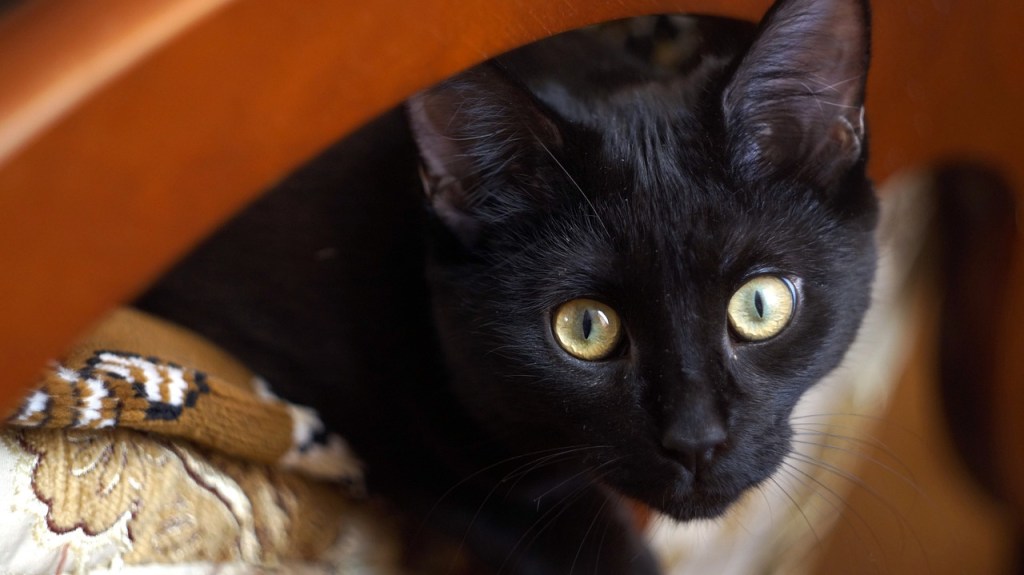
After Molly gently departed on her next adventure, Lucy (the black tortoiseshell cat pictured above) was stoic and attentive. Dusty, her younger calico sister, kind of understood what was going on but still found it confusing. Kathy and I did our best to reassure them and cope with the raw void. 

Less than a week after Molly’s passing, I noticed food-driven Lucy wasn’t finishing her kibble. She ended up having five teeth extracted. Lucy has tooth resorption, which basically means her saliva breaks down her teeth, and had had five extractions less than a year before. Tooth resorption is not uncommon in cats, but science hasn’t figured out why it happens or how to fix it.  

This time her recovery was full of ups and downs — different medications for pain and nausea, trying all manner of soft foods and feeding methods to get her to eat, and trips back to the vet clinic to be checked and rechecked. We were all still slogging through the fog of loss. I shared meditation with Lucy daily but wondered if I was getting it all wrong.

On a Saturday, after another vet visit and another failed attempt to get her to eat more than a couple of small bites, I was at the end of my tether. I wanted Lucy better. Yesterday.

Lucy was getting veterinary care. Now I had to force myself to do what I’d suggest to any client in this situation: Take a breath and focus on the connection rather than “the problem.”

Only then was I able to communicate with my cat without worry butting in.

What Lucy told me was not that she was tired of going to the vet and being cajoled to eat … though who could blame her? What she told me was that her mouth was still adjusting and her body was healing. She could feel the prayers and healing energy working. What she needed was time. And steadiness. She needed me not only to show up but keep coming back. Because we humans do drift.

I began to breathe a little easier. Her appetite remained sketchy for the rest of the weekend. On Monday afternoon she followed me into the furnace room, which is off limits to the cats, and ducked underneath some shelving.

“Lucy! Outta there!”

All I could see was the faint, dark outline of a cat crouched amid the dust bunnies. Never have I been so glad to see a cat behave like a stinker.

I went back upstairs, grabbed a fork and tapped the side of her stainless steel food bowl. Out of the furnace room and up the basement stairs she ran. And ate a bit more food.

The next morning, Lucy ate her breakfast normally. Well, maybe not quite normally, but close enough that we could see she’d turned a corner.

Lucy continues to improve, and we all continue to heal. It is not a linear process, and of course there’s never a good time for an animal to be ill or pass away. We humans have enormous responsibility for our animal companions, and yet there’s so much we cannot control. I’ve discovered that returning to God, to the breath, and to the presence of the animals can only help. Sometimes it’s the only thing that does.

Even if I have to do it several times a day (or hour), I’ll keep coming back.

Permission is key in animal communication, meditation

Photo by Unlaw on Pixabay

Respect for animals and their people is the foundation of my work as an animal communicator and practitioner of Kathleen Prasad’s Let Animals Lead® animal Reiki meditation method. This means an animal is free, at any time, to choose not to communicate with me or participate in a meditation session. We can try again another day or I can issue a refund. Either way, the animal’s “no” is honored.

It also means that regardless of who pays, I must have permission of the animal’s owner for an animal communication or meditation session. By owner (or guardian) I mean the person who is legally responsible for the animal, whether that is an individual or an organization such as a shelter or rescue.

That permission is required is stated on my website, but it’s still come up a couple of times recently. So this is to let you know where I’m coming from and how you might handle potentially problematic situations.

Why permission is needed

Having permission from the person who is legally responsible for the animal:

  • Keeps everything above board, which naturally brings better outcomes for the animal communication or meditation session.
  • Protects the animal and respects the boundaries and relationships of all humans involved. (Put another way: Say you have a child, or an adult for whom you are legally responsible. Barring some kind of emergency, you would not want a friend or relative to arrange a counseling session or alternative treatment for that person without your permission. Anyone who tried to do so, however well intentioned, would probably lose your trust. You wouldn’t think much of the practitioner involved, either.)
  • Is in keeping with the codes of ethics I follow for animal communicators and Let Animals Lead® practitioners.

But what if …

There’s an animal you love and want to support with animal communication or meditation who isn’t technically yours. How do you handle that?

Here are some examples:

  • A rescued horse has been returned — again — to the sanctuary where you volunteer. The vet has ruled out injury or illness as a cause for his behavior issues. The director, barn supervisor, and other volunteers are all at a loss as to where or even whether to try to place him next. Asking the horse could yield information about the behavior and what kind of home he wants, and you are willing to pay for the session out of your own resources.
  • You are fostering a cat from your local animal shelter. The cat has been over-grooming to the extent that raw, bald patches are showing up on her legs and belly. The cat was thoroughly checked out by the shelter vet before coming to your home, and there is no medical cause. You know from experience that this is a common sign of stress, and the bald patches could put off prospective adopters. That is, if you don’t adopt this sweet kitty yourself. You’re happy to pay for a meditation session to help her feel more relaxed and secure.
  • Your sister is struggling with decisions regarding the care of her dog, who is severely ill. Her veterinarian has placed a couple of choices before her, and she is overwhelmed. You love this dog, too, and you’d do anything to help your sister. Should you just go ahead and book the session, see what the animal has to say, and then tell your sister?

In the above scenarios, I need the permission of the sanctuary director, the shelter director/adoption supervisor, and your sister, respectively. Talk with the animal’s owner, share a link to my website, and offer an animal communication session as a gift to support the animal — and them. They’re also welcome to contact me with questions. If the answer is yes, I am honored to help. If the answer is no, that is absolutely fine.

If you are interested in a meditation or communication session but are not sure about permission issues, contact me. Some situations are just confusing. I will do my best to help you sort it out and find the best way forward.

Giving animals a voice is a responsibility, and part of that responsibility is maintaining the trust and respecting the boundaries of the people and animals involved.

It lets us all speak, and more importantly listen, freely.

Scientific studies on Reiki and animal communication

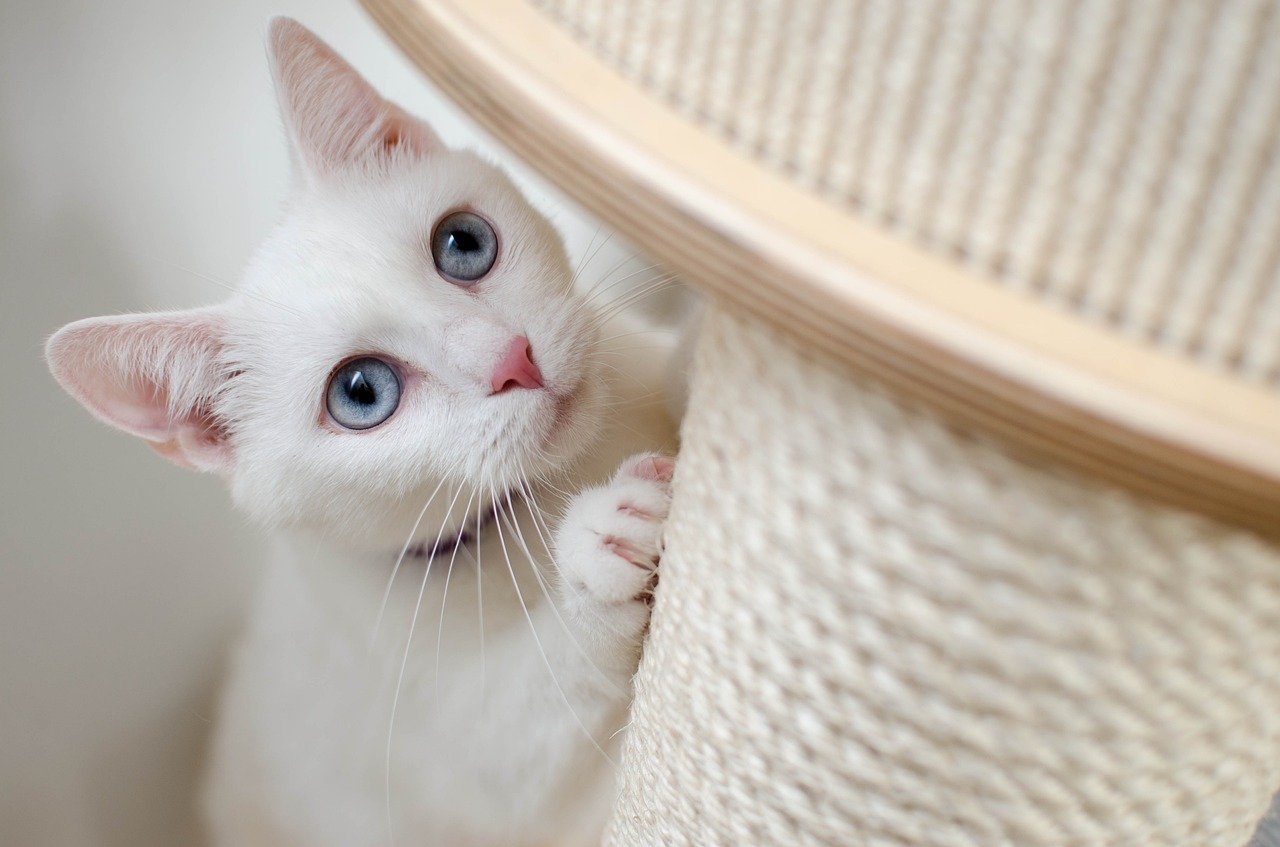
white kitten with scratching post
Several scientific studies support animal communication, animal sentience, and animal Reiki. (Image by Daga Roszkowska from Pixabay)

What does science say about whether and how animal Reiki and animal communication work?

What we know (or hypothesize) about anything today may only scratch the surface of what we’ll figure out tomorrow — but there’s more scientific knowledge out there than you might think.

Animal Reiki benefits

There are a few studies about Reiki, but not many about animal Reiki specifically. Here’s what I found in late 2021:

• The American Kennel Club recently published a story on the benefits of Reiki for pets, also citing a study you can find on the National Center for Biotechnology Information website. That 2017 (human) study, published in the Journal of Evidence-Based Complementary & Alternative Medicine, indicates Reiki is better than a placebo. In particular, it “activates the parasympathetic nervous system to heal body and mind. It has potential for broader use in management of chronic health conditions, and possibly in postoperative recovery. Research is needed to optimize the delivery of Reiki.”

• An Innovative Veterinary Care Journal article also touts the benefits of Reiki to animals, especially in clinical settings. This one cites an animal-specific 2008 study, “Reiki Improves Heart Rate Homeostasis in Laboratory Rats,” from the Journal of Alternative and Complementary Medicine. It showed Reiki reduced heart rate and blood pressure in noise-stressed rats.

• Kathleen Lester’s 2019 article in the Journal of the American Holistic Veterinary Association, “Reiki as Complementary Care in Veterinary Medicine,” cites numerous scholarly sources to discuss how Reiki can benefit not only animals but the veterinary staff caring for them. (With a shortage of veterinarians exacerbating an already stressful job, I think this will be increasingly important.)

Animal communication: dog brains, cat names and more

I found a bit more research on human-animal communication:

Dogs have some understanding of what we say and how we say it, Hungarian scientists found. They trained a group of family dogs to enter an MRI machine and scanned the way their brains responded to not only words but their tone. The study appeared in the journal Current Biology in 2014.

Two books reviewed in the Christian Science Monitor further delve into research on how attuned our canine companions are to our emotions, speech, and behavior. Alexandra Horowitz, cognitive scientist and author of Inside of a Dog, followed that bestseller up with Our Dogs, Ourselves: The Story of a Singular Bond. Clive D.L. Wynne, a dog behavioral scientist examines that bond in Dog Is Love: The Science of Why and How Your Dog Loves You.

Cats react to the sound of their names, according to a group of Japanese scientists whose study appeared in the journal Scientific Reports. Monique Udell, an animal behaviorist at Oregon State University, told the Associated Press the study shows “cats are paying attention to you, what you say and what you do, and they’re learning from it.”

Goats prefer positive human facial expressions, says a UK-based study published by The Royal Society. “These findings suggest that the ability of animals to perceive human facial cues is not limited to those with a long history of domestication as companions, and therefore may be far more widespread than previously believed,” the authors concluded.

• Norwegian researchers taught 23 horses to express their needs using symbol boards — for example, to request a blanket on a cold day. “When horses realized that they were able to communicate with the trainers, i.e. to signal their wishes regarding blanketing, many became very eager in the training or testing situation,” the authors wrote in their study, which appeared in Applied Animal Behaviour Science. “Some even tried to attract the attention of the trainers prior to the test situation, by vocalizing and running towards the trainers, and follow their movements.”

When you look at any study, pay attention to who conducted the research, who paid for it, and whether any conflicts of interest are disclosed.

Also keep in mind that many factors influence what we believe about the legitimacy of animal communication, Reiki, or anything else.

Scientific inquiry, by nature, is ongoing, so please send or post a link to any animal Reiki or animal communication study you find that I didn’t!

And, as they used to say on television: Stay tuned.