Chosen by cats

If you are in transition, chances are an animal is or is waiting to be your teacher. Cats in particular choose us for these missions, although some cleverly let us think we do the choosing.

For example: A tiny, loudmouthed tiger kitten adopted me at a Southern Indiana animal shelter when I was just out of graduate school and unsure of the next step. When I picked her up, she looked me straight in the eye and meowed. I’d passed muster.
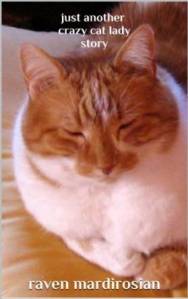
UnknownRaven Mardirosian describes a similar experience in “Just Another Crazy Cat Lady Story” (2014). She had just arrived in Fort Collins, Colorado for graduate school. On the East Coast, she’d left behind her fundamentalist Christian family and her “sort-of” girlfriend at their Christian college, which banished Mardirosian from campus when their relationship was uncovered (by said girlfriend).

It was the beginning of many years of wandering — if not running — and yet there she was in an animal shelter, about to take on the commitment of adopting one of two kittens. She was drawn to the darker one, as the orange tabby reminded her a little too much of the beloved family cat whose loss she still grieved. But when the orange tabby’s tiny white paw grabbed her finger, Mardirosian knew she’d been chosen.

That orange tabby, Avery, became Mardirosian’s link to a kinder, gentler way of being amid a return to the East Coast and a series of jobs, schools, apartments and girlfriends. People in her life asked: When are you going to grow up? When are you going to get right with the Lord? Avery just napped in her lap, knowing she would figure it all out.

While living in New York City, Mardirosian adopted Zoey, a little gray street cat, through a fellow CCL (crazy cat lady). After thoroughly vetting Mardirosian and her living space, CCL brought Zoey for a trial visit.

Zoey turns her eyes my way: jade green, with just enough of a razor slit to show that I’m not the only bitch in the room. …

Then she decides to come over and say hello.

She likes you.

The magical three words. All of the chasing after my parents’ love, the attention of the beautiful redhead or blonde or black-haired girl at Henrietta’s … flies back in one terrifying sword of truth — she likes you — as Zoey remains in my lap, not quite seated, not quite standing.

She does, doesn’t she?

Still, in the beginning there was fearsome hissing and screaming, broken glass and an abscessed injury to the base of Avery’s tail. Though Zoey did settle down, she remained moody and opinionated — much like Idgie, my aforementioned loudmouthed tiger cat.

Mardirosian developed a unique relationship with each of her feline charges: “I’m much more aligned to Zoey, the secret observer. The runner. I’ve got that skill down pat. Avery challenges me to remove the labyrinth that winds its way around my heart and let others love me.”

Her account of Avery’s illness and the agonizing decision to let him go, after nearly two decades of life and love, is wrenching. Though deeply moving in and of itself, it brought back the loss of Idgie, who passed at age 16, quite vividly.

Even in her grief, Mardirosian recognizes, as I did, that her friend and guide is “safe, happy and free. … This crazy cat of mine will fly on. I may not know how — but trust the energy that propels him forward will move me in the same way.”

At our city shelter, I met a tortoiseshell kitten. I picked her up, and she reached out and patted my face with her paw. Lucy is now an easygoing 3-year-old, a very different cat with a new set of lessons.

My education continues.
What was, and what’s left

Indianapolis Star photo by Greg Griffo

Indianapolis Star photo by Greg Griffo

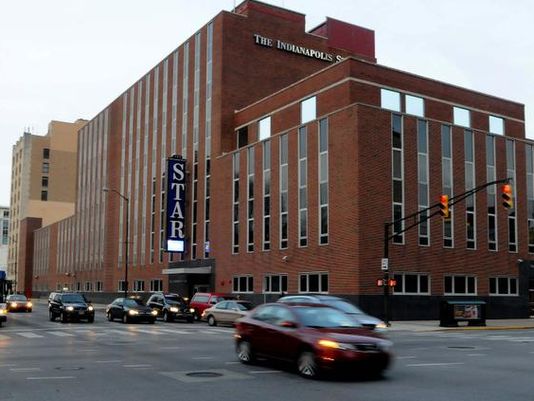
This is the Indianapolis Star building, which until a few weeks ago stood at 307 N. Pennsylvania St. The newspaper called it home for some 100 years before moving to what used to be a department store at Circle Centre mall downtown. For a relative snippet of time, I called it home, too.

My dad, Tom Crowe, worked there from 1960 to 1990, as an ad salesman, advertising director, and finally as vice president and general manager. Long before Take Our Daughters to Work Day was a thing, Dad was taking me with him to “the plant” with the rich, sharp smell of newsprint and ink and the inky footprints in the first-floor hallway. I peered over the desks of God knows how many poor souls trying to get their work done as I followed Dad around the building. He almost always whistled. The place reminded me of a Chutes and Ladders game, with ramps, steps, and corridors going off every which way. That’s what happens when you morph two or three old buildings into one.

The mailroom was the best, because you could watch and hear the presses running. The stories the people on the second floor had written — wrapped around the ads the people on the third floor had sold — were all coming out on those big sheets of paper rattling through the machinery. The finished, folded papers that came out on the conveyor belt would then go into homes all over the city. People read the paper. They talked about what was in it. Printed words mattered.

Many drawings and homework assignments were completed at the small conference table in the office Dad moved into after being promoted to general manager. It was off the New York Street entrance — just out of the frame in this photo. There were no windows, and while the daylight addict in me hated that, I never felt anxious or claustrophobic in there. Decades later, during an energy healing session, I was asked to picture myself in a place where I felt absolutely safe and at home. I went not to a beach, shady grove, or cozy fireside, but to Dad’s office, puzzling through social studies or perhaps just reading the comics in that day’s paper while he worked.

We were a large, often dysfunctional extended family. Charlie Simmons, one of Dad’s coworkers in the advertising department, sat with Mom and me through several of Dad’s heart surgeries. Other employees confided in Dad about their battles with depression or alcoholism, or their confusion over decisions their own children had made. We went to one another’s weddings and funerals, watched the fireworks together at the Fourth Estate employee park every Fourth of July, and knew at least something about what was going on in one another’s lives.

When I went to work in the business office during the summer as a college student, Don Bates in personnel — a sideline photographer who had taken my baby pictures — took the photo for my ID badge. “No bearskin rug this time,” he said, grinning as he clicked the shutter.

I could not have asked for a more educational, and fun, introduction to the working world. Wednesdays in the cashiers’ office were hectic, as all the circulation district managers brought in their checks, cash, and money orders. Frazzled after totaling everything up and balancing on one such day, we got into a rubber band fight. Without even trying, I managed to loop one over a sprinkler head. About 15 years later, when I stopped by for a visit, I happened to look up and that same rubber band still hung there.

At the News during another break, I got to practice the copyediting and headline writing skills that would become a large part of my career. Bo Connor at the Star helped me get my first full-time journalism job at The Republic in Columbus, Ind.

Dad passed away in 1994, just four years after retiring. The first phone calls I received that day — after Mom, telling me the news — came from 307 N. Penn.

A few years later, the News closed down. Then the Star was sold to Gannett. Then came the move to Circle Centre and the sale of the building. Then came the demolition.

Nothing stays the same, and really, nothing should. Not all change is for the better, and often more change is needed because of it. If we are smart, we learn. Dad, who kept a brick from the old Detroit Times building in his office, would be the first to tell me it’s OK to let go of what was and make room for what will be.

What can we pull from the past and retrofit to work for us now? That’s a question we in print media are going to have to figure out. Most days, I think it comes down to caring about what we do and why, and caring for one another in the process. That’s probably a gross oversimplification, but it’s a place to start.

In the meantime, after we make our next deadline, I just may fire off another rubber band.