Speaking up for neglected horses

malnourished horse
This is one of sixteen malnourished, neglected horses taken from a northeast Indiana farm last winter. (Photo courtesy Friends of Ferdinand)

Sixteen horses — first 10, then another six — were rescued from a Wells County, Indiana property in January 2018. All were malnourished, and some had untreated infections and injuries.

A few, including two of the six horses I worked with, did not survive. Others returned to their previous owners or found new ones, but faced a long and difficult healing process.

The case was all the more disturbing because the person responsible was known and trusted by area horse owners and rescuers. Yet, according to the conversations that followed, there were previous signs that all was not well.

What can we pull from this to create a better outcome the next time something doesn’t seem quite right, but we don’t know what to ask or how to help? How can we get better at spotting signs of animal abuse and neglect, speaking up, listening, and following through?

As I write this, winter is coming. That’s when many of these heartbreaking situations come to light, and when it’s difficult to respond.

I’m not a veterinarian, horse handler, or law enforcement officer. My job with horses is to listen to them, and to the people who love and care for them, and offer a calm presence that allows healing. But as a journalist of many years, I also wanted to offer some quality information that might prove useful to those of us in northeast Indiana and beyond. Here’s what I found.

• These two articles were both sparked by the Wells County case: When to Speak Up: Red Flags & Warning Signs for Reporting Abuse in Horse Nation; and If you see something, say something by Carleigh Fedorka, a horse handler and postdoctoral researcher who was part of the same network as the neglected horses’ owner.

• Another, Neglected, abused and abandoned horses: How to help in Equus Magazine, was written earlier but includes helpful information on staying on the right side of the law in these situations.

• Also of note: Friends of Ferdinand, which played a key role in the rescue of the horses in the above case, received a Standing Ovation by Ovation Riding in 2018. This story talks about how other rescue organizations stepped in to help.

Creating a better world for horses (and everyone else) does, in fact, take all of us.
Chosen by cats

If you are in transition, chances are an animal is or is waiting to be your teacher. Cats in particular choose us for these missions, although some cleverly let us think we do the choosing.

For example: A tiny, loudmouthed tiger kitten adopted me at a Southern Indiana animal shelter when I was just out of graduate school and unsure of the next step. When I picked her up, she looked me straight in the eye and meowed. I’d passed muster.

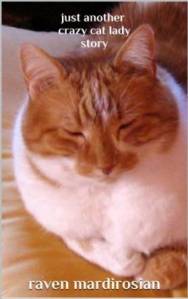
UnknownRaven Mardirosian describes a similar experience in “Just Another Crazy Cat Lady Story” (2014). She had just arrived in Fort Collins, Colorado for graduate school. On the East Coast, she’d left behind her fundamentalist Christian family and her “sort-of” girlfriend at their Christian college, which banished Mardirosian from campus when their relationship was uncovered (by said girlfriend).

It was the beginning of many years of wandering — if not running — and yet there she was in an animal shelter, about to take on the commitment of adopting one of two kittens. She was drawn to the darker one, as the orange tabby reminded her a little too much of the beloved family cat whose loss she still grieved. But when the orange tabby’s tiny white paw grabbed her finger, Mardirosian knew she’d been chosen.

That orange tabby, Avery, became Mardirosian’s link to a kinder, gentler way of being amid a return to the East Coast and a series of jobs, schools, apartments and girlfriends. People in her life asked: When are you going to grow up? When are you going to get right with the Lord? Avery just napped in her lap, knowing she would figure it all out.

While living in New York City, Mardirosian adopted Zoey, a little gray street cat, through a fellow CCL (crazy cat lady). After thoroughly vetting Mardirosian and her living space, CCL brought Zoey for a trial visit.

Zoey turns her eyes my way: jade green, with just enough of a razor slit to show that I’m not the only bitch in the room. …

Then she decides to come over and say hello.

She likes you.

The magical three words. All of the chasing after my parents’ love, the attention of the beautiful redhead or blonde or black-haired girl at Henrietta’s … flies back in one terrifying sword of truth — she likes you — as Zoey remains in my lap, not quite seated, not quite standing.

She does, doesn’t she?

Still, in the beginning there was fearsome hissing and screaming, broken glass and an abscessed injury to the base of Avery’s tail. Though Zoey did settle down, she remained moody and opinionated — much like Idgie, my aforementioned loudmouthed tiger cat.

Mardirosian developed a unique relationship with each of her feline charges: “I’m much more aligned to Zoey, the secret observer. The runner. I’ve got that skill down pat. Avery challenges me to remove the labyrinth that winds its way around my heart and let others love me.”

Her account of Avery’s illness and the agonizing decision to let him go, after nearly two decades of life and love, is wrenching. Though deeply moving in and of itself, it brought back the loss of Idgie, who passed at age 16, quite vividly.

Even in her grief, Mardirosian recognizes, as I did, that her friend and guide is “safe, happy and free. … This crazy cat of mine will fly on. I may not know how — but trust the energy that propels him forward will move me in the same way.”

At our city shelter, I met a tortoiseshell kitten. I picked her up, and she reached out and patted my face with her paw. Lucy is now an easygoing 3-year-old, a very different cat with a new set of lessons.

My education continues.